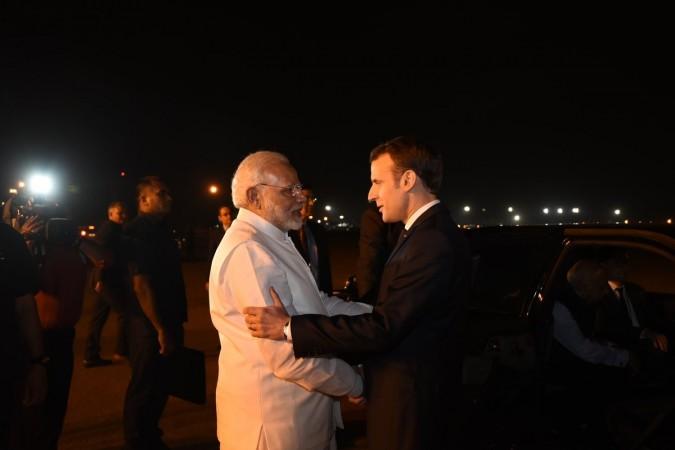
In the gilded halls of the Bayerischer Hof on 14 February 2026, the 62nd Munich Security Conference became something rarer than a diplomatic gathering: it became a funeral and a birth simultaneously. German Chancellor Friedrich Merz, in the most blunt opening address, the conference had heard in decades, pronounced the verdict, that everyone had felt but few had dared to utter aloud: the rules-based international order, that imperfect yet durable edifice erected after 1945 under American auspices, no longer exists. "Our freedom is no longer guaranteed," he declared, his voice carrying the weight of a continent that had for eighty years outsourced its ultimate security to Washington.
The post-war order, he continued, had not gently faded; it had been dismantled by wrecking-ball politics, by the very power that once served as its chief architect and guarantor. Even the United States, Merz warned, is no longer powerful enough to go it alone in an age of raw great-power rivalry. Europe, therefore, must cease its long vacation from history and become a self-sustaining strategic pillar within NATO, not a replacement for it. Germany would field the continent's strongest conventional army.
Serious conversations about anchoring a European nuclear deterrent in French capabilities had already begun. The message was neither anti-American nor nostalgic; it was post-American in the most sober, unsentimental sense.
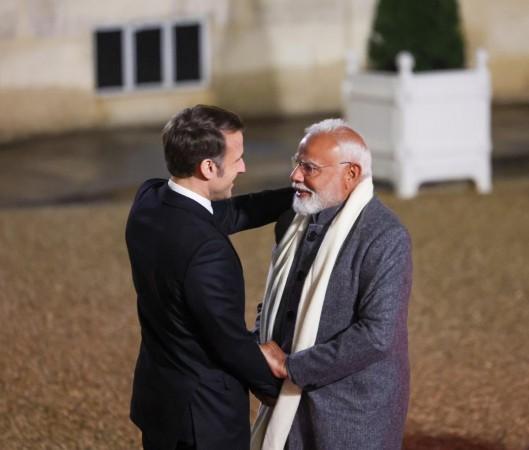
The intellectual scaffolding for this verdict had been laid days earlier in the Munich Security Report 2026, titled Under Destruction. Where the 2025 report had spoken cautiously of multipolarization, a gradual diffusion of power, this year's document was merciless in its diagnosis. The world, it argued, has entered an era of wrecking-ball politics in which sweeping demolition, not incremental reform, is the dominant impulse. Political forces across the West that prize destruction over careful correction have gained the upper hand. Institutions built over eight decades are being abandoned, norms discarded, alliances treated as transactional arrangements rather than sacred trusts. The report's Munich Security Index 2026 reveals a deepening crisis of confidence in democratic governance across the G7, even as publics in the Global South continue to rank environmental collapse and inequality as their paramount threats. The contrast is telling: the West is arguing over its own ruins while much of the rest of the world is simply trying to survive the consequences. Yet the report is not a counsel of despair. It is a summons to wield power, both principled and pragmatic, in a world that has lost its referee.
Merz's speech set the tone, but it was Emmanuel Macron who gave the moment its philosophical and strategic depth. Speaking on the first evening, the French president delivered what may be remembered as the most consequential European address since de Gaulle. Europe, he insisted, must learn to become a geopolitical power; it was never part of our DNA, but it must become our destiny. This is the right time for audacity. A stronger Europe, Macron argued, would be a better friend to the United States, not a rival. He spoke of long-range strike capabilities, industrial-scale defence production, the urgent need to integrate France's nuclear deterrent into a broader European security architecture, and the absolute refusal to capitulate to Russian maximalism on Ukraine. Even if a ceasefire were reached tomorrow, Europe would still confront an aggressive Russia for a generation. The continent, he said, must exhibit strength and tenacity, pride in its achievements, and the courage to define its own security without apology. Where some see decay, Macron saw fortitude; where others see dependence, he saw the opportunity for sovereign partnership.
The contrast with the previous year's bruising encounter, when then-Vice President Vance had lectured Europe on its supposed civilizational failings, was stark. This time the Europeans were not reacting; they were articulating.
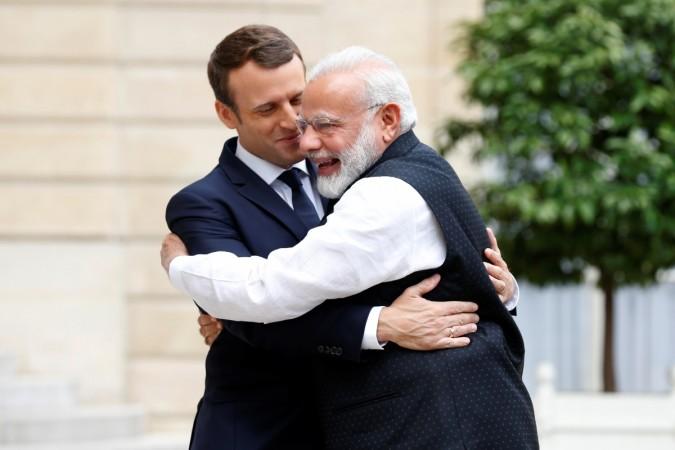
Into this charged atmosphere stepped US Secretary of State Marco Rubio on the second day. His keynote was a masterpiece of calibrated reassurance wrapped around unyielding realism. The United States and Europe, he declared, belong together. America wants Europe to be strong; indeed, Europe must survive.
He invoked shared history, centuries of intertwined civilization, and the enduring truth that adversaries calculate their ambitions against the cohesion of the West. Yet beneath the warmth lay a hard-edged message: the old world is gone. The post-war assumptions that allowed Europe to underinvest in its own defence while America bore the burden are no longer sustainable. Rubio spoke of recalibration, of honest reckoning with past delusions, on migration, on climate dogma, on the belief that history had ended in liberal triumph.
European leaders, from Ursula von der Leyen to Kaja Kallas, breathed an audible sigh of relief; the tone was firm but not hostile, a far cry from the previous year's confrontation. Rubio's message was clear: Washington is not abandoning Europe, but it is no longer willing to subsidize European strategic complacency. The alliance must be reborn on terms of genuine reciprocity.
What crystallised in Munich over those forty-eight hours was nothing less than the visible architecture of a new global order. The shift is from a rules-based system to a deals-based one, from universal norms to ad-hoc bargains, from multilateral institutions to minilateral coalitions and spheres of influence. The United States is pivoting toward hemispheric priorities and Indo-Pacific deterrence; China is consolidating its near abroad and courting the Global South; Russia is attempting, with brutal persistence, to restore a European sphere by force. Europe, for the first time in generations, is choosing strategic autonomy not as ideological luxury but as existential necessity. Nuclear-sharing discussions, once confined to think-tank seminars, are now mainstream. Defence spending targets are climbing toward 3 to 4 per cent of GDP in frontline states and well above 2 per cent across the board.
The real tests ahead are industrial, ammunition, platforms, command integration, and political: whether Germany can overcome its strategic culture, whether France can share its ultimate deterrent, whether the EU can activate Article 42.7 without fracturing.
For the United States the implications are double-edged. Greater European burden-sharing is welcome, yet the risk of alliance erosion is real. A Europe that feels abandoned may hedge economically toward China and pursue autonomous policies that complicate NATO cohesion. Washington retains enormous leverage, but that leverage is finite; it rests on credibility, not nostalgia. Canada, as a NATO and Five Eyes partner with acute Arctic vulnerabilities, faces parallel pressures to rearm and diversify. In the Middle East, fragile ceasefires brokered by American diplomacy have created breathing space, yet underlying conflicts remain unresolved and humanitarian vacuums widen as aid flows diminish.
Eastern Europe and the Balkans live with the daily dread of a new Yalta, great powers carving spheres over the heads of smaller states. Frontline nations are accelerating defence integration and demanding iron-clad guarantees that go beyond rhetoric.
For India, the Munich reckoning offers both opportunity and imperative. New Delhi has long practised strategic autonomy; in this emerging landscape that doctrine becomes not a luxury but a survival skill. The Jaishankar–Wadephul dialogue in Munich signalled Europe's eagerness for deeper defence-industrial ties, submarines, engines, AI-enabled systems, with a partner unburdened by the transatlantic drama. Yet India must navigate carefully: Russian energy and defence links remain vital even as European outreach intensifies. American tariffs are a strategic prompt to diversify markets, conclude pending free-trade agreements, and lead coalitions in the WTO and G20 for reformed rules that accommodate rising powers. The border standoff with China continues; hybrid threats multiply. Indigenous production, critical-minerals security, and cyber resilience are no longer aspirational, they are non-negotiable. India's public opinion still ranks environmental risks highest; this remains a powerful lever in Global South coalitions and in forums such as the MSC climate sessions. Above all, India's greatest asset is its capacity to say no credibly to all sides. That credibility will rest on economic heft, military strength, and diplomatic agility in a world that rewards the nimble and punishes the dependent.
History will record Munich 2026 not for any single treaty signed, there were none, but for the moment when the West collectively acknowledged that the old order had died and a new one was being born in real time. Europe is choosing agency over nostalgia. The United States is choosing transaction over trusteeship. Middle powers are choosing options over alignment. Whether this produces a more stable or more dangerous planet depends on whether the new pragmatism is tempered by enduring principle, whether the wrecking ball clears ground for something better or simply leaves rubble. The statesmen and stateswomen gathered in the Bavarian capital understood the stakes. The corridors hummed with side deals, quiet understandings, and the low electric tension of history changing lanes. The conference continues through Sunday, but the intellectual verdict is already in: the post-war order is under destruction. Europe, for the first time in generations, has decided it will not be destroyed with it. The rest of the world, India included, must now decide where it stands in the architecture that rises from the ruins.
[Major General Dr. Dilawar Singh, IAV, is a distinguished strategist having held senior positions in technology, defence, and corporate governance. He serves on global boards and advises on leadership, emerging technologies, and strategic affairs, with a focus on aligning India's interests in the evolving global technological order.]