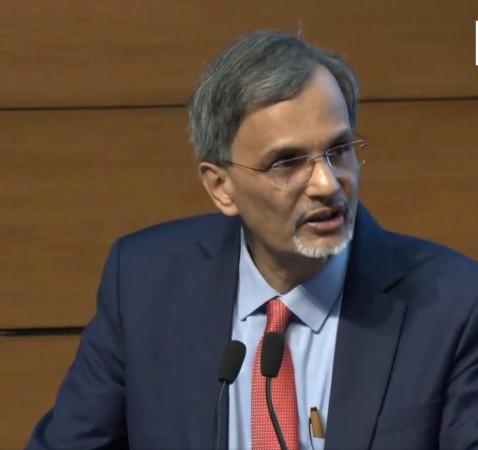
The Economic Survey 2025–26 sets the tone for the upcoming Union Budget and offers a snapshot of where India's economy stands today. Speaking at the Survey's press briefing, Chief Economic Adviser (CEA) V. Anantha Nageswaran outlined key trends shaping growth, inflation, employment, agriculture, green energy and the challenges emerging from the digital age. Here are the key takeaways from his remarks.
Rupee weakness driven by global factors
The CEA said the recent weakness in the rupee is largely driven by global factors rather than domestic economic stress. As an emerging market reliant on foreign capital, India remains exposed to shifts in global risk sentiment and volatile capital flows. He stressed that India's economic fundamentals remain stable and that currency movements mainly reflect tighter global financial conditions.
Growth picks up as inflation eases
India's growth momentum strengthened as inflation cooled sharply. Real GDP growth rose to 7.4 per cent in FY26, supported by stronger consumer spending and investment. Headline inflation fell to 1.7 per cent in FY26 (up to December), while core inflation also softened, signalling easing price pressures across the economy.

Fiscal consolidation strengthens confidence
Nageswaran noted that government finances are improving, supported by a credible fiscal consolidation path. The fiscal deficit is projected to decline to 4.4 per cent of GDP in FY26, while the primary deficit has also narrowed. This provides greater room for public spending without adding stress to the economy.
Labour market shows steady improvement
The CEA highlighted clear gains in employment indicators. The unemployment rate declined from 6 per cent in 2017–18 to 3.2 per cent in 2023–24, while female labour force participation rose sharply from 23.3 per cent to 41.7 per cent. Recent FY26 data shows unemployment easing further to 4.9 per cent by December, reflecting continued improvement in labour market conditions.
Agriculture diversification gains, but challenges persist
Agricultural diversification is being driven by livestock and fisheries, which recorded average GVA growth of 6.1 per cent and 7.2 per cent, respectively, between FY20 and FY24—higher than overall agricultural growth of 4.7 per cent and crop growth of 4 per cent. However, the CEA flagged concerns such as imbalanced fertiliser use, excess grain stocks, high storage costs and weak markets for alternative crops, which continue to limit farm incomes.
Green energy, AI risks and mental health concerns
India's clean energy transition will require large-scale access to critical minerals, improved logistics and significant energy storage capacity, the CEA warned. He also flagged risks linked to artificial intelligence, including skill mismatches, job disruption, high resource consumption by data centres and reliance on foreign AI models. Separately, he cautioned against rising digital addiction, particularly among youth, citing growing mental health implications.
Rupee at 92 per dollar 'punching below its weight'
The Economic Survey said the rupee's slide to the 92-per-dollar level does not reflect India's strong economic fundamentals. "In other words, the rupee is punching below its weight," it said, adding that investor hesitation to commit funds warrants examination at a time when inflation is under control and growth prospects remain favourable.
The Survey noted that India's trade deficit in goods is only partly offset by services exports and remittances. When capital inflows weaken, rupee stability comes under pressure. While an undervalued rupee helps cushion the impact of higher US tariffs and does not currently pose inflation risks, it can still dampen investor confidence.
Labour Codes key to future job security
The Survey emphasised that effective implementation of the four Labour Codes will be crucial in supporting formal employment and improving security for women and gig workers. The Codes consolidate 29 central laws and formally recognise gig and platform workers, expanding social security, welfare funds and benefit portability. Going forward, the Survey stressed the need for algorithmic transparency and worker-friendly practices.
On skills, it highlighted the importance of flexible vocational pathways starting at the school level and targeted skilling for women and youth in high-productivity sectors to ensure inclusive growth.
India's rising strength in healthcare manufacturing
The Economic Survey noted that India is a global leader in low-cost vaccine supply, providing a majority of the world's DPT, BCG and measles vaccines. India's medical devices sector is also rapidly becoming globally competitive, with exports to 187 countries in FY25. The industry now manufactures high-end equipment such as MRI and CT scanners, linear accelerators, cardiac stents and ventilators, marking a significant shift toward high-tech medical manufacturing.
Overall, the Economic Survey paints a picture of a steadily growing economy with improving inflation and employment trends, while also flagging critical challenges—from agriculture bottlenecks to green energy logistics and AI-driven disruptions—that will need careful management to sustain long-term growth.
(With inputs from IANS)