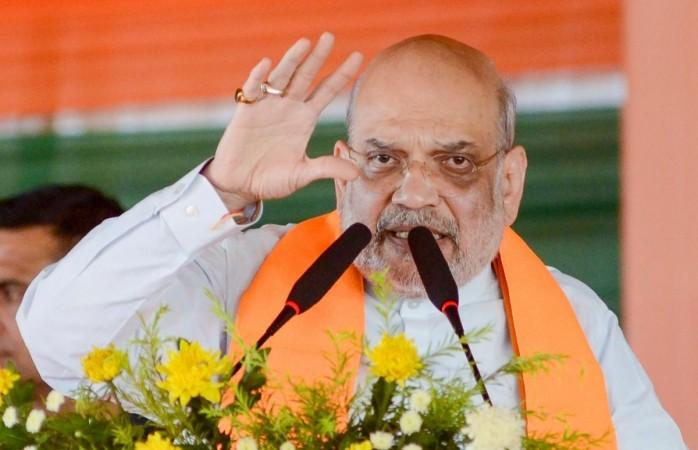
Amit Shah used RAW's most prestigious annual lecture to deliver a blunt message to diplomats from more than 40 countries: fragmented laws are the drug cartel's best weapon — and the world is running out of time to fix it.
India's Union Home Minister Amit Shah used one of the country's most significant intelligence forums on Friday to issue a direct call to the international community: harmonise drug laws, standardise penalties, share intelligence in real time, and extradite kingpins — or watch narco-states become the world's next power centres.
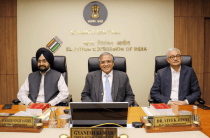
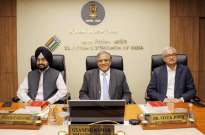
Speaking at the R.N. Kao Memorial Lecture 2026, the annual lecture series organised by the Research and Analysis Wing in honour of its founder Rameshwar Nath Kao, Shah addressed an audience that included ambassadors, high commissioners and diplomats from more than 40 countries, alongside former RAW secretaries, members of Kao's family, and officials from India's security establishment. The choice of forum was deliberate — RAW's most prestigious platform, used this year not for a retrospective on intelligence craft, but for a forward-looking call to global action on narcotics.
"The world, with a population of 8 billion people, 195 nations, and 250,000 kilometres of international borders, cannot tackle the problem of drugs through fragmented approaches," Shah said.
The domestic foundation
Shah said that under the leadership of Prime Minister Narendra Modi, India has set a goal to achieve a Drug-Free India by 2047, and that Indian security agencies had prepared a roadmap to eradicate drug syndicates. The zero-tolerance policy, he stated, meant India would ensure not one gram of narcotics enters the country or uses Indian territory as a transit route. Android Authority
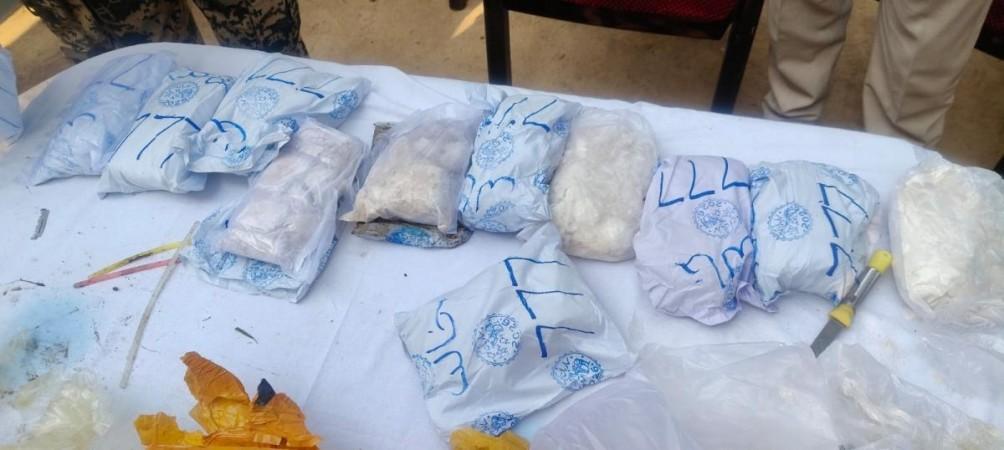
Between 2014 and 2025, drugs weighing over one crore eleven lakh kilograms and valued at one lakh seventy-one thousand crore rupees were seized. Shah cited India's record of bringing back more than 40 transnational criminals in the last two years with the support of friendly nations — while acknowledging that much more remained to be done.
The domestic architecture is already in place. A nationwide anti-drug campaign launched from March 31 this year runs for three years, with all central government departments required to prepare roadmaps up to 2029 with time-bound review mechanisms. The Drug-Free India campaign is currently running across 372 districts, with ten crore people and three lakh educational institutions associated with it.
The global ask
What Friday's lecture added was the international dimension — and the urgency behind it.
Shah described narcotics as a borderless threat that countries cannot address in isolation, warning that drug cartels are actively exploiting differences in national laws to expand their operations. The solution, he argued, required four simultaneous moves at the global level: a uniform definition of prohibited substances, standardised punishments for trafficking, an extradition framework for drug kingpins, and real-time intelligence sharing to interdict consignments before they cross borders.
Without that alignment, he warned, cartels would continue to arbitrage the inconsistencies between national legal systems — moving product through whichever jurisdictions offered the lowest risk and the lightest penalties.
The warning carried a longer horizon than most diplomatic addresses. Shah told the assembled envoys that there was still time to act — but that if joint efforts were not initiated now, the world would look back in ten years and recognise that the window had closed. He called on the ambassadors and diplomats present to join India's efforts directly, framing narcotics not as a law-enforcement matter but as a national security and public health emergency with generational consequences.
The battle against drugs, he said, must rise above geopolitical differences and individual national interests. The world must simultaneously fight both narco networks and narco-terror states — organisations that use drug revenues to fund terrorism, build parallel economies, and, in some cases, capture state institutions entirely.
The R.N. Kao Memorial Lecture, named for the architect of India's external intelligence apparatus, has in past years addressed questions of espionage, geopolitical strategy, and intelligence reform. This year's edition, with a sitting Home Minister addressing foreign diplomats on narcotics policy at RAW headquarters, marked a distinctive turn — less inward-looking, more explicitly a piece of Indian foreign policy signalling dressed in the language of a lecture.