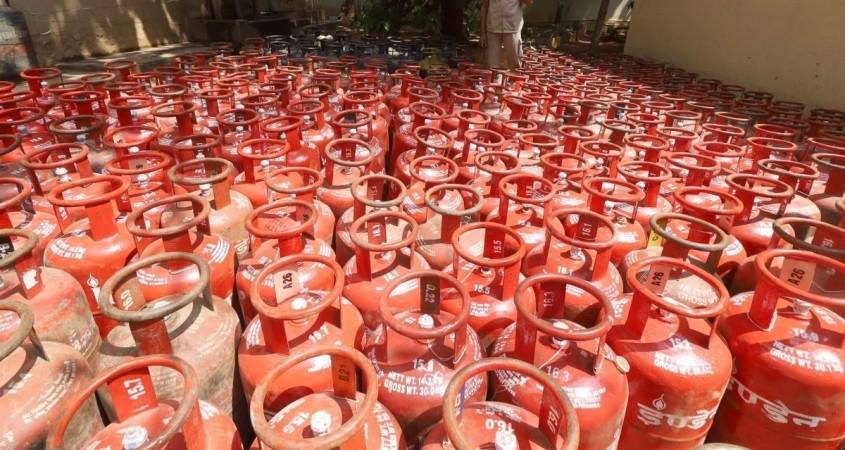
The government has increased domestic LPG production by about 25 per cent and is directing the entire output towards household consumers to ensure uninterrupted cooking gas supply amid the evolving situation in West Asia, officials said on Wednesday.
According to the Ministry of Petroleum and Natural Gas, the government issued an order on March 8 asking refineries and petrochemical complexes to maximise LPG production and divert key hydrocarbon streams to the LPG pool.
Officials said India imports nearly 60 per cent of its LPG needs, and around 90 per cent of those imports usually pass through the Strait of Hormuz, which has been affected by recent developments in the region. To ensure essential supplies, priority is being given to domestic users, while non-domestic LPG is being reserved for critical sectors such as hospitals and educational institutions.
A three-member committee consisting of executive directors from Indian Oil Corporation Limited, Hindustan Petroleum Corporation Limited, and Bharat Petroleum Corporation Limited has been formed to review LPG allocations to restaurants, hotels and other commercial users and ensure fair distribution.
The government said the price of a domestic LPG cylinder in Delhi currently stands at Rs 913 after a recent Rs 60 increase. However, beneficiaries of the Pradhan Mantri Ujjwala Yojana continue to pay Rs 613 per cylinder. Officials said that for a PMUY household, the recent price increase works out to less than 80 paise per day.
To support oil marketing companies, the government has approved compensation of Rs 30,000 crore for LPG under-recoveries. Authorities have also noticed some panic booking and hoarding behaviour by consumers, though the normal delivery cycle remains around two and a half days.
To prevent diversion of cylinders at the distributor level, the Delivery Authentication Code system is being expanded to cover about 90 per cent of LPG consumers. As a temporary measure to manage demand, the minimum gap between LPG bookings has also been increased from 21 days to 25 days.
Officials also said India's overall crude oil supply remains secure. The country consumes around 55 lakh barrels of crude oil every day and imports from nearly 40 countries. Due to diversified sourcing, about 70–75 per cent of crude imports now come from routes outside the Strait of Hormuz, compared to about 55 per cent earlier.
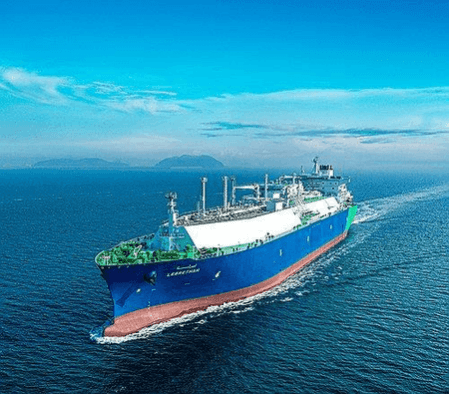
Meanwhile, two liquefied natural gas (LNG) cargoes are on their way to India to augment supplies for domestic consumers as public sector oil and gas companies step up imports from outside the Middle East amid the ongoing Iran conflict.
Joint Secretary in the Petroleum and Natural Gas Ministry, Sujata Sharma, said at a press conference that procurement through alternative routes is underway to secure supplies. "Crude supply remains secure. Volumes secured today exceed what normally would arrive from the Strait of Hormuz," she said.
Sharma also said refineries are operating at the highest capacity utilisation, with some even running at more than 100 per cent capacity. India's total gas consumption stands at 189 mmscmd, of which 97.5 mmscmd is produced domestically, while the rest is imported. Around 47.4 mmscmd supply has been affected due to force majeure conditions triggered by the Iran war.
Concerns over natural gas shortages arose after Qatar paused production following attacks launched by Iran. The Gulf nation is India's largest supplier of liquefied natural gas.
Petroleum Minister Hardeep Singh Puri had earlier assured consumers that there is no shortage of LPG for household kitchens. The Centre has also issued orders under the Essential Commodities Act to ensure uninterrupted supply of piped natural gas for household kitchens, LPG, and CNG for transport on top priority amid disruptions caused by the Middle East conflict.
The government said priority allocation of natural gas will be maintained, subject to operational availability, to meet the average six-month consumption for domestic piped natural gas supply, compressed natural gas for transport, LPG production and other essential pipeline operations.
(With inputs from IANS)