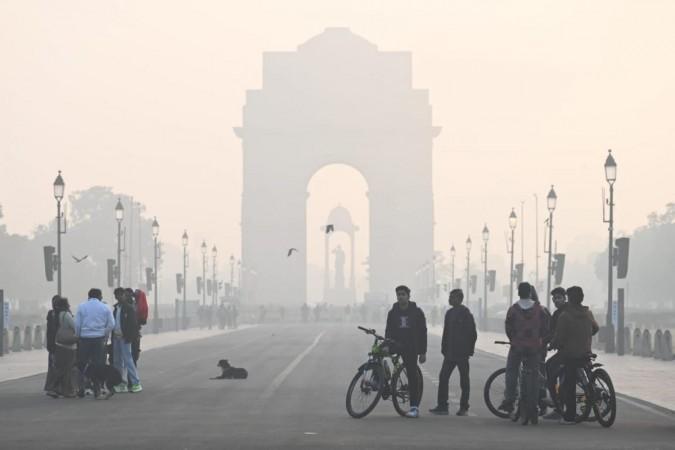
People across Delhi-NCR are facing a double whammy of biting cold and severe air pollution on Tuesday. While the India Meteorological Department (IMD) has issued orange and yellow alerts due to an ongoing cold wave, the Air Quality Index (AQI) remains at dangerously high levels in several areas.
According to the IMD, a cold wave is likely to persist throughout January 13 and 14 across Delhi-NCR. During this period, the maximum temperature will hover around 20 degrees Celsius, while the minimum temperature can drop to as low as 4 degrees Celsius. The situation has been further aggravated by extremely high humidity levels, which have reached 97 to 98 per cent during the morning hours.
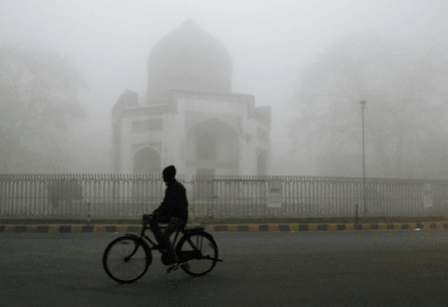
The combination of cold winds and high humidity has intensified the chill, making the weather feel harsher than the actual temperature. Although a slight temperature rise is expected from January 15, with the minimum temperature likely to increase to around 6 degrees Celsius, moderate to dense fog is forecast during the early morning and night hours, potentially affecting visibility and transportation.
Meanwhile, the air pollution situation remains a major concern. Data from monitoring stations operated by the Central Pollution Control Board (CPCB) and State Pollution Control Boards indicate that the AQI has crossed the 400 mark in several parts of the national capital, placing air quality in the 'severe' category. Anand Vihar recorded an AQI of 411, Rohini 397, Chandni Chowk 380, Bawana 378, Wazirpur 375, and Ashok Vihar 366.
Other areas also reported alarming AQI levels, with Alipur at 322, R.K. Puram at 365, Vivek Vihar at 366, Sonia Vihar at 334, and Shadipur at 309. Even locations with comparatively lower pollution, such as Sri Aurobindo Marg, recorded an AQI of 274, which still falls under the 'poor' category.
In neighbouring NCR cities, air quality remained equally concerning. Noida recorded AQI levels of 357 in Sector-1, 339 in Sector-116, 340 in Sector-125, and 307 in Sector-62. In Ghaziabad, Indirapuram recorded an AQI of 324, while Sanjay Nagar stood at 309.
Union Minister for Environment, Forest and Climate Change (EFCC) Bhupender Yadav on Monday chaired a high-level review meeting to assess the Delhi government's action plans for tackling air pollution across the NCR, stressing the need for sustained, long-term measures rather than short-term fixes.
The meeting, part of the Centre's annual review mechanism, was attended by Delhi Chief Minister Rekha Gupta, Union Minister of State (EFCC) Kirti Vardhan Singh, Delhi Environment Minister Manjinder Singh Sirsa and senior officials from the Ministry of Environment, Forest and Climate Change (MoEFCC), the Delhi government and allied agencies.
Health experts warn that prolonged exposure to such polluted air can significantly increase the risk of respiratory and cardiovascular illnesses, particularly among children, the elderly, and individuals with pre-existing health conditions. Doctors have advised people to avoid outdoor activities unless absolutely necessary, wear protective masks, and take adequate precautions against the cold. Authorities have also urged residents to follow pollution control guidelines and remain cautious during this critical period.
(With inputs from IANS)