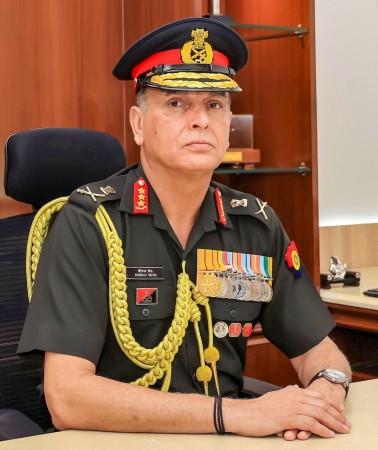
As Lieutenant General Dhiraj Seth, PVSM, UYSM, AVSM, an Armoured Corps veteran with nearly four decades of distinguished service, prepares to assume office as the 31st Chief of the Army Staff on 30 June 2026, India confronts a strategic landscape of profound complexity. Succeeding General Upendra Dwivedi, this NDA alumnus and first Armoured Corps officer in the top role in nearly three decades brings unparalleled experience across desert operations, strike formations, counter-insurgency in Jammu and Kashmir, the Sudarshan Chakra Corps, Delhi Area, South Western Command, Southern Command, and most recently as Vice Chief. His tenure arrives at a decisive moment when the Indian Army must evolve from a formidable traditional force into a multi-domain, technology-dominant instrument of national power.
General Seth inherits momentum from the ongoing "Decade of Transformation" yet faces the urgent task of accelerating it. The battlefield of tomorrow demands not incremental adjustments but a fundamental reimagination of doctrine, organization, technology, and culture. His leadership will determine whether the Army achieves decision superiority in an era defined by velocity, integration, and cognitive dominance.
Ongoing Major Programs and the State of Combat Readiness
The Army advances critical modernization initiatives including Arjun Mk-1A and Mk-2 tanks, T-90 upgrades, artillery systems such as ATAGS and K9 Vajra, infantry modernization under F-INSAS and successor programs, air defence enhancements, and network-centric warfare capabilities. Recent exercises highlight improving synergy among precision fires, unmanned systems, and command networks, particularly in desert and high-altitude environments.
Readiness, however, extends beyond platforms. It requires sensor-to-shooter cycles compressed to seconds, robust electronic warfare resilience, contested logistics endurance, and seamless integration across domains. The designation of 2026 as the "Year of Networking and Data Centricity" offers a vital foundation. General Seth must ensure data becomes the decisive currency of warfare, transforming information into actionable dominance at every echelon. Indigenous innovation through iDEX, ADITI, and Army Design Bureau challenges must scale rapidly to reduce vulnerabilities in critical supply chains.
Core Challenges, Strategic Opportunities, and Inescapable Imperatives
India confronts a two-front threat environment complicated by nuclear dimensions, hybrid tactics, and grey-zone aggression. Persistent internal security commitments strain resources, while budgetary realities and procedural delays in acquisitions limit modernization pace. Manpower intensity competes with the need for agile, technology-enabled structures.
Opportunities emerge powerfully from India's demographic strengths, a burgeoning private defence ecosystem, and advancing self-reliance. Defence exports signal growing industrial maturity. The inescapable imperative remains full theatreisation: integrated commands that transcend service silos for genuine jointness under the Chief of Defence Staff framework. This reform enables unified planning and execution across land, air, maritime, cyber, space, and electromagnetic domains, essential for confronting sophisticated adversaries.
The Evolving Character of Conflict and Homeland Security
Future wars will fuse conventional operations with hybrid, non-kinetic, and autonomous elements. Lessons from recent global conflicts underscore the power of drone swarms, AI-driven autonomy, directed energy systems, space denial, cyber-electromagnetic superiority, and information warfare. In India's context, high-altitude, mountainous, and desert terrains add unique demands for distributed, resilient, and attrition-resistant forces.
Homeland security challenges encompass proxy infiltration, radicalization, critical infrastructure vulnerabilities, and disaster response. The Army's aid-to-civil-authority role must become more specialized and technology-augmented, preserving combat units for primary missions while enhancing border surveillance and rapid intervention. Maintaining the force's apolitical and secular character remains non-negotiable, demanding vigilant leadership to insulate professional ethos from extraneous influences.
Emerging Technologies, Adversary Advances, and Force Re-design
China's People's Liberation Army pursues "intelligentized" warfare with emphasis on precision strike, anti-access strategies, and multi-domain integration. Pakistan blends asymmetric tools, drones, and imported platforms into hybrid campaigns. India must respond with asymmetric edges: indigenous AI and quantum technologies, hypersonic systems, loitering munitions, soldier augmentation, and resilient networks.
Force design demands courageous evolution. Lighter, agile integrated battle groups should replace heavier static deployments where technology permits substitution. Greater emphasis on unmanned systems, robotics, special operations, and special forces will multiply effectiveness. Optimizing manpower through civilian integration in non-combat roles, targeted recruitment of technology specialists, and selective right-sizing will create a more lethal yet sustainable force. The goal is not fewer soldiers but exponentially greater combat power through integration and innovation.
Alliances, Major Power Dynamics, Military Diplomacy, and Velocity Imperatives
Strategic autonomy defines India's approach. Partnerships such as the Quad enhance maritime awareness, technology cooperation, and non-traditional security without formal alliances. Recent experiences affirm the value of flexible arrangements: logistics agreements, intelligence sharing, and joint exercises that build interoperability while preserving independence.
Military diplomacy through training exchanges, joint exercises, and defence industry collaboration must project Indian influence across the Indo-Pacific and Global South. Managing relations with major powers requires finesse: deepening technology and capability ties with the United States, France, Israel, and others, while sustaining functional cooperation with Russia and engaging emerging partners.
The imperatives of pace, speed, and velocity tower above all. Bureaucratic delays and excessive risk aversion have historically exacted costs. Empowered project teams, outcome-focused accountability, and streamlined acquisition reforms are essential. Atmanirbharta must transition fully from policy to ingrained practice, with the private sector driving innovation and production scale.
Higher Defence Architecture, Intellectual Capital, Budget Efficiency, and Broader Ecosystem
General Seth's contributions within the National Security Council ecosystem, alongside the NSA, NSAB, and NSCS, must champion integrated capability planning and long-term structuring. Engaging think tanks such as IDSA and CLAWS, alongside veterans, for rigorous red-teaming, scenario analysis, and fresh ideas will strengthen decisions without diluting command responsibility.
Budgetary discipline requires zero-based evaluations, rigorous outcome auditing, and prioritization of high-leverage areas including networks, electronic warfare, munitions reserves, and unmanned systems. National economic growth remains the ultimate enabler of military power; a thriving economy underpins credible deterrence and sustained modernization.
Resolving longstanding issues, from human resource policies to inter-service coordination, calls for decisive yet inclusive leadership. Non-military actors, including religio-political elements, must encounter firm boundaries to preserve institutional integrity.
A Visionary Mandate for 2030 and Beyond
General Dhiraj Seth assumes command as India seeks not merely to defend its interests but to shape a favourable regional order. The Army he stewards must emerge as a multi-domain force capable of deterring through superior readiness and prevailing through integrated, technology-amplified effect across physical and cognitive battlefields.
This transformation requires intellectual boldness to question inherited orthodoxies, organizational agility to innovate and learn rapidly, and unwavering commitment to the timeless values of the profession of arms amid societal change. Success will hinge on achieving genuine decision dominance, where superior awareness, speed, and precision render traditional mass less decisive.
The nation entrusts its Army with its most precious asset: the security and sovereignty that underwrite its rise. Adversaries observe closely. History records outcomes. General Seth's legacy will be measured by his success in forging the force India requires for an uncertain future: agile, integrated, self-reliant, and invincible in purpose.
The moment demands unyielding velocity. The mandate is transformation. The opportunity is historic.
[Major General Dr. Dilawar Singh, IAV, is a distinguished strategist having held senior positions in technology, defence, and corporate governance. He serves on global boards and advises on leadership, emerging technologies, and strategic affairs, with a focus on aligning India's interests in the evolving global technological order.]