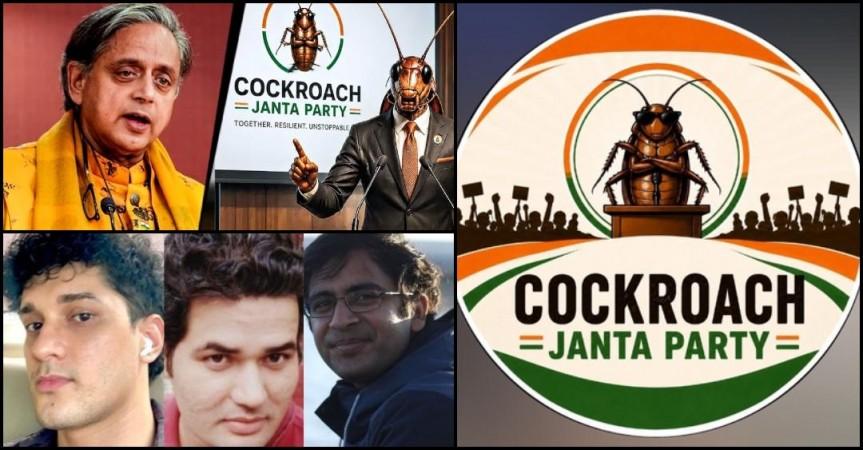
The Cockroach Janata Party (CJP), described by founder Abhijeet Dipke as a "youth pressure group," on Wednesday announced three prominent social media influencers as its official spokespersons. The move comes ahead of a proposed protest at Delhi's Jantar Mantar on June 6, where the group plans to demand the resignation of Union Education Minister Dharmendra Pradhan over alleged lapses in examinations, including NEET, CBSE and recruitment tests.
The announcement follows support extended to the movement by activist Sonam Wangchuk and marks a significant step in giving the group a more structured organisational setup after it gained widespread attention through a satirical social media post last month.
Three Influencers Named as Spokespersons
Investigative journalist Saurav Das has been appointed Chief Spokesperson of the movement. According to the group, Das brings years of experience in reporting and investigating legal, judicial and social issues. The CJP also highlighted his role in leading the anti-pollution protests at India Gate in November 2025.
Joining him as spokespersons are political researcher, author and filmmaker Vijeta Dahiya, and Ashutosh Ranka, an alumnus of IIT Kanpur and the London School of Economics who previously worked with global consulting firm McKinsey in London.
The party said Dahiya brings extensive experience in political research and strategic analysis. She is also a content creator, filmmaker and author of two best-selling books.
This is serious... Cockroaches are literally planning for violence, a riot type situation in Delhi....
— Mr Sinha (@Mrsinha) June 4, 2026
For now, this clown should be identified and grilled... @DelhiPolicepic.twitter.com/vldtIHlsBv
Ranka, meanwhile, has been associated with several public campaigns in Jaipur focusing on environmental, educational and youth issues, including movements linked to Dol Ka Badh, the Amaira suicide case and the NEET paper leak controversy.
CJP Rejects Claims of Violent Protest Plans
The appointments come amid viral social media claims alleging that the Cockroach Janata Party and its supporters are planning violent demonstrations in Delhi. Some posts have claimed that participants were instructed to bring sticks and "turn India into Nepal."
The CJP has denied these allegations. The controversy emerged as Dipke prepares to return to India on June 6 to lead the protest in the national capital.
In multiple public statements and videos, Dipke has urged supporters to follow constitutional and democratic methods. He has repeatedly described the planned gathering at Jantar Mantar as a peaceful demonstration and has said that the organizers are seeking official permission for the event.
During the group's first press conference on June 3, spokesperson Saurav Das said the movement was seeking accountability from a system where "rot has set in."

Why Are There No Women Spokespersons?
Responding to questions about the absence of women among the newly appointed spokespersons, Dipke said the organization had offered the role to several female members.
"We did offer the role to our female team members, but many told us they would prefer to remain actively involved without being at the forefront because of the online attacks and threats we are receiving. We respect their decision," Dipke said.
He added that the movement remains open to young women who wish to take on spokesperson roles in the future.
Shashi Tharoor's Advice to Gen Z
Meanwhile, Congress MP Shashi Tharoor weighed in on the movement in a column published in The Indian Express.
Tharoor acknowledged that Dipke's movement has resonated with many young Indians frustrated by perceived shortcomings in the political system. However, he cautioned against confusing social media activism with long-term political change.
"Instagram is your town square. But it is not a ballot box," Tharoor wrote, adding that while the anger and frustration of young people are understandable, lasting change requires strategy, organization and sustained engagement.
He described the emergence of the Cockroach Janata Party as a powerful symbol of young people's dissatisfaction with institutions that often appear unresponsive to their concerns.
Tharoor's Suggestions for Gen Z
Tharoor urged young Indians to channel their energy into constructive action through:
Holding elected representatives accountable
He encouraged citizens to engage with local MPs and MLAs and use the Right to Information (RTI) Act to demand transparency.
Creating institutional pressure:
He advised organising around specific and actionable demands that can attract media attention and compel lawmakers to respond.
Professionalising advocacy efforts:
Young activists should work alongside student unions, legal groups and policy organisations that can draft petitions and pursue legal remedies.
Participating in mainstream politics:
According to Tharoor, meaningful change often occurs through continuous participation in democratic processes rather than through social media campaigns alone.
Concluding his message, Tharoor urged young Indians not to embrace frustration as a permanent identity and instead work with political leaders and institutions to build a system that respects the dignity of students, job seekers and ordinary citizens.