
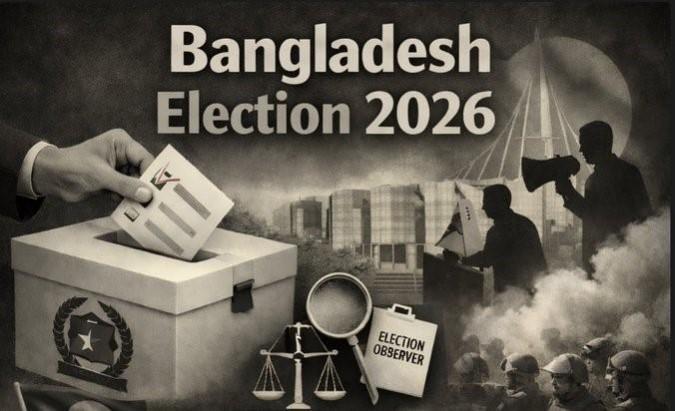
As political tensions mount ahead of the February 12 elections, the radical Islamist party Jamaat-e-Islami and the newly formed National Citizens Party (NCP) have accused sections of the civil administration under the Yunus regime of working in favour of the Bangladesh Nationalist Party (BNP), local media reported.
Jamaat, during a meeting of its central executive council, said the conditions for a free, fair, and neutral election were still absent in the country, The Daily Star reported.
"Allegations are emerging from different regions that some government officials within the administration are working in favour of a particular party. Political leaders and activists are still being killed in broad daylight," a press release issued by Jamaat's central publicity department stated.
The party demanded strict measures to ensure administrative neutrality and urged the Election Commission (EC) and law enforcement agencies to perform their duties without partisan bias.
Echoing similar concerns, NCP Chief Coordinator Nasiruddin Patwary, speaking at a rally at Dhaka University, alleged that the civil administration had begun "leaning towards a specific party, the BNP."
"When Tarique Rahman arrived in Bangladesh, we welcomed him. But we saw government officials leaving their offices to greet him by the roadside," Patwary was quoted as saying.
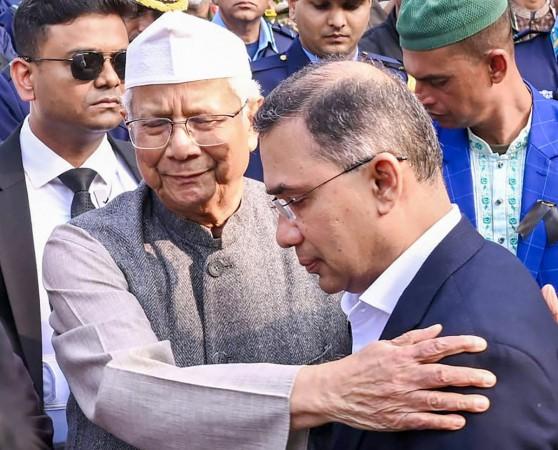
Meanwhile, opinion polls indicate that the scales are tilting decisively in favour of the BNP. While surveys last month suggested a close contest between the BNP and Jamaat-e-Islami, recent data shows the BNP surging ahead, with nearly 70 per cent of respondents saying they would vote for the party headed by the late Khaleda Zia.
Jamaat-e-Islami has slipped to 19 per cent support, highlighting a widening gap between the two parties. The NCP trails far behind, with just 2.9 per cent support, according to an opinion poll conducted by Eminence Associates for Social Development (EASD).
Poll observers attribute the BNP's rise to multiple factors, including a sympathy wave following Khaleda Zia's death and the return of her son, Tarique Rahman, which has energised party cadres on the ground.
Analysts also point to growing public fatigue with Jamaat, blaming the party for prolonged violence and instability. An Intelligence Bureau official said many Bangladeshis believe that a Jamaat-led government would compromise the country's independence, with Pakistan's ISI exerting significant influence.
"The average Bangladeshi wants prosperity and stability, not a nation driven by religious extremism. There is widespread fear of an Iran-style system if Jamaat comes to power," the official noted.
The survey also revealed a major political shift, with many supporters of Sheikh Hasina abandoning the Awami League—now banned from contesting the elections—and moving towards the BNP. According to the poll, 60 per cent of former Awami League supporters plan to vote for the BNP, while 25 per cent are backing Jamaat. The Jatiya Party, meanwhile, has just 1.4 per cent support.
The BNP continues to perform strongly among women voters, with 71 per cent expressing support. The party dominates in Rajshahi and Chattogram, where it is projected to secure nearly 70 per cent of the vote. Overall, 77 per cent of respondents said they were confident that the BNP would form the next government.
Officials said Jamaat is rapidly losing its grip, with its politics of religion and alleged ISI backing working against it. While its student wing, Islamic Chhatra Shibir, had earlier swept university elections, the national mood appears to have shifted sharply.
Another official remarked that by following an ISI-driven script, Jamaat had pushed the country towards chaos. "Most Bangladeshis want a peaceful nation governed by the Constitution, not Sharia law," the official said.
India, meanwhile, is hopeful of a BNP-led government. Following Khaleda Zia's death, Prime Minister Narendra Modi sent a condolence message to Tarique Rahman through External Affairs Minister S. Jaishankar. New Delhi has maintained channels with BNP leaders, and experts believe a working bilateral relationship would follow if the party comes to power.
Intelligence officials, however, warned that violence could escalate as the Jamaat–ISI combine may attempt to derail the polls by creating fear and chaos to justify postponement.
In the past 18 days, targeted violence has led to the killing of six Hindus. In the last 24 hours alone, two Hindu men were murdered by radical elements. Agencies fear such incidents could intensify as polling day approaches.
"The borders will need to remain on high alert. There is every possibility that the ISI will attempt to export instability into India," an Intelligence Bureau official cautioned.
(With inputs from IANS)