Although there is a clear divide among the residents of the Union Territory of Jammu and Kashmir over the "benefits" and "losses" of the abrogation of Articles 370 and 35-A, August 5 is nothing short of a festival for the Valmiki community of Jammu. For them, this day in 2019 marked the restoration of the basic human rights that had been denied to this marginalised community for over six decades.
"For the last six decades, our community members had waited for this day when we would be treated at par with other residents of Jammu and Kashmir," said Gharu Bhatti, President of the Valmiki Samaj Jammu and Kashmir, while speaking to The International Business Times.
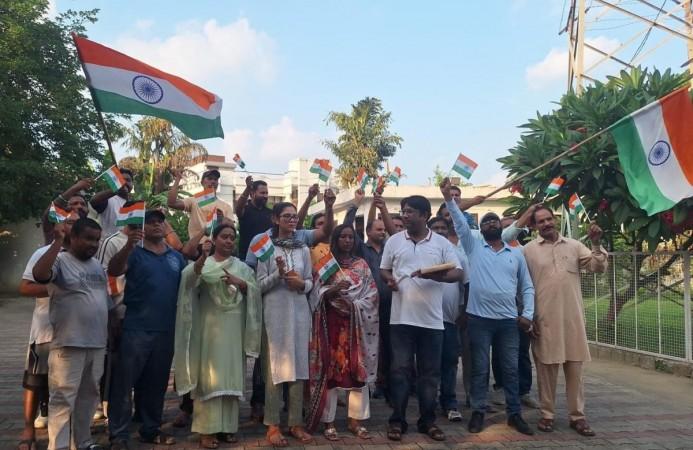
Bhatti, along with other members of his community, was gathered at the Maharishi Valmiki temple at Jammu's Gandhi Nagar area to celebrate the 7th anniversary of the abrogation of Article 370 and Article 35-A.
Pointing towards a portrait of Dr B.R. Ambedkar, Radhika lamented that her community had remained deprived of constitutional rights for 63 long years.
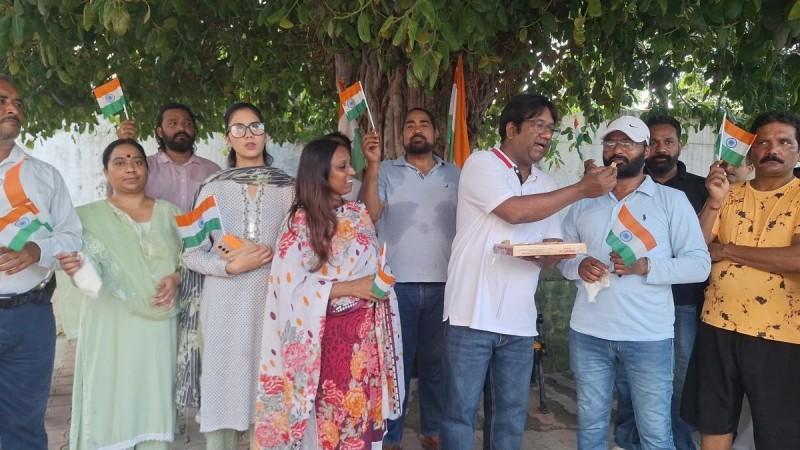
Since 1957, the Valmiki community had borne the brunt of the discriminatory policies of successive regimes. Gharu Bhatti was among those who challenged the constitutional validity of Article 35-A before the Supreme Court.
"We had been living in Jammu since 1957 but were deprived of all constitutional and human rights because of the so-called separate constitution of the erstwhile state. Even our highly qualified youth were barred from applying for government jobs. They were eligible only for the post of sweeper in Jammu and Kashmir," he said.
He maintained that the abrogation of Article 35-A had transformed the future of the coming generations of the Valmiki community.
"It was the result of a 63-year-long struggle that the government ultimately recognised us as permanent residents by granting us domicile certificates. These certificates have liberated our community from decades of discrimination," he said.
Recalling the history of the community, Gharu Bhatti said that in 1957, 272 Valmiki families were brought to the erstwhile State of Jammu and Kashmir from Amritsar and Gurdaspur in Punjab to work as sanitation workers.
However, for decades they remained deprived of several fundamental rights. They were not recognised as permanent residents of the state and were denied the right to purchase land, vote, obtain caste certificates, pursue businesses, secure admission to professional courses, or avail themselves of various welfare schemes of both the state and central governments.
He further said that the historic decision taken on August 5, 2019, by Prime Minister Narendra Modi and Union Home Minister Amit Shah brought an unprecedented transformation to the lives of the Valmiki community in Jammu and Kashmir.
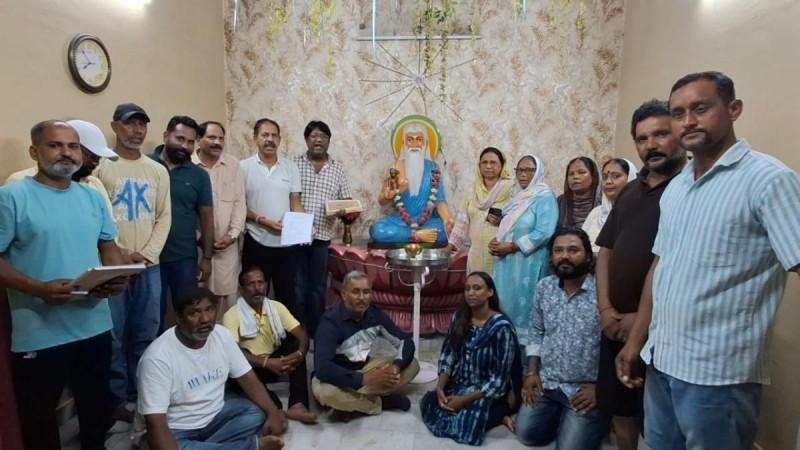
"Today, the community enjoys the right to obtain domicile and caste certificates; exercise voting rights; own land; apply for higher government jobs; undertake any business; pursue professional courses; and avail themselves of welfare schemes of both the Union Territory and the Central Government," he said.
In an era when equality and social justice are considered fundamental democratic values, the third generation of the Valmiki community was virtually living in bondage. They had little choice but to work as sweepers in government departments in the erstwhile State of Jammu and Kashmir, which was reorganised into the Union Territories of Jammu and Kashmir and Ladakh under the Jammu and Kashmir Reorganisation Act, 2019.
The ordeal of the community began in 1957 when they were brought from Punjab to work as Safai Karamcharis. That year, local sanitation workers had gone on an indefinite strike. To resolve the crisis, the then Wazir-e-Azam (Prime Minister) of Jammu and Kashmir, Bakshi Ghulam Mohammad, convened an emergent cabinet meeting, during which it was decided to bring sanitation workers from Punjab. Before 1965, the head of the Jammu and Kashmir government was designated as the Prime Minister.
More than 250 Valmiki families were brought from the Gurdaspur and Amritsar districts of Punjab with an assurance that they would be granted the same constitutional rights as other citizens of the state.
However, although they were promised Permanent Resident Certificates (PRCs) by the then prime minister of the state, the assurances remained unfulfilled for decades.
Following the abrogation of Article 35-A, the Permanent Resident Certificate (PRC) system was abolished and replaced by the domicile law, making members of the Valmiki community eligible to obtain domicile certificates and enjoy the same rights as other residents of the Union Territory.
The abrogation of Article 35-A has ushered in hope for a more dignified and secure future for the coming generations of the Valmiki community living across Jammu province. Today, a large number of Valmiki youth are pursuing higher education in diverse disciplines and preparing for recruitment examinations conducted by the Jammu and Kashmir Services Selection Board (JKSSB) and the Jammu and Kashmir Public Service Commission (JKPSC), opportunities that were previously beyond their reach.