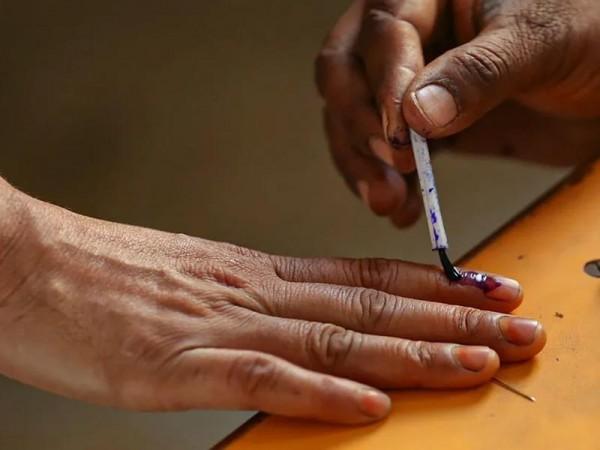
Assam's forthcoming Assembly election must be understood not as a routine democratic contest but as the continuation of a profound political reordering that has unfolded over the past decade. Unlike states where anti-incumbency or leadership popularity dominate electoral calculus, Assam's politics today is shaped by a far more durable architecture: the fusion of identity redefinition, institutional control, and electoral process management. The 2026 election will therefore test not merely voter sentiment, but the resilience of an entire governance and political model that has embedded itself deeply into the state's administrative, social, and cultural life.
At the heart of Assam's current political stability lies the BJP's successful construction of a broad but carefully tiered coalition, anchored in Assamese sub-nationalism rather than pan-Indian ideological abstraction. The party's most significant achievement has been its ability to reframe Assamese identity away from ethnic pluralism toward a more homogenised narrative of cultural protection, demographic anxiety, and civilisational continuity. This narrative does not operate only during elections; it is continuously reinforced through governance choices, cultural policy, language symbolism, and public discourse. As a result, electoral loyalty in Assam is no longer episodic but structural, especially among Assamese-speaking Hindus, tea garden communities that have been politically mainstreamed, and sections of indigenous tribal groups.
The role of citizenship-centric politics remains pivotal, but its function has evolved. Instruments such as NRC, CAA discourse, and voter verification exercises are no longer merely policy initiatives; they have become psychological frameworks that shape political alignment. Even where these processes are incomplete or legally contested, their political effect is substantial. They generate a persistent sense of insecurity among minority communities while simultaneously consolidating a perception among the majority that the ruling dispensation alone is capable of safeguarding identity and territory. In electoral terms, this has resulted in a muted opposition mobilisation in large parts of Lower Assam and Barak Valley, not because discontent is absent, but because political confidence has been systematically eroded.
Unlike Kerala, where electoral processes subtly tilt margins, in Assam the administrative ecosystem itself has become an extension of political strategy. The boundaries between governance, law enforcement, and political messaging are increasingly blurred. Policing actions, land eviction drives, encroachment narratives, and development announcements operate within a single communicative frame that reinforces authority and decisiveness. This produces a strong incumbency advantage, particularly in rural and semi-urban constituencies where state presence is the primary interface between citizens and power.
Recent panchayat and local body elections further confirm this structural advantage. BJP dominance in these contests is not merely numerical; it reflects organizational saturation. Booth-level networks, beneficiary mapping through welfare schemes, and local elite co-option have ensured that opposition parties struggle even to field credible candidates in many areas. Where the Congress or AIUDF manage to perform respectably, it is often due to localised personal influence rather than party strength. This indicates a critical asymmetry: while opposition votes exist, opposition structures do not.
When Assam's Assembly constituencies are examined through a realistic lens, roughly 60 to 65 seats appear firmly within the BJP-led alliance's grasp. These include Upper Assam, large parts of Central Assam, and mixed rural belts where welfare delivery, identity politics, and organisational depth converge. Victory margins here are not always overwhelming, but they are consistent enough to withstand moderate anti-incumbency. Another 15 to 20 seats can be classified as leaning towards the ruling alliance, contingent on continued cohesion among regional partners and the absence of major governance shocks.
The opposition's strength is concentrated in approximately 35 to 40 constituencies, largely in minority-dominated areas of Lower Assam and parts of Barak Valley. Even here, however, the opposition vote is fragmented between Congress, AIUDF, and smaller regional forces, diluting its effectiveness under first-past-the-post dynamics. Attempts at opposition unity face deep trust deficits, leadership rivalry, and ideological incompatibility. Without a credible, unified front, even strong minority consolidation struggles to translate into seat gains.
A smaller but strategically important category comprises 10 to 15 marginal or swing seats, where local factors, candidate credibility, and turnout variations could influence outcomes. These constituencies are typically urbanising, demographically mixed, or economically aspirational. While they offer the opposition theoretical opportunity, the BJP's superior financial resources, media dominance, and campaign professionalism give it a decisive edge. Money in Assam does not merely amplify messaging; it structures visibility, logistics, and voter contact in a state with challenging geography and infrastructure gaps.
Media plays a particularly consequential role. Local vernacular media, social media ecosystems, and narrative alignment between state and national platforms ensure that the ruling party's framing of events becomes the default lens through which political reality is interpreted. Counter-narratives struggle to gain oxygen, and when they do, they are often delegitimised as destabilising or anti-Assamese. This creates an electoral environment where dissent exists but lacks narrative legitimacy.
Looking ahead, the most likely outcome of the 2026 election is BJP retention with a comfortable, though not necessarily expanded, majority. Anti-incumbency may surface around issues such as unemployment, inflation, or local grievances, but these are unlikely to coalesce into a statewide wave capable of overcoming structural advantages. A reduced majority remains possible if opposition coordination improves marginally, but a transfer of power would require an extraordinary convergence of unity, leadership credibility, and narrative disruption, none of which currently appear imminent.
The deeper significance of Assam 2026 lies beyond seat counts. It represents a test case for a governance model where identity, administration, and electoral process form a single continuum of power. Whether this model continues to deliver political stability or begins to generate democratic fatigue will shape not only Assam's future but also broader patterns of state politics in India's peripheries.
In essence, Assam is no longer a battleground state. It is a consolidated state, where elections confirm power rather than contest it. The real question in 2026 is not who wins, but how enduring this consolidation proves to be in the face of social complexity, economic pressures, and the long-term costs of political centralisation.
[Major General Dr. Dilawar Singh, IAV, is a distinguished strategist having held senior positions in technology, defence, and corporate governance. He serves on global boards and advises on leadership, emerging technologies, and strategic affairs, with a focus on aligning India's interests in the evolving global technological order.]