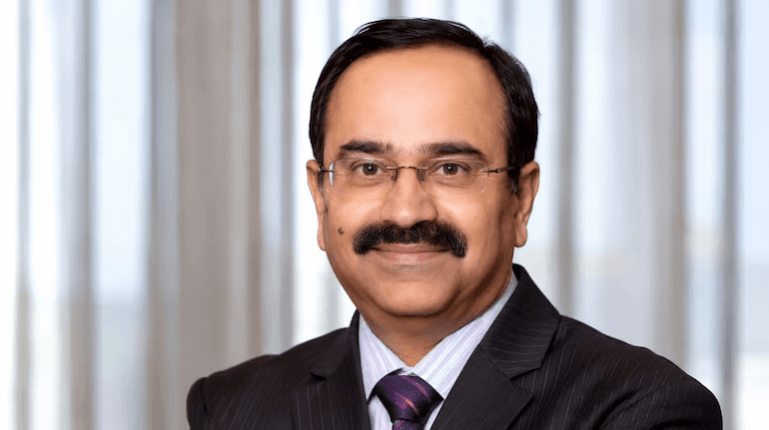
The appointment of Anup Bagchi as HDFC Bank's first external CEO represents more than routine succession planning. It signals a fundamental recognition that India's largest private lender faces structural challenges requiring fresh perspectives, not incremental improvements from within. Bagchi's three-year term beginning 27 October 2026 will test whether outsider leadership can successfully navigate post-merger integration, margin compression, governance restoration and cultural alignment at a bank whose DNA has been shaped by 30 years of Aditya Puri's tenure.
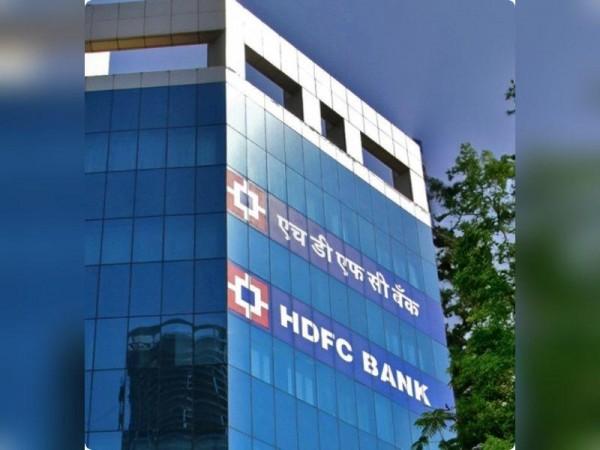
HDFC Bank's 32-year history of internal promotions created a distinctive organisational culture: risk-averse, process-driven, and deeply loyal to institutional memory. This culture delivered consistent returns but also bred complacency. The mega-merger with HDFC Ltd in 2023 exposed structural weaknesses: elevated loan-to-deposit ratio at 95.8 percent, narrowing net interest margins, slowing core income growth, and governance turbulence following Chairman Atanu Chakraborty's March 2026 resignation.
Bagchi faces the outsider's classic dilemma. Move too fast, and he alienates the legacy organisation that made HDFC Bank successful. Move too slow, and he fails to address the urgent challenges demanding immediate attention. His appointment as Additional Director on 2 October, three weeks before formally taking charge, suggests the board wants him to begin cultural familiarisation without appearing to undermine Jagdishan's authority during the transition.
Bagchi outlined six priorities on 4 October: deposits, profitability, technology, trust, talent and customer experience. These sound like standard banking CEO talking points. But the specific challenges behind each reveal the depth of HDFC Bank's structural problems.
Deposits: The 95.8 percent loan-to-deposit ratio is dangerously close to regulatory comfort limits. HDFC Bank's historical advantage was its low-cost CASA franchise, built over three decades through relationship banking. But digital disruption, fintech competition and post-merger balance sheet complexity have eroded this advantage. Bagchi must accelerate retail deposit growth while maintaining cost discipline. The bank's target of reducing the ratio to 90 percent requires not just deposit mobilisation but also judicious credit growth management.
Profitability: Net interest margin compression is an industry-wide phenomenon driven by deposit rate competition and asset yield pressure. But HDFC Bank's premium valuation multiple demands superior profitability metrics. The bank's cost-to-income ratio target of 30 percent is ambitious given technology investment requirements and branch expansion needs. Bagchi's insurance background at ICICI Prudential, where he achieved Rs 10,000 crore in Annualised Premium Equivalent and nearly 40 percent PAT growth in FY2025, demonstrates his ability to drive operational efficiency. The question is whether those skills translate to banking's different economics.
Technology: HDFC Bank's digital capabilities are strong but fragmented. The merger with HDFC Ltd added complexity: integrating legacy systems, harmonising customer data, and creating unified digital experiences. Bagchi's digital transformation experience at ICICI Bank is directly relevant, but HDFC Bank's technology stack differs from ICICI's. The real challenge is not technology deployment but technology integration across merged entities while maintaining operational continuity.
Trust: The governance turbulence following Chakraborty's resignation and the MSRDC deposit pricing episode damaged investor confidence. External law reviews gave HDFC Bank a clean bill of health, but perception lags reality. Bagchi's clean track record is an asset, but he must demonstrate transparent communication, consistent decision-making and visible accountability mechanisms. Regular investor interactions, starting with the 17 October Q2 results call, will be critical to rebuilding trust.
Talent: Leadership uncertainty has created attrition risks at senior levels. Bagchi must stabilise the management team while introducing fresh perspectives where needed. His ICICI pedigree brings credibility but also creates expectations. Existing leaders may fear displacement; external hires may expect rapid promotion. Balancing these competing dynamics requires emotional intelligence, clear communication and visible commitment to meritocracy.
Customer Experience: HDFC Bank's premium positioning depends on superior customer experience. But service quality has deteriorated in recent years, with longer response times, complex grievance redressal and product usability issues. Bagchi's customer experience priority must translate to measurable improvements: reduced turnaround times, simplified processes, enhanced digital interfaces, and proactive problem resolution.
Bagchi's 34-year ICICI career spans treasury, retail banking, wholesale banking, investment banking, capital markets, wealth management, insurance and digital financial services. This breadth is unusual and valuable. But ICICI Group's culture differs fundamentally from HDFC Bank's. ICICI is aggressive, entrepreneurial, and comfortable with calculated risks. HDFC Bank is conservative, process-driven, and risk-averse.
His success at ICICI Prudential Life Insurance demonstrates operational excellence. But insurance economics differ from banking: longer liability duration, different risk profiles, and distinct regulatory frameworks. His digital transformation work at ICICI Bank is directly relevant, but HDFC Bank's technology stack, customer base and competitive positioning differ from ICICI's.
The critical question is whether Bagchi's ICICI-honed skills are transferable to HDFC Bank's different context. His academic credentials (B.Tech from IIT Kanpur and MBA from IIM Bangalore) suggest strong analytical capabilities. His regulatory committee experience indicates credibility with policymakers. But cultural fit and organisational leadership in a different environment remain unproven.
The RBI's swift approval under Section 35B of the Banking Regulation Act 1949, choosing Bagchi over internal candidate and Deputy MD Kaizad Bharucha, signals structural backing for an independent leader. The regulator has increasingly preferred external candidates for banks experiencing governance shifts, as seen with Rajiv Anand at IndusInd Bank.
But regulatory backing is conditional, not unconditional. The RBI expects transparent operations, robust risk management, adherence to prudential norms, and proactive communication. Bagchi's clean track record positions him well, but he must continuously earn regulatory confidence through performance, not rest on initial approval.
Pradeep Gupta, Chairman of Mindshare and veteran banking analyst, stated in his 3 October 2026 market commentary: "Bagchi's appointment is a bold move by HDFC Bank's board. His track record at ICICI Prudential shows he can drive profitable growth in complex organisations. The key test will be whether he can replicate that success in banking's different competitive dynamics while managing the cultural transition from insider to outsider leadership."
Dr. Raghuram Rajan, former RBI Governor and Professor at University of Chicago Booth School, observed in his 2 October 2026 column for Project Syndicate: "External CEO appointments in banking are rare for good reason: institutional knowledge matters. But when banks face structural challenges, fresh perspectives become essential. Bagchi's diversified experience across banking, capital markets and insurance positions him well, but success will depend on his ability to earn the trust of HDFC Bank's legacy organisation while driving necessary change."
Bagchi's three-year term will test whether an outsider can successfully lead India's most complex private bank. The specific targets are clear: increase loans faster than banking system, keep NIMs stable, reduce cost-to-income ratio to 30 percent, and lower loan-to-deposit ratio to 90 percent. These are ambitious but achievable if execution improves.
The RBI's backing is strong but must be continuously earned. Shareholders expect margin improvement, deposit growth and stock re-rating. Employees need cultural sensitivity and clear direction. Regulators demand compliance and stability. Customers expect service quality improvements. All these stakeholders must be satisfied simultaneously, a balancing act requiring exceptional leadership skills.
Bagchi has the experience, the mandate and the regulatory confidence. He now faces the hardest part: delivery. The success or failure of India's first external private bank CEO will influence succession planning across Indian banking for years to come. If he succeeds, expect more external appointments at major private banks. If he struggles, banks will retreat to internal promotions, and the opportunity for transformational change will be lost.
The stakes could not be higher. HDFC Bank's performance affects millions of depositors, borrowers, employees and shareholders. Its governance quality influences investor confidence in Indian banking broadly. Its success or failure will shape the future of private banking leadership in India. Bagchi's outsider status is both his greatest asset and his biggest challenge. He must prove that fresh perspectives can deliver better outcomes without destroying the institutional strengths that made HDFC Bank successful.
[Major General Dr. Dilawar Singh, IAV, is a distinguished strategist having held senior positions in technology, defence, and corporate governance. He serves on global boards and advises on leadership, emerging technologies, and strategic affairs, with a focus on aligning India's interests in the evolving global technological order.]








![Angry Jaya Bachchan pushes journalist's mic away during INDIA bloc protest [watch]](https://data1.ibtimes.co.in/en/full/839178/angry-jaya-bachchan-pushes-journalists-mic-away-during-india-bloc-protest-watch.jpg?w=220&h=138)