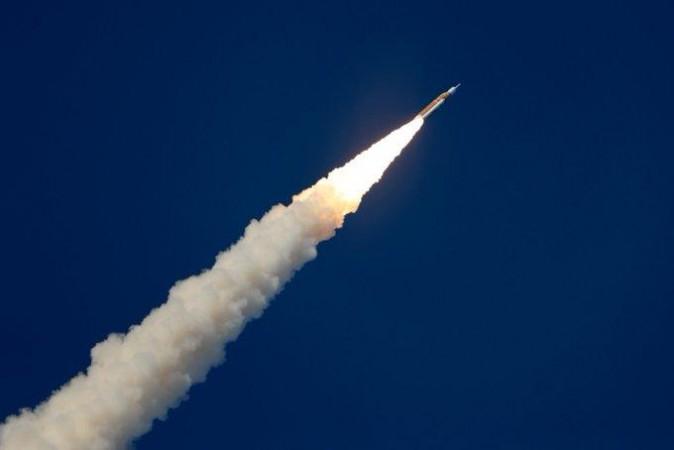
US President Donald Trump began his prime-time national address from the White House on Wednesday by saluting NASA for the successful launch of Artemis II, describing it as a bold American achievement in space.
"Let me begin by congratulating the team at NASA, and our brave astronauts on the successful launch of Artemis II," Trump said. "It will travel farther than any crewed rocket has ever flown. They are on their way, and God bless them."
His remarks came just hours after the historic liftoff, giving him an opportunity to highlight a key milestone of his second term.
However, a technical issue involving the spacecraft's only toilet was reported shortly after launch. Engineers are currently troubleshooting a malfunction in the Orion spacecraft's Universal Waste Management System during the ongoing 10-day mission.
According to NASA, the issue lies with a fan used in urine collection that has stopped functioning properly. Despite this setback, the agency confirmed that the system remains operational and can still be used for solid waste.
"The toilet fan is reported to be jammed," NASA spokesperson Gary Jordan said during live mission commentary. "Ground teams are now working on instructions to access and clear the fan to restore full functionality."
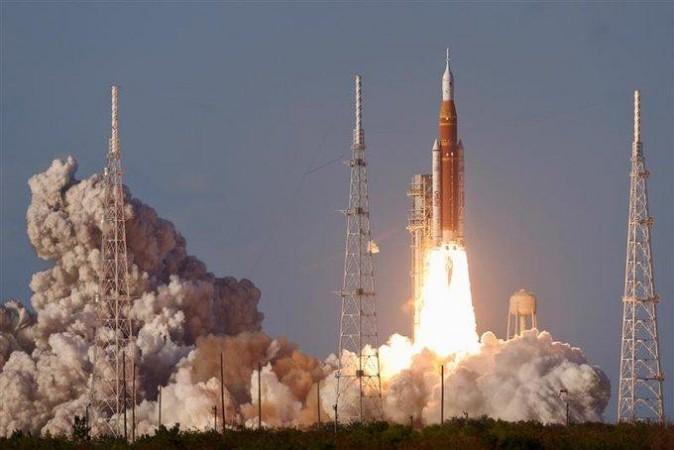
Artemis II lifted off from the Kennedy Space Center in Florida at 4:05 am IST on April 2 aboard the Space Launch System (SLS) rocket, the most powerful ever built for human flight. Trump, who first established the Artemis program in 2019, has repeatedly linked US space leadership to national strength. His address blended celebration of the mission with broader policy updates, with a strong emphasis on American resurgence in space.
The 10-day test mission is carrying four astronauts: NASA commander Reid Wiseman, pilot Victor Glover, mission specialist Christina Koch, and Canadian Space Agency astronaut Jeremy Hansen.
It marks the first crewed flight beyond low-Earth orbit since Apollo 17 in 1972.
After separating from the rocket, the Orion spacecraft, named Integrity, is now traveling toward the Moon on a free-return trajectory. The crew is expected to reach a maximum distance of over 400,000 km from Earth—farther than any human has ever traveled—before looping around the Moon's far side and heading back.
The mission is designed to rigorously test Orion's life-support systems, heat shield, and navigation capabilities in deep space ahead of future lunar landings.
So far, the crew remains healthy following a brief, routine communications blackout after launch. Despite the toilet issue, mission controllers say Orion is performing as expected and remains on track for a safe splashdown off the coast of California.