
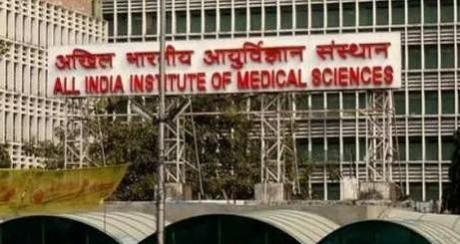
Doctors at the All India Medical Sciences (AIIMS) Delhi on Friday announced a successful surgery where they removed a whopping 19.9 kg tumour from a 43-year-old colon cancer patient, giving her a new lease of life.
Munmun, hailing from Durgapur, West Bengal, was presented to the hospital in July 2024 with abdominal distension (a larger-than-normal belly). She had a history of unilateral salpingo-oophorectomy -- the surgical removal of one ovary and one fallopian tube on one side of the body -- 25 years ago.
Munmun was diagnosed with Stage-4 colon cancer, featuring pelvic predominance.
She had visited multiple hospitals and undergone several cycles of chemotherapy. Despite that, there was no improvement, and the disease kept progressing. With the tumour spreading to multiple abdominal organs, she was given only 3-4 months to survive.
"A team of doctors, led by Prof. M.D. Ray, a surgical oncologist at AIIMS Delhi, performed successful cytoreductive surgery on January 12, achieving complete resection and removing 19.9 kg of tumour burden with multi-organ resections, completing surgery plus HIPEC on January 15, to complete the oncosurgical management. The patient was shifted from the ICU to the ward and later discharged. She is doing fine, expectedly," the apex institute said in a statement.
Speaking to reporters, Ray noted the disease was considered inoperable based on CT and PET-CT scans.
The scans showed a massive abdominal tumor with no separately identifiable organs. The entire abdomen was occupied by a tumour mass.
As the patient was unlikely to tolerate the massive procedure in a single surgery, he decided to do the surgery in two stages.
"In the first stage, I removed the bulk of the tumour. We performed extensive resection, removing ascending colon, part of ileum, two-thirds of transverse colon, sigmoid colon, omentum, uterus, and bilateral fallopian tubes, parts of liver and liver capsule, and peritoneum," the doctor said.
"Major vessels such as the IVC were at risk due to inflammation and infiltration, making surgery extremely challenging," he said, adding that during this stage, the patient became hemodynamically unstable due to blood loss and other complications.
After a gap of two days, the second stage of the surgery was performed, where HIPEC was administered to the patient.
While chemotherapy is usually given intravenously, in the Hyperthermic Intraperitoneal Chemotherapy -- the heated chemotherapy (41–43 degrees Celsius) is delivered directly into the abdominal cavity after complete tumour removal.
"Once we were satisfied that all visible tumours were removed, HIPEC was administered for one and a half hours to eliminate microscopic disease that cannot be seen with the naked eye," Ray said.
"Postoperatively, the abdomen appeared completely free of visible tumor. The liver and intestines were clearly visible and uninvolved," he added.
"The patient was kept in the ICU postoperatively. On the first postoperative day, she was already smiling and laughing. She was discharged on the fifth postoperative day. The first surgery was done on January 12th, the second on January 15th, and she was discharged on January 20th," the doctor said.
Ray explained that colon cancer, once considered a terminal disease, is still curable in some cases.
"Metastatic colon cancer should not be declared untreatable without evaluation at a high-volume center with expert surgeons," he said.
Colon cancer is the third most common cancer in women and the sixth most common cancer in men in India. Major risk factors include tobacco and alcohol, lifestyle factors, obesity, sedentary habits, poor diet, and chronic stress.
(With inputs from IANS)