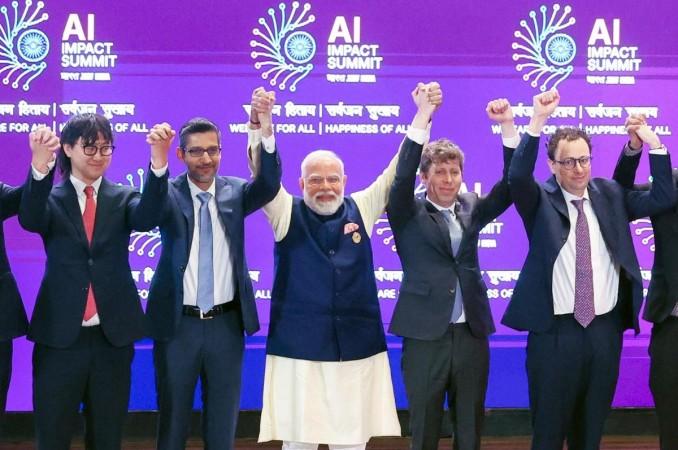
Alphabet and Google CEO Sundar Pichai on Thursday highlighted the transformative potential of artificial intelligence (AI) and India's rapidly evolving digital landscape at the India AI Impact Summit 2026 in New Delhi. Speaking to world leaders, policymakers, industry leaders, and innovators from over 110 countries, Pichai described AI as the "biggest platform shift of our lifetimes" and emphasized the need to act boldly and responsibly to ensure its benefits reach billions.
"No technology has me dreaming bigger than AI. We are on the cusp of hyper-progress and new discoveries that can help emerging economies leapfrog legacy gaps," Pichai said, stressing that collaboration is essential to realise AI's full potential. He also warned that positive outcomes from AI are not guaranteed, highlighting the importance of ethical and inclusive deployment.
Pichai underscored Google's efforts in India, including the development of a full-stack AI hub in Visakhapatnam, part of the company's $15 billion infrastructure investment. The hub will feature gigawatt-scale computing, an international subsea cable gateway, and AI resources aimed at improving healthcare, agriculture, startups, and more. He added that Google is building a network of subsea fibre optic cables, including four new systems between the US and India under the India-America Connect initiative.
Highlighting AI-powered scientific advances, Pichai cited AlphaFold, Google DeepMind's protein-folding breakthrough, which is used by over three million researchers in 190 countries to accelerate drug discovery, including malaria vaccines. He added that Google is cataloguing DNA disease markers and developing AI agents to act as true partners in the scientific method.
Pichai also emphasized AI's impact on the workforce: "AI will undeniably reshape the workforce — automating some roles, evolving others, and creating entirely new careers." Google plans to train 100 million people in digital skills to help workers adapt to AI-driven changes.
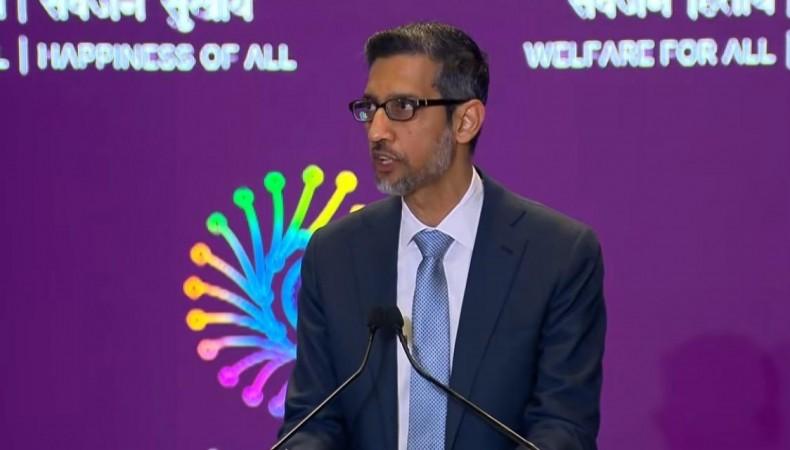
Speaking on real-world applications, Pichai highlighted AI initiatives in India, including AI-powered weather forecasts that helped millions of farmers protect their livelihoods last year. He stressed the importance of strong investment in AI research and equitable adoption across all sectors.
The summit, held at Bharat Mandapam from February 16 to 20, brought together over 500 global AI leaders, including 100 CEOs, 150 academicians and researchers, and 400 CTOs, VPs, and philanthropists. Government participation included more than 20 heads of state and around 60 ministers and vice ministers, fostering unprecedented dialogue on AI's transformative potential.
Prime Minister Narendra Modi welcomed the attendees, reiterating India's commitment to AI for inclusion, innovation, and responsible development.
(With inputs from IANS)