
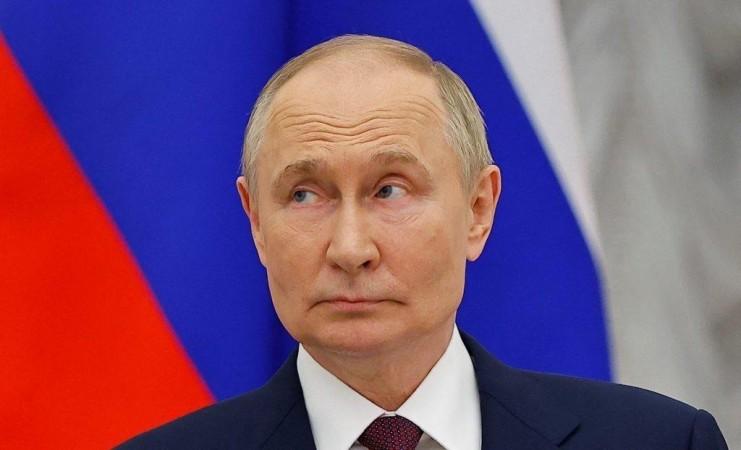
Russia's President Vladimir Putin will pay an official visit to China from May 19 to 20, the Kremlin announced, as Moscow and Beijing seek to further deepen their strategic partnership amid rising geopolitical tensions with the West.
According to the Kremlin, Putin and Chinese President Xi Jinping will discuss strengthening the "comprehensive partnership and strategic cooperation" between the two countries. Putin is also expected to hold talks with Chinese Premier Li Qiang focusing on economic and trade cooperation.
Russia's state-run TASS news agency reported that the visit coincides with the 25th anniversary of the 2001 Treaty of Good-Neighborliness and Friendly Cooperation, regarded as a cornerstone of modern Russia-China relations.
The announcement comes just a day after US President Donald Trump concluded a high-profile visit to Beijing — the first US presidential trip to China in nearly a decade. Trump later described the summit with Xi as a "historic moment" and claimed the two sides had reached "fantastic trade deals" while making progress on major geopolitical issues including Taiwan, artificial intelligence, Iran and nuclear arms reduction.
Speaking aboard Air Force One while returning to Washington via Anchorage, Alaska, Trump repeatedly praised Xi and highlighted the growing importance of US-China dialogue despite long-standing tensions over trade, technology and military influence in the Indo-Pacific.
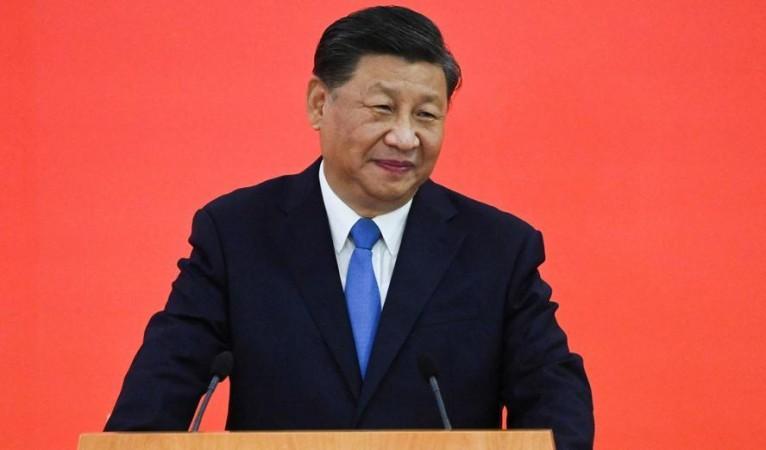
Taiwan reportedly emerged as one of the key issues during the discussions. Trump said Xi strongly opposed any move toward Taiwanese independence and warned it could trigger "a very strong confrontation." Trump also revealed that Xi questioned Washington's military commitment to Taiwan and raised concerns over continued US arms sales to the island.
"He asked me if I'd defend them. I said, I don't talk about that," Trump told reporters, adding that he would decide "over the next fairly short period of time" whether future arms sales to Taiwan would continue.
In another candid remark, Trump acknowledged ongoing espionage activities between both countries while responding to questions on Chinese intelligence operations in the United States. "We spy like hell on them, too," he said.
Trump further stated that Xi agreed Iran should not be allowed to acquire nuclear weapons, suggesting broader strategic coordination between Washington and Beijing despite deep geopolitical rivalry.
The leaders also discussed the Russia-Ukraine war, where China officially maintains neutrality and positions itself as a potential mediator. However, Beijing's close relationship with Moscow has repeatedly drawn criticism from Western nations. Xi and Putin had declared a "no limits" partnership shortly before Russia launched its full-scale invasion of Ukraine in 2022.
Although China and Russia are not formal military allies, ties between the two countries have strengthened significantly in recent years. Following Western sanctions on Moscow, Beijing emerged as Russia's largest trading partner, purchasing large volumes of Russian oil and goods while conducting trade increasingly in yuan and roubles.
China has also denied reports alleging that Chinese firms helped sustain Russian drone production by supplying components disguised as civilian industrial equipment.
Last month, Xi called for "closer and stronger strategic coordination" with Moscow during talks with Russian Foreign Minister Sergey Lavrov. Xi had also visited Russia last year, where he pledged to stand with Moscow against what he described as "unilateralism and hegemonic bullying."