
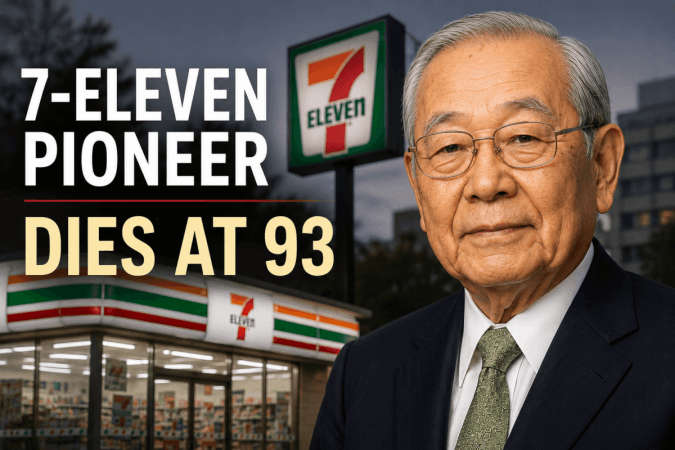
Toshifumi Suzuki, the Japanese retail titan credited with transforming 7-Eleven into a global convenience store empire and revolutionising how millions shop every day, has died at the age of 93. Seven & i Holdings confirmed that Suzuki died of heart failure on May 18 at his home in Tokyo.
Suzuki is widely regarded as the architect of Japan's modern "conbini" culture — convenience stores that evolved into an essential part of daily life by offering everything from ready-to-eat meals and bill payments to ATM services and parcel deliveries. Under his leadership, 7-Eleven Japan became a blueprint for convenience retail across the world.
Born in Nagano in 1932, Suzuki joined retailer Ito-Yokado in 1963 after working at a book wholesaler. His breakthrough came during a visit to the United States, where he discovered the 7-Eleven concept and pushed to bring it to Japan despite strong opposition from executives and retail experts who believed the model would fail in the country.
Working closely with Japanese billionaire Masatoshi Ito, whose retail group backed the expansion, Suzuki helped launch the first Japanese 7-Eleven store in Tokyo in 1974. Ito, who died in 2023 at the age of 98, laid the financial and corporate foundation for the chain's expansion, while Suzuki pioneered the operational model that made it a global success. Together, the duo reshaped modern retail in Japan and abroad.
Suzuki introduced sophisticated data-driven inventory systems decades before big data became a retail buzzword. Stores tracked local buying habits in real time, allowing shelves to be stocked according to neighbourhood demand while minimising waste. He also focused heavily on fresh food, rice balls, boxed meals and rapid inventory turnover — innovations that became hallmarks of Japanese convenience stores.
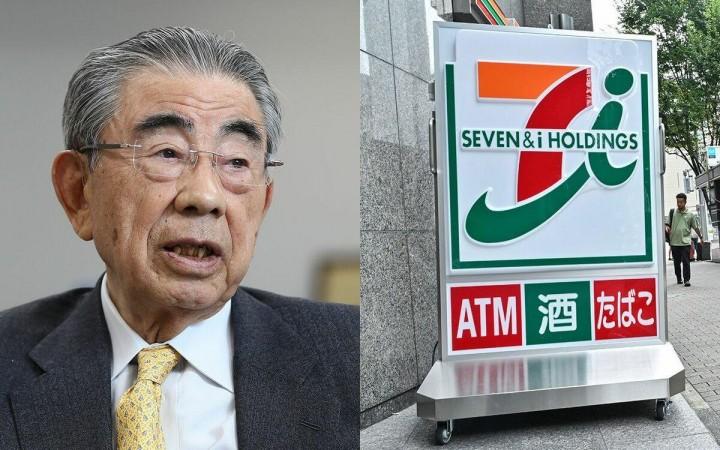
The businessman later orchestrated one of the biggest reversals in global retail history. After Southland Corp — the original American owner of 7-Eleven — collapsed under debt and filed for bankruptcy in the early 1990s, Suzuki led the Japanese side's rescue and restructuring efforts. The Japanese company eventually took control of the American parent, cementing Japan's dominance over the global 7-Eleven brand.
In 2005, Suzuki established Seven & i Holdings, expanding the business into a retail conglomerate spanning supermarkets, restaurants, financial services and department stores. By then, 7-Eleven had grown into the world's largest convenience store chain, with more than 85,000 outlets globally.
Suzuki stepped down in 2016 after a high-profile boardroom dispute but remained one of Japan's most influential business figures. Known for his relentless management style, he earned the nickname "Hurricane Suzuki" in corporate circles.
His death marks the end of an era for Japan's retail industry. Alongside Masatoshi Ito, Suzuki helped turn a small American convenience store concept into a global retail phenomenon that reshaped consumer habits across continents.