
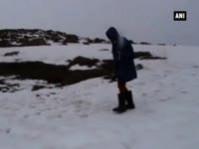
The countdown is over as the 40-day harshest winter period, known as Chillai-Kalan, is set to commence from the intervening night of Saturday and Sunday, with expectations of light snowfall over some higher reaches of north Kashmir.
Chillai-Kalan is likely to begin with light snowfall in the higher elevations and the possibility of light rain in the lower areas. The period will test people's endurance until January 30.
Notably, during this 40-day phase, the Kashmir Valley typically experiences heavy snowfall, sub-zero temperatures, frozen water bodies, and prolonged overcast skies, with the sun rarely making an appearance.
In preparation for such harsh conditions, residents begin making arrangements during the summer months. To keep warm, people stock coal and firewood, collect warm woollen clothing, and dry and store vegetables and fruits for consumption during the bone-chilling cold of Chillai-Kalan.
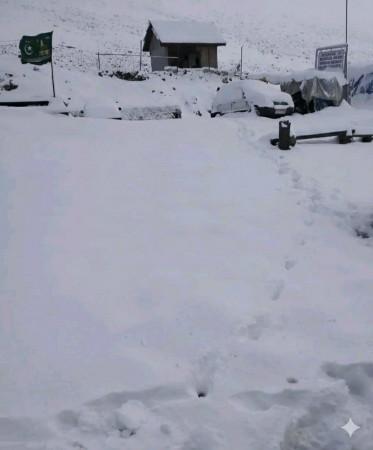
It is important to mention that the entire Kashmir Valley was already gripped by severe cold even before the onset of Chillai-Kalan. Minimum temperatures dropped below the freezing point in November, resulting in Chillai-Kalan-like conditions well ahead of the official start of the 40-day period. However, the Valley has witnessed consistently dry weather over the past three months.
- The harshest winter period known as Challai-Kalan will commence from December 21 and culminate on January 31 next year.
- Challai-Kalan will be followed by a 20-day-long Chillai-Khurd (small cold) that occurs between January 31 and February 19.
- The period of Challai-Khurd will be followed by a 10-day-long Chillai-Bachha (baby cold), which begins from February 20 to March 2.
The prolonged dry spell has led to a drought-like situation across the Valley. Water levels in major water bodies, including the Jhelum River, have declined, while air quality has also deteriorated. The dry weather has left people vulnerable to various seasonal ailments.
The harshest winter period, Chillai-Kalan, will officially commence on December 21 and conclude on January 31 next year. It will be followed by a 20-day Chillai-Khurd (small cold), lasting from January 31 to February 19. This, in turn, will be followed by the 10-day Chillai-Bachha (baby cold), from February 20 to March 2.
Notably, Chillai-Kalan is a Persian term that means "major cold."
The cold wave has already tightened its grip across Kashmir, with most places in the Valley recording below-normal temperatures.

Snowfall likely in higher reaches
According to the Meteorological Department, higher reaches of Kupwara, Bandipora, and Ganderbal districts may receive moderate to heavy snowfall, particularly on December 21. On December 21 and 22, the weather is expected to remain generally cloudy, with the possibility of light to moderate snowfall over higher reaches and light to moderate rain over most plain areas of Jammu and Kashmir, from late night of December 20 till the evening of December 21.
Meanwhile, the Valley witnessed severe cold amid dry weather conditions on Saturday. Minimum temperatures remained below the freezing point at most places. Pulwama was the coldest area, recording a minimum temperature of –3.2 degrees Celsius. Shopian recorded –2.9°C, Awantipora –2.2°C, Pampore –2.0°C, Srinagar –0.4°C, Srinagar Airport –1.6°C, Qazigund and Pahalgam –1.0°C each, Kupwara –0.7°C, and Baramulla –1.5°C. Gulmarg recorded a minimum temperature of 2.0°C.
Ladakh is also in the grip of severe cold, with the minimum temperature in Leh recorded at –4.2 degrees Celsius.