The United States carried out strikes on Iranian military targets after Tehran's forces allegedly attacked three American destroyers transiting the Strait of Hormuz, the US military said on Thursday, escalating tensions in the strategically vital Gulf region while diplomatic efforts to preserve the ceasefire continued.
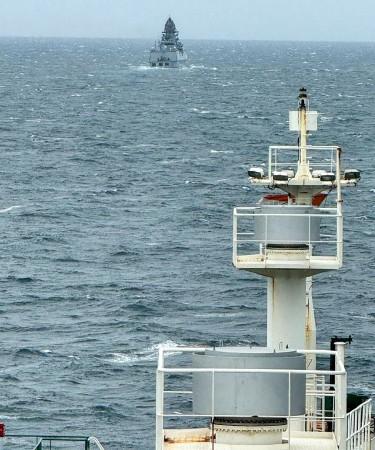
According to the US Central Command (CENTCOM), American forces intercepted what it described as "unprovoked Iranian attacks" as US Navy guided-missile destroyers moved through the Strait of Hormuz toward the Gulf of Oman on May 7. The military said the strikes were conducted in self-defense.
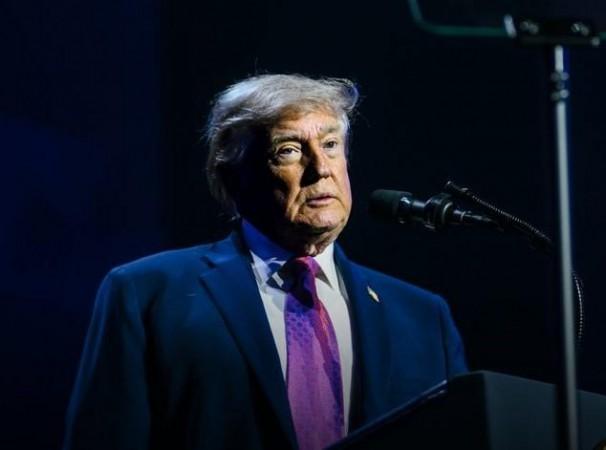
US President Donald Trump warned Iran against further escalation and urged Tehran to quickly finalise a deal with Washington. In a post on Truth Social, Trump said the United States would respond "a lot harder" if tensions intensified. However, he later told ABC News that the ceasefire between the two countries remained in place and described the retaliatory action as a limited "love tap".
Iran's central military command accused the United States of violating the ceasefire, while Iranian Foreign Minister Abbas Araghchi criticised Washington's actions, saying that whenever diplomacy appeared possible, the US opted for "reckless military adventure". In a post on X, Araghchi asserted that "Iranians never bow to pressure".
Amid heightened tensions, Iran has introduced new regulations for ships transiting the Strait of Hormuz, according to reports citing documents reviewed by CNN. Under the new framework, vessels seeking passage through the strategic waterway are required to obtain permits from the newly established Persian Gulf Strait Authority (PGSA). Ships reportedly receive instructions through official communication channels linked to the authority.
The Strait of Hormuz remains one of the world's most critical oil-shipping chokepoints, and ongoing restrictions by both the United States and Iran have disrupted global energy markets. Oil prices remained elevated amid concerns over supply disruptions, with Brent crude trading above $100 per barrel.
In another development, a Chinese-owned oil products tanker was attacked near the Strait of Hormuz earlier this week, according to reports by Reuters citing Chinese media outlet Caixin. The vessel reportedly caught fire on its deck and bore markings reading "CHINA OWNER & CREW". The incident marked the first reported attack on a Chinese oil tanker during the current conflict, although details regarding casualties were not immediately available.
The United States has also intensified maritime operations in the region under "Project Freedom", an initiative announced by President Trump to escort commercial vessels through the Strait of Hormuz.
Meanwhile, diplomatic backchannel efforts to end the conflict continue. Reports citing Iranian media said Tehran is reviewing messages from Washington delivered through Pakistani mediators regarding a proposed agreement aimed at ending hostilities.
The reported framework includes a 14-point memorandum that could see Iran pause nuclear enrichment activities in exchange for sanctions relief and the release of frozen Iranian funds by the United States. Both sides are also expected to consider easing restrictions in the Strait of Hormuz as part of a broader 30-day negotiation process toward a comprehensive agreement.
US Secretary of State Marco Rubio warned that Washington would respond decisively if Iran launched missiles targeting American forces in the region.
The US Central Command further stated that more than 70 tankers carrying an estimated 166 million barrels of Iranian oil remain unable to enter or leave Iranian ports amid the ongoing standoff.
Separately, tanker-tracking reports indicated that three empty Iranian-flagged oil tankers recently returned to Iran after travelling through monitored waters near the Strait of Hormuz and Pakistan's Exclusive Economic Zone.
Global financial markets reacted cautiously to the developments. Major US stock indices closed lower, while Asian and European markets also weakened amid uncertainty over the conflict's economic impact. The Japanese yen strengthened against the US dollar following reports of intervention by Japanese authorities.
The United Arab Emirates said its air defence systems intercepted two ballistic missiles and three drones launched from Iran on Friday. Authorities reported that three people were injured in the attacks.
According to the UAE Ministry of Defence, a total of 551 ballistic missiles, 29 cruise missiles and 2,263 drones have been intercepted since the beginning of the US-Israeli conflict involving Iran. The total number of injuries has risen to 230, officials added.
Iran's foreign ministry also condemned recent US naval actions involving two Iranian tankers, describing them as "aggressive acts" that undermine the ongoing truce and raise concerns over maritime security in the Gulf region.