
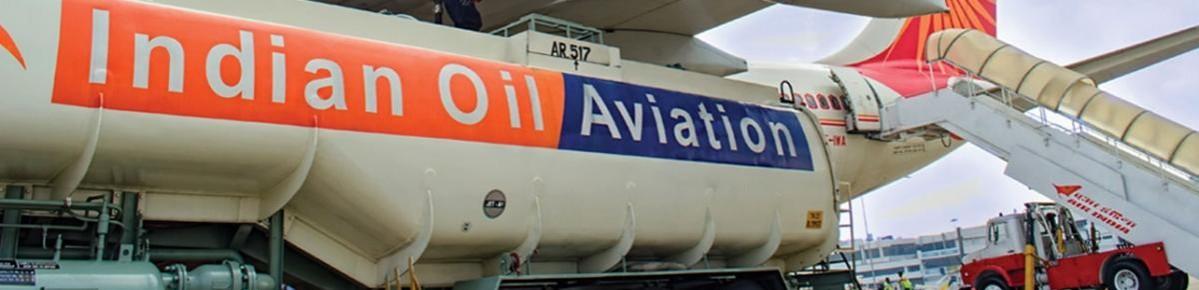
State-owned oil marketing companies have revised prices of aviation turbine fuel (ATF) and commercial LPG, tracking a sharp rise in global crude oil prices amid escalating tensions in West Asia.
ATF prices initially appeared to have surged sharply, with reports indicating a more-than-doubling. However, a clarification by Indian Oil Corporation stated that jet fuel prices have actually risen by about 8.5 per cent. The current ATF price in Delhi stands at around Rs 1.04 lakh per kilolitre.
This marks a continued upward trend, following a 5.7 per cent increase in March, as global oil prices remain elevated.
At the same time, the price of 19-kg commercial LPG cylinders has been increased by Rs 195.50. A cylinder now costs Rs 2,078.50 in Delhi. Domestic LPG prices, however, remain unchanged, with a 14.2-kg cylinder retailing at Rs 913.
Fuel prices are revised monthly based on international benchmarks and exchange rate movements.
Global oil surge drives price revisions
The increases come amid a sharp rally in global crude oil prices, which have risen nearly 50 per cent due to supply disruptions linked to the ongoing West Asia conflict.
Brent crude futures are trading at $105.86 per barrel, while US West Texas Intermediate (WTI) stands at $103.31 per barrel, reflecting sustained pressure on energy markets.
Disruptions around the Strait of Hormuz — a key route for global energy supplies — have further intensified price volatility.
Govt caps impact on domestic aviation
According to the Ministry of Petroleum and Natural Gas, ATF prices in India have been deregulated since 2001 and are revised in line with global trends.
However, to shield domestic airlines and passengers from a sharp spike, oil marketing companies, in consultation with the Ministry of Civil Aviation, have implemented a calibrated approach.
Domestic airlines will face only a limited increase of around 25 per cent (approximately Rs 15 per litre), instead of the full pass-through of global price hikes.
In contrast, international carriers will bear the full increase, in line with market-linked pricing.
Union Civil Aviation Minister Ram Mohan Naidu said the move would help maintain fare stability and support the aviation sector.
"This calibrated approach will help shield passengers from sharp fare increases, ease the burden on domestic airlines, and ensure stability in the aviation sector," he said.
He added that the decision would also support cargo movement and maintain critical air connectivity for trade and logistics.
The sharp increases come amid a steep rally in global crude oil prices, which have jumped nearly 50 per cent due to supply disruptions linked to the ongoing West Asia conflict.
Globally, crude oil prices remained firm on Wednesday. Brent crude futures rose 1.81 per cent to $105.86 per barrel, while US West Texas Intermediate (WTI) futures were up 1.90 per cent at $103.31.
(With inputs from IANS)