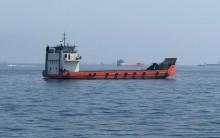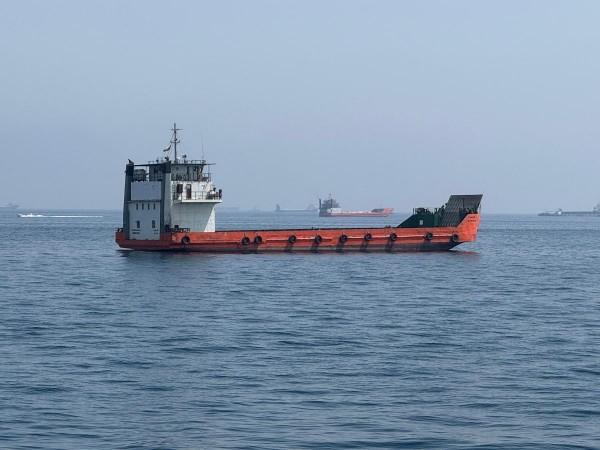
India on Tuesday reiterated its call for safe and unhindered navigation through the Strait of Hormuz, asserting that the free flow of commerce through the strategic waterway is vital to the economic and energy security of countries worldwide.
Addressing a weekly media briefing, the Ministry of External Affairs (MEA) spokesperson Randhir Jaiswal said that New Delhi is closely monitoring developments in West Asia, while continuing to advocate de-escalation and a return to dialogue and diplomacy to ensure peace and stability in the region.
"We are closely following the developments in West Asia. We continue to call for safe and unimpeded navigation and the flow of commerce through the Strait of Hormuz. This is key for ensuring the economic and energy security of people across the world. We issued a statement after summoning the Deputy Chief of Mission of Iran. We conveyed to them our deepest concerns and that we strongly condemned what has happened. We lost a precious Indian life, and several Indian nationals have been injured, a couple of them seriously injured," Jaiswal stated.
On the other hand, US President said on Monday that the United States would take control of the Strait of Hormuz, the critical waterway, which has remained a contentious issue between the US and Iran since the beginning of the conflict in the Middle East.
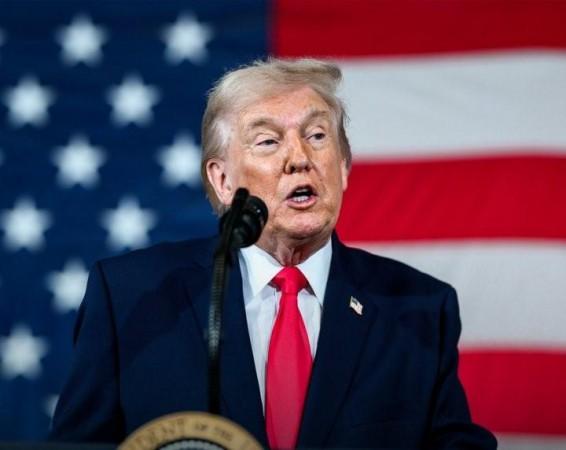
In an interview with Fox News for its programme 'Fox and Friends', the 80-year-old Republican leader said the US would begin guarding the Hormuz, which holds one-fifth of global oil and natural gas transit. He further claimed that if the US had not been guarding the strait, it would be "reimbursed by wealthy nations" now.
Nearly a fifth of the world's crude oil, along with a significant share of its liquefied natural gas, moves through this route every single day. For India, it's one of the most critical energy lifelines, since a large share of its crude oil imports from countries such as Saudi Arabia, Iraq, the UAE, and Kuwait passes through the strait.
What did Trump say?
In a post on Truth Social later, Trump further reiterated that Hormuz remains open, "with or without Iran", while adding that he is reinstating the blockade. This will allow all other countries to have a "fair and open" use of the strait.
"But as such, and as a matter of FAIRNESS, will be reimbursed, at the rate of 20 per cent on all cargo shipped, for any and all costs necessary to do the job of providing safety and security to this very volatile section of the World. The process and formation will begin immediately. Thank you for your attention to this matter!" he said.
Hormuz has emerged as one of the biggest contentious points between the US and Iran, with the latter claiming complete control over it, while the former maintains that the waterway is open to all countries and all vessels can freely sail through it.
US also launched fresh strikes on Iran this morning, coming on the backdrop of Trump's announcement regarding the "reinstatement" of the blockade.
What was Iran's response?
Iran's foreign minister, Abbas Araghchi, responded to Trump's announcement on X. "POTUS is absolutely right. Whoever provides secure and safe passage of commercial vessels through the Strait of Hormuz should be compensated for this service," he wrote.
"Iran has always been the GUARDIAN of the Strait and will remain so FOREVER", and that "20% Too Much, We Will Be Fair," he added.
Following the recent strikes by the United States, Iran further retaliated by launching attacks on Bahrain and two tankers linked to the United Arab Emirates in the Strait of Hormuz. The retaliation significantly heightened tensions across the Gulf region.
What does this mean for India?
India's location makes it highly dependent on seaborne energy flows; thus, any disruptions in the Strait of Hormuz will cause problems for the nation. Officials have pointed out that about 40 per cent of India's crude supply traces a path through Hormuz, a figure that instantly converts geopolitical tension into domestic inflation risk.
At its narrowest point, the strait is just 33 km across, with shipping lanes barely a couple of kilometres wide. Yet nearly a fifth of the world's oil flows through this single corridor, tying Asian consumers to Gulf suppliers via a single maritime passage.
For India specifically, Hormuz functions as a crude artery: about 60 per cent of imported oil sourced from the Gulf crosses through the strait before fanning out across the Arabian Sea to refining hubs in Jamnagar, Mumbai, Mangalore, and Kochi.
India imports more than 85 per cent of its crude oil overall, and a large share of that, from Iraq, Saudi Arabia, the UAE, Kuwait, and Qatar, passes through this route.
It's also a key corridor for India's LNG imports. That level of dependence means any prolonged disruption, whether from military action, tanker attacks, or added transit costs, can push up India's import bill, regardless of whether the country ends up paying Trump's proposed toll directly.
That risk is part of why New Delhi has spent the past few years buying more crude from Russia and other suppliers, building out its crude imports beyond the Gulf.
Although the Indian government has reduced Gulf imports, it has not eliminated them. The region continues to supply a large share of the country's energy imports.