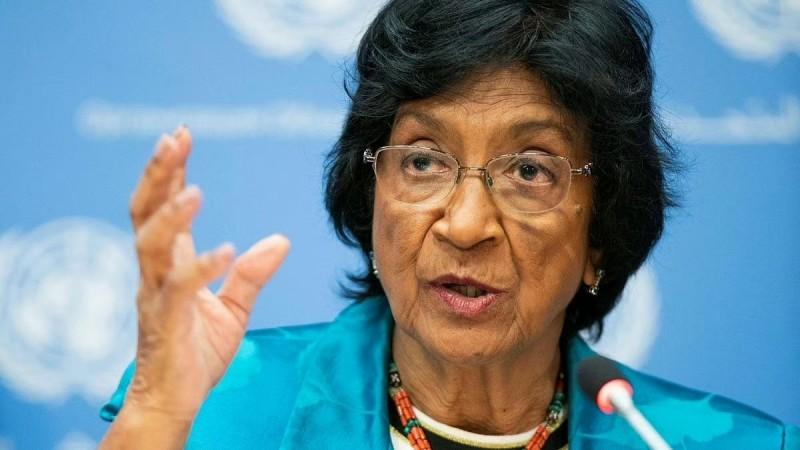
Navanethem "Navi" Pillay, a South African jurist of Indian Tamil origin and former United Nations High Commissioner for Human Rights, has been awarded the 2026 Nobel Peace Prize for her efforts to promote peace and international law.
The Norwegian Nobel Committee announced the award on Friday, recognising Pillay's decades-long work in human rights, international justice and accountability for serious violations of international law. Her career has included serving as a judge at international criminal tribunals and working to strengthen legal institutions that hold individuals and governments accountable for grave crimes.
Who is Navi Pillay?
Born on September 23, 1941, in Durban, South Africa, Pillay grew up during the apartheid era, when racial segregation and discrimination shaped the lives of non-white communities. She comes from a family of Indian Tamil origin and went on to become one of South Africa's prominent human rights lawyers and jurists.
Pillay studied at the University of Natal, earning a Bachelor of Arts degree in 1963 and a law degree in 1965. She later established her legal practice and became the first Black woman to serve as a judge of the High Court in Natal, now part of KwaZulu-Natal. Her career was shaped by efforts to challenge racial discrimination and promote equality under the law.
Amazing moment. Navi Pillay has received the Nobel Peace Prize ! https://t.co/HL3r1PJzLO We are at the Nuremberg Court; I cannot think of a stronger symbol for her Nobel prize. We are all so thrilled! This is her first reactions upon hearing the news: https://t.co/Crbj6XdiyQ
— Agnes Callamard (@AgnesCallamard) October 9, 2026
Navi Pillay's journey in international law
Pillay went on to hold several prominent positions in international justice. She served as a judge at the International Criminal Tribunal for Rwanda, where she contributed to proceedings involving genocide and crimes against humanity. Her work helped advance the recognition of sexual violence, including rape, as a possible act of genocide under international law.
She also served as a judge at the International Criminal Court and became the United Nations High Commissioner for Human Rights in 2008, holding the position until 2014. During her tenure, she advocated for the protection of fundamental rights, accountability for abuses and stronger international mechanisms to address human rights violations.
Pillay has also been associated with initiatives promoting gender equality and women's rights, including the international human rights organisation Equality Now, which works to advance legal equality for women and girls.
Why did Navi Pillay win the 2026 Nobel Peace Prize?
The Norwegian Nobel Committee honoured Pillay for her efforts to promote peace and international law. Her work has focused on strengthening international legal institutions, ensuring accountability for war crimes and crimes against humanity, and reinforcing the principle that serious violations must be investigated and prosecuted.
The committee highlighted the importance of international law in resolving disputes without violence and ensuring that powerful individuals and states are not beyond legal scrutiny.
Pillay's recognition also underscores the role of judges, prosecutors and international institutions in protecting victims and upholding human dignity during conflicts. Her career has spanned domestic judicial service, international criminal justice and senior United Nations responsibilities.
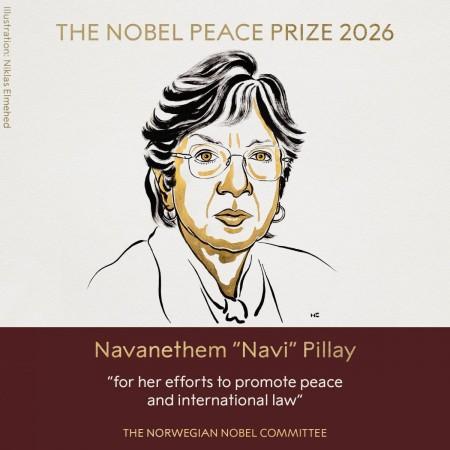
Nobel Peace Prize 2026: Award details
The 2026 Nobel Peace Prize carries prize money of 12 million Swedish kronor, along with a medal and diploma. The award ceremony is scheduled to take place in Oslo on December 10, the anniversary of Alfred Nobel's death.
Pillay's achievement marks a major international recognition of her contribution to human rights and the rule of law. Her journey from apartheid-era South Africa to leadership roles in global legal institutions highlights the influence of legal advocacy and international cooperation in addressing injustice.
The award places renewed attention on the importance of accountability, equality and the peaceful resolution of conflicts through international law.