What was initially projected as a swift and decisive campaign to denuclearize Tehran and cause regime change has instead evolved into a prolonged regional crisis with no clear endgame, destabilizing global energy markets, straining economies across continents, and raising uncomfortable questions about the limits of American power.
Knowing what he knows now, it is difficult to imagine that President Trump would have initiated the assault on Iran under the same assumptions that shaped the early stages of the war.
Operation Epic Fury, the name given by the Trump administration to the attacks on Iran, launched on February 28, appears to have been built on several core expectations such as:
- Similar to the overthrow of the Maduro administration in Venezuela, this intervention would end quickly:
- Iran's political leadership would collapse after targeted strikes and decapitation attacks;
- Internal unrest would quickly escalate into a popular uprising against the regime;
- The United States and Israel would be able to neutralize or remove Iran's enriched uranium stockpiles; and
- Tehran would ultimately lack either the capability or the will to disrupt the Strait of Hormuz, the world's most critical energy chokepoint.
Nearly three months after the joint U.S.-Israeli offensive began, each of those assumptions has proven flawed.
Iran has definitely suffered severe military and infrastructural damage. Much of its conventional military capability has been degraded, senior leaders and commanders have been eliminated, and key facilities have been destroyed. Yet the Iranian state has not collapsed. Instead, the war has hardened Tehran's resolve and focused it on regional and economic retaliation.
Weaponizing army to choking waters, oil
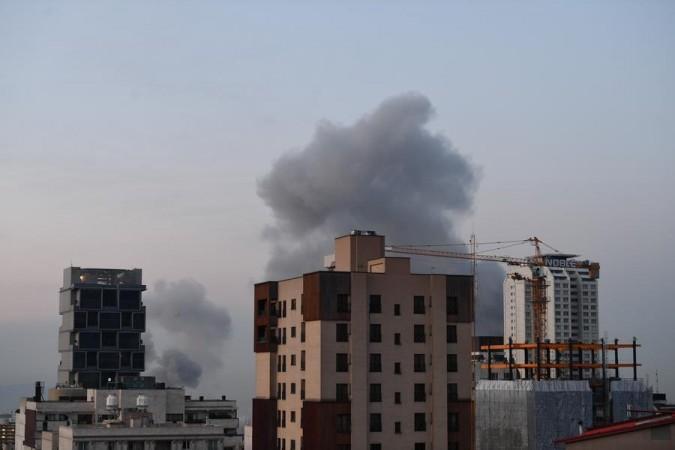
Unable to directly confront American military superiority, Iran has sought to weaponize geography, energy markets, and regional instability. Disruptions around the Strait of Hormuz have sent shockwaves through global trade and commodity markets. Oil prices have surged. Liquified Natural Gas shipments have been disrupted. Fertilizer costs have soared, threatening agricultural supply chains and food prices worldwide.
The economic consequences of that miscalculation are now being felt far beyond the Middle East.
For energy-importing economies such as India and much of Europe, the crisis has become very destabilizing. Energy remains the single most important driver of industrial economies, affecting everything from transportation and manufacturing to food production and household inflation.
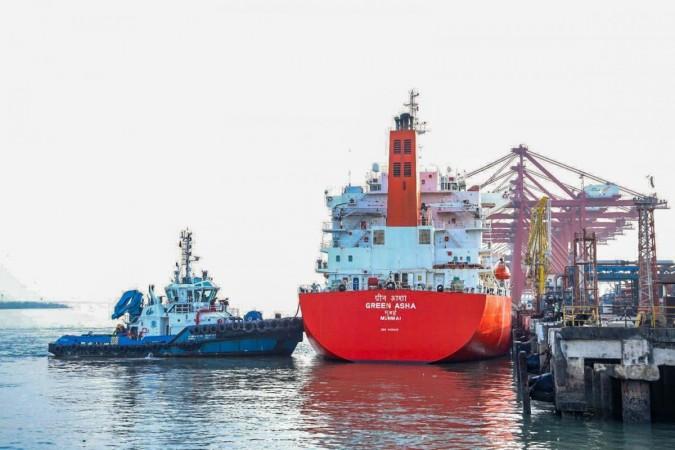
The Gulf's aviation, shipping, tourism, and logistics sectors have also suffered enormously as insurers, shipping companies, and global investors reassess the risks across the region.
What initially appeared to many in Washington as a contained military operation has instead evolved into a global economic shock.
The humanitarian toll has been equally devastating. Civilian casualties and displacement across Iran, Lebanon, Israel, and parts of the Gulf region have been significant. Infrastructure damage, supply shortages, and economic paralysis have reshaped daily life for millions of people across the broader Middle East.
Diplomatic quagmire
Meanwhile, the diplomatic situation has become increasingly awkward for Washington.
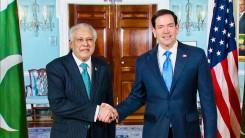
Ceasefire negotiations, including the "peace talks" facilitated by Pakistan, have so far failed to produce a breakthrough.
The very fact that the United States is now actively engaged in ceasefire diplomacy with Iran is itself remarkable. Historically, when the United States enters a war, the objective is not merely a negotiated pause but a clear victory.
The comparison many observers now quietly invoke is Vietnam — one of the few modern conflicts in which Washington eventually found itself searching for an exit rather than defining victory on its own terms.
Ironically, one of the emerging diplomatic objectives now appears strikingly similar to the agreement Trump abandoned during his first presidency: The 2015 Joint Comprehensive Plan of Action (JCPOA) limiting Iran's development of a nuclear program, which the Obama administration signed with Iran, with the cooperation of the United Kingdom, France, Russia, China, and Germany.
After years of escalation, military confrontation, and enormous economic damage, the Trump administration now appears willing to accept a framework that may ultimately differ only marginally from the arrangement it once rejected as inadequate.
Having survived the military campaign, Tehran is now attempting to convert its resilience and endurance into long-term economic leverage.
Decades of sanctions strengthened Iran
Decades of sanctions had severely weakened the Iranian economy, crippling investment, trade, and industrial growth. Now, in addition to demanding the lifting of sanctions, Iran is reportedly seeking reparations for the massive damage caused by the war.
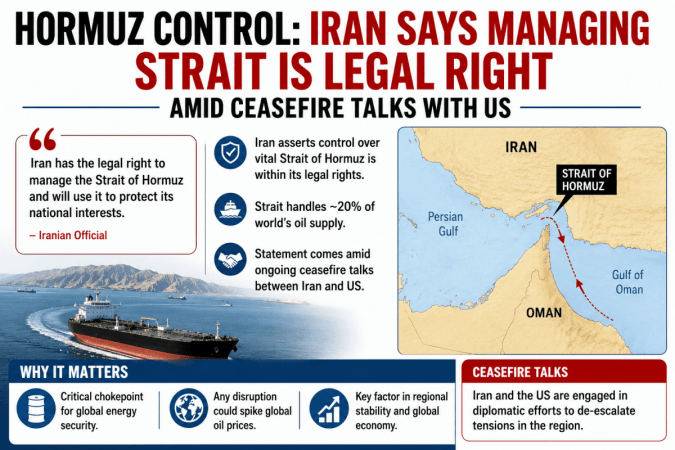
More significantly, Iran is also attempting to monetize its control over the Strait of Hormuz. Reports suggest that Tehran is demanding some form of transit toll for ships passing through the strait — reportedly as high as $2 million per vessel — similar to the fees ships pay when transiting the Suez Canal or the Panama Canal.
Iran is also reportedly seeking what amounts to "protection fees" or digital transit tolls on the undersea fiber-optic cables that run across the Hormuz corridor and facilitate global internet and financial transactions estimated to be worth trillions of dollars daily.
If Iran secures these demands as part of an agreement, the world will ultimately end up paying not only for the war itself, but also for the long-term economic leverage Iran gains from controlling one of the planet's most critical energy and digital trade chokepoints.
Strategically, the war has dealt a psychological blow to the image of American and Israeli invincibility.
The United States remains the world's most powerful military force by an overwhelming margin. No other country possesses its combination of global reach, technological superiority, naval dominance, intelligence capabilities, and financial power. Yet modern warfare increasingly exposes a deeper reality: even overwhelming military superiority does not automatically translate into quick military or political outcomes.
Ukraine war lesson not learnt
Russia's prolonged struggle in Ukraine demonstrated that military power alone cannot always produce decisive strategic victories in the face of determined resistance, asymmetric tactics, geography, and economic disruption. Now the United States appears to be confronting a similar lesson in Iran.
The problem for Washington is not military weakness. It is political overreach and the growing difficulty of controlling the secondary consequences of war in an interconnected global economy.
Every additional week of instability in the Gulf raises the probability of a wider global slowdown. Inflationary pressures are intensifying just as many economies were beginning to stabilize after years of post-pandemic disruptions. Central banks face the dilemma of containing inflation while avoiding recession. Markets, despite being bullish, remain volatile. Consumer confidence is weakening. Businesses are delaying investment decisions.
A global recession is no longer an abstract possibility. It is becoming an increasingly more probably scenario.
The longer the conflict drags on without a decisive resolution, the more it risks reshaping geopolitical alignments far beyond the Middle East. China, Russia, and other rivals of the United States are watching closely, not simply to measure battlefield outcomes, but to assess America's endurance, political cohesion, and economic tolerance for prolonged instability.
Wars are often judged not only by the battles won, but by the strategic, operational and organizational realities they create afterward. At this moment, the Iran war increasingly appears less like a demonstration of overwhelming American strength and more like a warning about the limits of military power in a deeply interconnected world.
(Frank F. Islam is an entrepreneur, and civic and thought leader based in the Washington, D.C., area. The views expressed here are solely his own.)