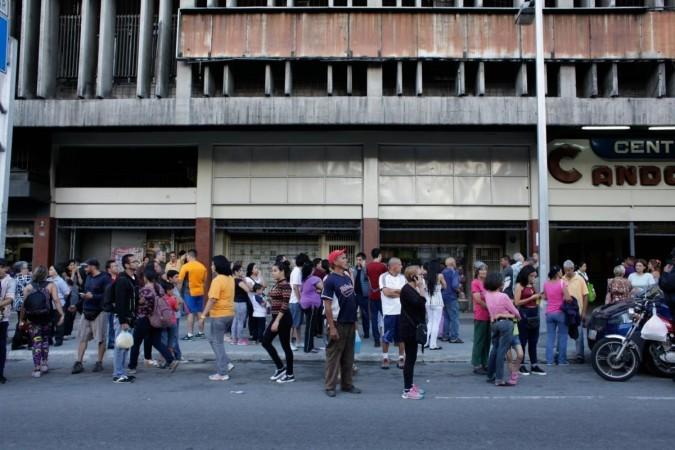
Neighbours in cities across northern Venezuela spent Thursday digging through rubble in search of loved ones after two powerful earthquakes struck on Wednesday evening, killing around 235 people, injuring at least 4,300 and leaving thousands missing, officials said.
The 7.2- and 7.5-magnitude earthquakes were among the strongest to hit Venezuela in more than a century and were felt across the region.
The coastal region of La Guaira, north of Caracas, was among the worst hit, with extensive damage and a high number of casualties. The country's main airport, located there, was shut due to damage, making relief operations more difficult. Acting President Delcy Rodríguez declared a state of emergency, while several countries pledged aid and rescue teams began arriving.
Across the affected areas, residents joined rescue efforts, searching collapsed buildings for survivors. Injured people, including children and animals, were pulled out covered in dust and blood.
Venezuelan state television showed dramatic rescue scenes, including a woman trapped beneath a concrete slab with only one bare foot visible before rescuers pulled her out alive. However, outside Caracas, few government rescue teams were initially seen.
Dayana Delgado, a mother of three, questioned where the heavy machinery promised by officials was, saying residents themselves were digging through collapsed buildings. "I want to know where my child is, if he's trapped or in a shelter," she said about her missing eight-year-old son.
Elsewhere, one mother broke down as the bodies of her three-year-old and 10-year-old children were wrapped in blankets and carried away, while others shouted the names of missing relatives or stood in shock.
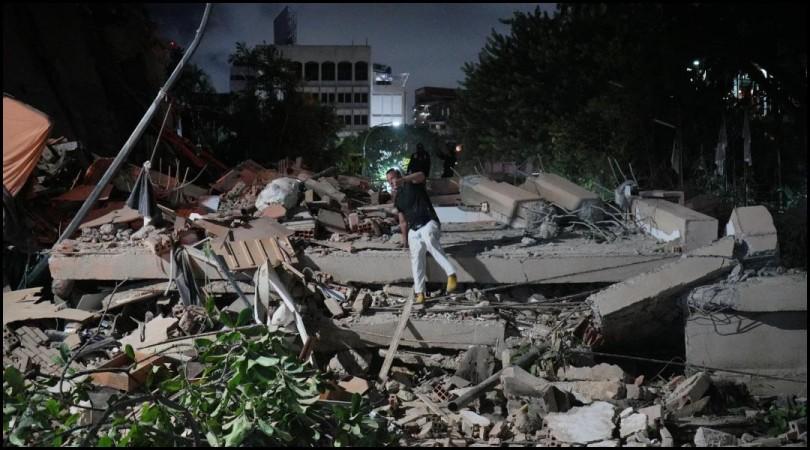
Authorities said rescue teams from other parts of the country were being deployed to La Guaira, which had already suffered one of Venezuela's worst natural disasters when a mudslide killed thousands in 1999. Cristian Carreo stood looking at his charred apartment building, leaning sharply to one side. "I lost everything," he said. "There are people still inside, I imagine, who couldn't get out. It's incredibly devastating."
Retired schoolteacher Juan Alberto Mendao climbed through the wreckage and passed a dead body before spotting a trapped woman signalling with her hand. "May God rescue her as quickly as possible," he said. "When we heard the scream, there was nothing we could do."
The disaster is the latest challenge for Rodríguez, the former vice president who took office in January after Nicolás Maduro's capture. Venezuela has faced economic turmoil for more than a decade, and many people continue to reject the legitimacy of the political movement she represents.
Rodriguez Announces $200 Million Reconstruction Fund
In a late-night address on Wednesday, Rodríguez announced a $200 million reconstruction fund for damaged hospitals and homes and appealed to businesses to provide heavy construction equipment for rescue operations. "We hope to rescue as many living people as possible," she said.
By Thursday morning, many residents were surveying buildings reduced to shells, with furniture hanging from windows and helicopters flying overhead. Streets had cracked open and several buildings had collapsed. Families put up missing-person posters with photographs, while others shared handwritten lists of names as they searched for relatives.
Venezuelans living abroad struggled to contact their families because phone services were disrupted. In central Caracas, hundreds spent the night in parks, car parks and other open spaces.
The International Monetary Fund (IMF) on Thursday expressed sympathy for the victims of the devastating earthquake and said it was working closely with Venezuelan authorities to assess the economic impact of the disaster and determine the best way to support recovery efforts.
Speaking at a regular IMF press briefing, Julie Kozack, Director of the IMF's Communications Department, said it was too early to determine the scale of any IMF assistance as officials continued evaluating the country's needs.
"We're deeply saddened by the impact of the earthquake on Venezuela. We express our deep sympathy to all of those affected, and our thoughts are with the people of Venezuela at this very difficult time for the country," Kozack said.
She said the Fund was maintaining close contact with Venezuelan authorities following the disaster.
"We've been closely engaged with the Venezuelan authorities, and we will remain closely engaged with them as they assess the economic impact and the recovery needs for Venezuela," Kozack said.
IMF Stand on Debt Recovery Plan
Asked whether the IMF would make emergency resources immediately available, Kozack said discussions were still at an early stage.
Responding to questions about Venezuela's recently announced debt restructuring, Kozack said the IMF was not participating in negotiations between the government and its creditors.
"So far, the Fund has not been involved in the debt restructuring process that has been announced by Venezuela," she said.
She added that the IMF maintained regular engagement with the authorities on the country's macroeconomic outlook and "stand ready to assist the authorities as needed."
Kozack explained that while debt restructuring often takes place under an IMF-supported programme, that was not always the case.
"The IMF is never a party to the negotiations and the discussion," she said.
Instead, the Fund typically provides a macroeconomic framework and debt sustainability analysis to assess whether any agreement between a government and its creditors can restore long-term debt sustainability.
"In this case, it's a bit different," Kozack said, noting that the IMF remained ready to assist Venezuelan authorities as needed during the restructuring process.
Venezuela lies near several fault lines, but strong earthquakes are less common there than in other parts of Latin America because of its position between the South American and Caribbean plates. The US Geological Survey said both tremors were centred near Morón on the Caribbean coast, about 170 kilometres west of Caracas.
Marcos Ferreira, a geophysicist and researcher at the Geological Survey of Brazil, said the pair of shallow earthquakes increased the level of destruction. "It is as if I am screaming and then someone starts screaming too. That amplifies the vibration and adds to the potential hazard," he said.
Shortly after United Nations officials in Venezuela urged the government to lift social media restrictions so people could receive potentially life-saving information, users in the country regained access to X. The platform had been blocked by Maduro since August 2024 in an effort to curb the flow of information among people who rejected his claim of victory in the July presidential election.