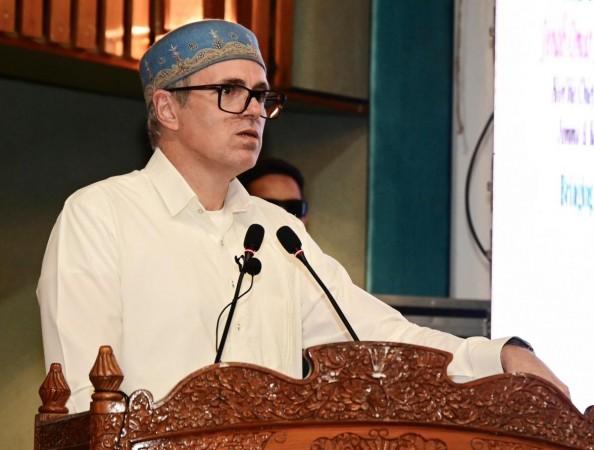
Jammu and Kashmir Chief Minister Omar Abdullah has said that there is a law governing the rendition of Vande Mataram and that the National Song and National Anthem will be played at official events.
"There is law in place on Vande Mataram. National Song and National Anthem will OBVIOUSLY be played. All the stanzas of Vande Mataram have been made mandatory. This is not just for Jammu and Kashmir; it applies across the country," Abdullah said.
His remarks come amid a growing political row over whether all six stanzas of Vande Mataram should be performed at official and public events.
The controversy intensified after Omar Abdullah and his father, National Conference leader Farooq Abdullah, stood through all six stanzas of the National Song at the inaugural International Film Festival in Srinagar.
The Congress, however, has maintained its position of singing only the first two stanzas, citing its 1937 resolution. The issue has also created friction between the Congress and its ally, the National Conference, with the latter backing the full rendition.
What are the Centre's guidelines on Vande Mataram?
The Union Home Ministry issued guidelines in February 2026 for the official rendition of Vande Mataram. According to the guidelines, the official version of the National Song consists of six stanzas and should be rendered in full when the National Song and National Anthem are performed together.
The guidelines also specify occasions when Vande Mataram is to be played or sung, including formal state functions involving the President or Governor, civil investitures and other government events.
The government has also strengthened legal protection for the National Song. A 2026 amendment expanded provisions of the Prevention of Insults to National Honour Act to cover Vande Mataram alongside the National Anthem, including intentional disruption of assemblies engaged in singing it.
Karnataka government opts for first two stanzas
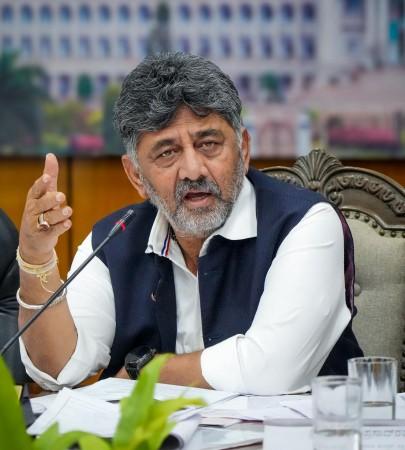
Amid the ongoing debate, the Karnataka government has directed that Vande Mataram be played or sung at state government programmes and official ceremonies, but specified that only the first two stanzas will be used.
The decision is in line with the Congress's longstanding position on the song. The Congress Working Committee has reaffirmed its 1937 stance that only the first two stanzas should be sung at party programmes.
Karnataka Chief Minister D.K. Shivakumar had earlier said that the state would follow the Congress decision. He also said that all six stanzas being rendered at an Independence Day event had happened without his knowledge.
OMAR ABDULLAH : "There is law in place on Vande Mataram. ??
— News Algebra (@NewsAlgebraIND) September 10, 2026
National Song and Nation Anthem will OBVIOUSLY be played.
All the stanzas of Vande Mataram have been made mandatory. This is not just for Jammu and Kashmir; it applies across the country" pic.twitter.com/5X8MxkcG1f
Vande Mataram row spreads to Gujarat
The controversy has also reached Gujarat, where Congress MLA Imran Khedawala sat down after the first two stanzas were rendered during a state Assembly session.
BJP leaders criticised Khedawala and demanded action, while the Congress MLA defended his decision by saying he was following the party's 1937 position and would not apologise.
The contrasting positions of the Congress and BJP, along with the differing approaches of the Congress and National Conference, have turned the rendition of Vande Mataram into a wider political debate.
While Omar Abdullah has backed the full rendition and maintained that all stanzas are mandatory across the country, Karnataka has chosen to limit its official state events to the first two stanzas.