US forces launched fresh strikes on Iranian targets near the Strait of Hormuz on Tuesday, marking the second American attack in two days and further escalating tensions between Washington and Tehran.
The strikes targeted Islamic Revolutionary Guard Corps (IRGC) positions, including air defence sites, radar systems, maritime assets, mine-laying capabilities and communications facilities, according to the US Central Command (CENTCOM). The US military said the operation followed attempted attacks by the IRGC on commercial shipping in the Strait of Hormuz and American service members in the region.
Explosions were reported across several Iranian coastal areas, including Qeshm Island, Bandar Abbas, Chabahar, Jask and Sirik. Iranian authorities had not immediately released details about the extent of damage or possible casualties.
An IRGC spokesperson warned that the United States would "regret its new attacks", while Tehran threatened further disruption to oil shipments through the Strait of Hormuz.
Trump warns Iran of bigger attack
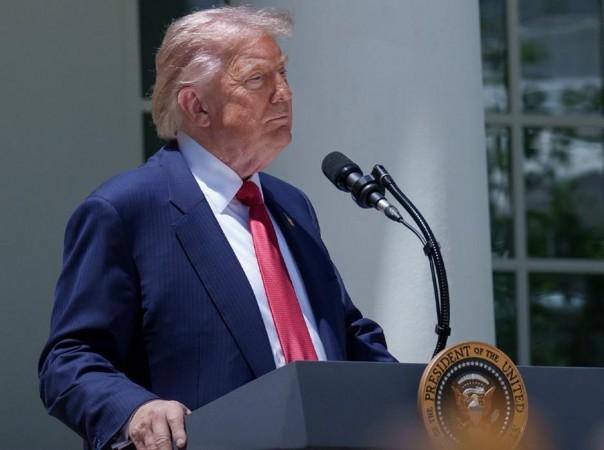
US President Donald Trump described the strikes as "large and powerful" and said they were carried out in response to Iran's alleged attempt to place sea mines in the Strait of Hormuz and its firing of eight missiles towards a US military base in Jordan.
Trump warned Iran that it would face an even stronger response if it retaliated.
He said the US had removed or detonated the mines in the strait and that all eight Iranian missiles fired towards the US base had been intercepted.
Iran threatens strong response
Iranian officials have warned that Tehran would respond to the US strikes. Iranian President Masoud Pezeshkian said at a regional summit in Kyrgyzstan that Iran would reciprocate immediately if Washington failed to honour its commitments under a June memorandum intended to halt the conflict.
Iranian Parliament Speaker Mohammad Baqer Qalibaf also warned that if Iran was prevented from exporting oil through the Persian Gulf, other countries would not be able to export oil either.
Foreign Ministry spokesperson Esmaeil Baghaei accused Washington of making excessive demands and said Iran would use all its capabilities, both on the battlefield and through diplomatic channels.
Second US attack in two days
The latest operation came two days after US forces struck Iranian rocket launchers in the Strait of Hormuz, ending a month-long lull in fighting.
Iran described Sunday's operation as a deadly attack and retaliated by firing ballistic missiles towards US bases in Jordan. Jordan said its armed forces intercepted eight missiles that entered its airspace early Monday.
US Central Command said the IRGC had been preparing to launch rockets carrying sea mines into the Strait of Hormuz. Iran acknowledged casualties in the US strikes and warned Washington of military and economic consequences.
The latest exchange marks another escalation in the conflict, which began on February 28 and has continued intermittently for more than six months.
US considers fresh sanctions on Iran
The military escalation comes as Washington prepares additional economic pressure on Tehran.
US Treasury Secretary Scott Bessent said the US was likely to announce fresh sanctions against Iranian banks and was also considering measures against aircraft-leasing companies and other entities doing business with the IRGC.
The renewed military confrontation and threat of further sanctions have also revived concerns about disruptions to global oil supplies. Around 20 per cent of the world's oil normally passes through the Strait of Hormuz, although commercial traffic remains significantly below pre-war levels.