The United States has accused India and more than 40 other countries of being part of a "shadow trans-shipment network" allegedly used by China to bypass high American tariffs, while Washington has announced plans to deploy an artificial intelligence-based system to detect suspicious shipments.
The allegations were detailed in a report titled The Great Transshipment Scam, released by Peter Navarro, US President Donald Trump's top trade adviser. The report claims that Chinese exporters increasingly began routing goods through third countries after the US imposed Section 301 tariffs on Chinese imports in 2018.
According to the report, Chinese goods are allegedly being sent through other countries where they may undergo limited processing, relabelling, repackaging, reinvoicing or changes in shipping routes. Such practices can make goods appear to originate from another country while retaining much of their Chinese content.
The US report estimates that goods worth between $40 billion and $303 billion could be rerouted through third countries each year, depending on the methodology used. Navarro said the network includes several major US trading partners, including Canada, Mexico, the European Union, India, Japan and South Korea.
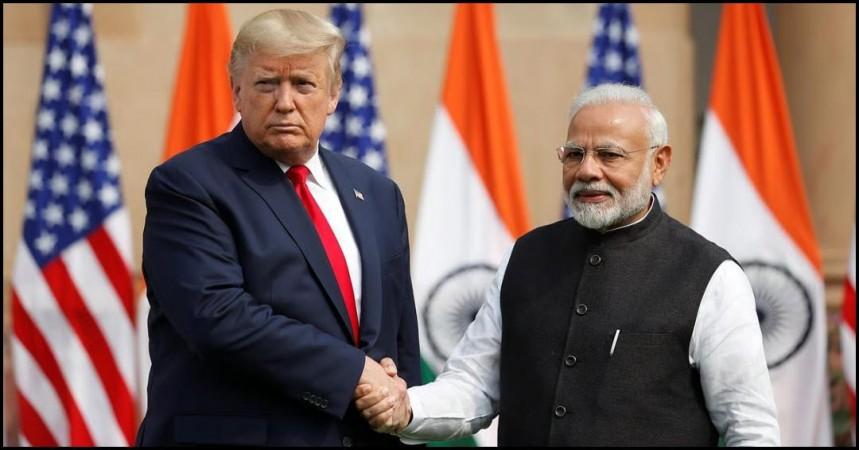
The report specifically highlighted India's Pune-Gujarat-Chennai manufacturing belt, claiming that it absorbs Chinese-origin pumps and compressors that could otherwise enter US supply chains directly. The allegation comes at a sensitive time for India-US trade relations, with the two countries continuing discussions on a bilateral trade agreement.
The Indian government has not yet issued a response to the allegations.
US plans AI-based 'Detective Border' system
Alongside the report, Washington outlined plans for an AI-powered system called "Detective Border" to help US Customs and Border Protection identify goods suspected of being rerouted to avoid tariffs.
The system is expected to analyse shipment records, routing histories, product classifications, ownership links and production-capacity data. It would also use anomaly detection and computer vision to identify potentially suspicious shipments and distinguish legitimate foreign investment or nearshoring from illegal tariff evasion.
The findings could then be used for enforcement measures, including collection of additional duties, penalties and exclusion orders.
Navarro has argued that transshipment allows Chinese manufacturers and trading companies to take advantage of countries with lower labour costs, weaker customs oversight, permissive free-trade zones or favourable access to the US market.
The US administration's move marks a broader effort to tighten enforcement against Chinese goods entering the American market indirectly. It could also increase scrutiny of manufacturing and supply chains across countries that have become important alternatives to China as companies diversify production.
For India, the allegations could add another layer of complexity to ongoing trade negotiations with Washington, particularly as New Delhi seeks to expand its role in global manufacturing and attract companies looking to reduce dependence on China.