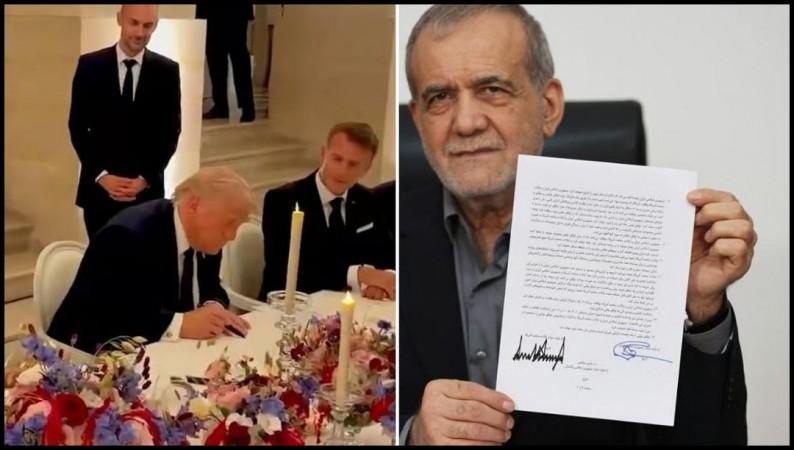
Senior US officials on Wednesday disclosed the contents of the memorandum of understanding (MoU) with Iran to journalists after days of secrecy surrounding the agreement. The officials spoke on condition of anonymity ahead of a formal signing ceremony scheduled for Friday. Iranian state television later released a version of the text that largely matched the US account.
Pakistani Prime Minister Shehbaz Sharif, whose country has played a mediating role between Washington and Tehran, later announced that the leaders of the United States and Iran had signed the agreement and that it would come into force immediately.
1. Immediate and permanent ceasefire
The United States and Iran, along with their allies involved in the current conflict, have agreed to the immediate and permanent cessation of military operations on all fronts, including Lebanon. Both sides committed not to initiate military action against each other and to refrain from the threat or use of force, while respecting Lebanon's sovereignty and territorial integrity.
The final agreement will formally confirm the permanent end of hostilities on all fronts.
2. Respect for sovereignty
Both countries agreed to respect each other's sovereignty and territorial integrity and pledged not to interfere in each other's internal affairs.
3. Final agreement within 60 days
The United States and Iran committed to negotiating a comprehensive final agreement within 60 days, with the possibility of extending the deadline through mutual consent.
4. End of US naval blockade
Immediately after signing the MoU, the United States will begin lifting its naval blockade and remove any restrictions affecting Iran. The blockade is to be fully lifted within 30 days.
During this period, maritime traffic will gradually return to pre-war levels. The US also committed to withdrawing its forces from areas near Iran within 30 days of a final agreement being reached.
5. Restoration of commercial shipping
Iran agreed to facilitate the safe passage of commercial vessels through the Persian Gulf and the Sea of Oman free of charge for 60 days.
Commercial shipping operations will resume immediately and are expected to return to normal within 30 days as technical and military obstacles, including demining operations, are addressed.
Iran will also engage with Oman and other Gulf states to determine the future administration and maritime services of the Strait of Hormuz in accordance with international law.
6. $300 billion reconstruction and development plan
The United States, together with regional partners, committed to developing a reconstruction and economic development package worth at least $300 billion for Iran.
The implementation mechanism will be finalised as part of the final agreement within 60 days. Washington also pledged to provide all necessary licences, waivers and permissions required for related financial transactions.
7. Commitment to lift sanctions
The United States undertook to terminate all sanctions on Iran, including UN Security Council measures, International Atomic Energy Agency (IAEA) Board of Governors resolutions and unilateral US sanctions, both primary and secondary.
Both countries acknowledged the importance of sanctions relief and agreed to address the matter immediately during negotiations for the final agreement.
8. Nuclear commitments
Iran reaffirmed that it will not acquire or develop nuclear weapons.
Both sides agreed to determine the future of Iran's enriched uranium stockpile through a mutually agreed mechanism. The minimum proposed method would involve downblending the material under IAEA supervision.
The parties also agreed to discuss uranium enrichment and other nuclear-related issues within a mutually acceptable framework as part of the final agreement.
9. Status quo during negotiations
Until a final agreement is reached, both sides agreed to maintain the status quo.
Iran will not expand its nuclear programme, while the United States will refrain from imposing new sanctions or deploying additional military forces to the region.
10. Waivers for Iranian oil exports
The US Treasury will immediately issue waivers allowing the export of Iranian crude oil, petroleum products and derivatives, including related banking, insurance and transportation services, until sanctions are formally lifted.
11. Release of frozen Iranian assets
The United States agreed to make available all frozen or restricted Iranian funds and assets following implementation of the MoU.
Both countries will determine the procedures governing the release of the funds during negotiations. The assets will be fully accessible for payments authorised by the Central Bank of Iran, with Washington issuing all necessary licences and approvals.
12. Monitoring mechanism
The two countries agreed to establish an executive mechanism to oversee implementation of the MoU and monitor compliance with the final agreement.
???? White House released full text of the MoU
— Commentary Donald J. Trump Truth Social Posts On X (@TrumpTruthOnX) June 17, 2026
The points summarised are as follows:
1. The U.S. and Iran, and their allies in the current war, by signing this MoU, declare the immediate and permanent termination of military operations on all fronts, including in Lebanon, and… pic.twitter.com/XiyeufaKY8
13. Negotiations on remaining issues
Once implementation begins on key provisions, including the ceasefire, lifting of maritime restrictions, restoration of shipping, oil export waivers and release of assets, both sides will begin negotiations on the remaining provisions of the final agreement.
14. UN Security Council endorsement
The final agreement will be endorsed through a binding United Nations Security Council resolution.