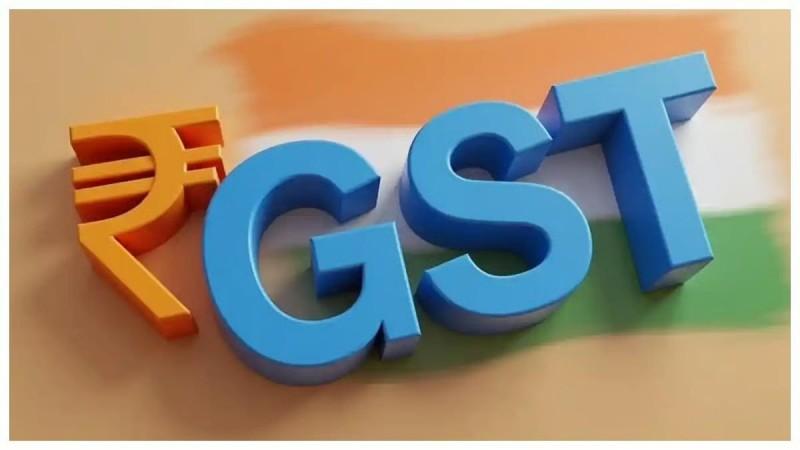
The Goods and Services Tax (GST) Council on Thursday approved a series of taxpayer-friendly reforms, including the removal of arrest powers from tax officers and a significant increase in the prosecution threshold to Rs 5 crore from the existing Rs 1 crore.
The decisions were taken at the 57th meeting of the GST Council, chaired by Union Finance Minister Nirmala Sitharaman in the national capital.
Addressing reporters after the meeting, FM Sitharaman said the Council focused on process-related reforms aimed at improving ease of doing business and reducing compliance burdens rather than making changes to GST rates.
"No rate changes have been made. The rate structure is settled," the Finance Minister said, adding that last year's efforts had focused on simplifying GST rates, while this year's discussions centred on streamlining procedures for businesses.
"GST Council scraps arrest power of tax officers; raises prosecution threshold to Rs 5 crore from Rs 1 crore," the Finance Minister told reporters during the press conference.
Among the key decisions, the Council approved the automatic acceptance of routine changes in GST registration, a move expected to reduce administrative delays and improve compliance efficiency.
The government will also speed up the refund process, with the acknowledgement period for refund applications being reduced to 10 days from the current 15 days.
In a major relief for taxpayers, FM Sitharaman announced that 90 per cent of eligible refund claims will be issued within three working days, a step aimed at improving liquidity for businesses and exporters.
The Council also expanded the availability of input tax credit (ITC), allowing businesses to claim credits on additional expenditure categories, including telecom towers and employer-provided insurance cover.
The 57th GST Council meeting, which was rescheduled from Wednesday due to unavoidable circumstances, was attended by representatives from the Centre and state governments.
The participants included the Chief Ministers of Delhi, Goa, Haryana, Jammu & Kashmir, Karnataka, Kerala, Maharashtra and Meghalaya; Deputy Chief Ministers of Manipur and Telangana; Finance Ministers and senior members of states and Union Territories, besides the Secretary of the Department of Revenue, the Chairman and Members of CBIC and senior officials of the Ministry of Finance.
UPI MDR rollout may be delayed
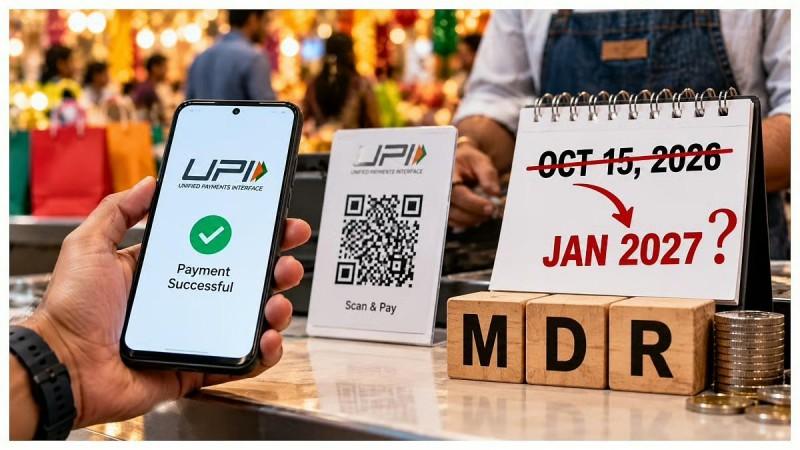
Meanwhile, the government's proposed plan to introduce Merchant Discount Rate (MDR) charges on UPI transactions above Rs 2,000 could face a delay, with implementation potentially shifting from October 15, 2026, to January 2027.
According to a Reuters report citing regulatory and industry sources, the government is considering postponing the rollout to avoid disruptions during the festive shopping season and give payment companies additional time to prepare.
However, there has been no official announcement confirming the postponement so far.
Why could UPI MDR be delayed?
The proposed 0.4 per cent MDR was scheduled to become effective on October 15, coinciding with India's festive shopping season.
Retail transactions typically increase significantly between October and December, making payment stability particularly important. A postponement would give banks, payment service providers and merchants additional time to upgrade their systems and implement the revised charging framework.
UPI currently serves more than 500 million users across India.
What are the proposed UPI charges?
Under the proposed framework, merchants accepting UPI payments above Rs 2,000 would face an MDR of 0.4 per cent.
For transactions worth Rs 75,000 or more, the charge would be capped at Rs 300.
Person-to-person UPI transfers would remain completely free, while merchant transactions of Rs 2,000 or less would also attract no charges.
These smaller payments account for more than 95 per cent of UPI merchant transaction volumes.
Paytm and Mobikwik shares fall
Reports of a possible postponement triggered selling in listed digital payment companies on Thursday.
Paytm shares declined 7.6 per cent, while One Mobikwik Systems dropped 7.2 per cent.
Investors had expected MDR implementation to create additional revenue opportunities for payment companies through transaction fee sharing. A delay could therefore postpone those anticipated earnings.
What has RBI said?
Reserve Bank of India Governor Sanjay Malhotra said on Wednesday that a small MDR charge was unlikely to significantly affect UPI transaction volumes.
He indicated that the central bank did not anticipate a major decline in UPI usage following the introduction of the proposed charges.
Will consumers pay anything?
The government has clarified that UPI will remain free for consumers making person-to-person payments.
The proposed MDR applies to eligible merchant transactions and not ordinary individual transfers.
The final implementation timeline now depends on an official government decision.