On Feb. 24, 2022, Russia launched its full-scale invasion of Ukraine, expecting what many believed would be a swift military victory. Instead, the war became Europe's largest and most destructive conflict since World War II. More than four years later, it continues to consume lives, treasure, and political capital while reshaping the global security order.
The roots of the conflict stretch back decades. Following the collapse of the Soviet Union, Ukraine steadily moved closer to the West, while Russia regarded NATO's eastward expansion as an existential threat. Moscow's annexation of Crimea in 2014 and its support for separatists in eastern Ukraine foreshadowed its larger invasion eight years later.
The consequences have been staggering
The war has cost well over a trillion dollars when military expenditures, sanctions, reconstruction, and economic disruption are taken into account. The United States alone has appropriated nearly $200 billion in military, economic, and humanitarian assistance to Ukraine. Kyiv now spends roughly one-third of its gross domestic product on defense, while both Russia and Ukraine have suffered enormous military casualties and the loss of vast amounts of equipment.
Exactly four years and four days after Russia invaded Ukraine, the United States and Israel launched military operations against Iran, beginning another conflict that many expected would end quickly.
The origins of that war also stretch back decades. Ever since Iran's 1979 Islamic Revolution overthrew the Shah and established the Islamic Republic, relations between Tehran and Washington have been defined by mutual hostility, sanctions, proxy conflicts, and recurring military crises. Iran's nuclear program, its support for regional militant groups, and repeated confrontations with Israel caused many analysts to view a direct military confrontation as only a matter of time.
The campaign against Iran started dramatically. The United States and Israel targeted much of Iran's military and political leadership in an effort to cripple the regime's ability to wage war and, ultimately, to bring about political change. Tehran, despite suffering extensive damage to its military infrastructure, absorbed the initial assault and retaliated with missile and drone attacks against Israel and America's Arab partners.
The conflict soon expanded beyond the battlefield as Iran closed the Strait of Hormuz, disrupting nearly one-fifth of the world's seaborne oil trade and sending shockwaves through global energy markets.
Now in its sixth month, the Iran war has inflicted far fewer casualties than the Russia-Ukraine conflict, but its economic consequences have been felt worldwide. Oil prices have surged, inflation has accelerated, shipping costs have climbed, and global trade has slowed. According to the World Bank, worldwide economic growth is projected to decline 2.5 percent because of disruptions to energy supplies and international commerce.
The economic damage tells only part of the story
Perhaps the most striking parallel between the two wars is how both have exposed the limits of military power.
Russia entered Ukraine expecting a rapid victory. Many observers predicted Kyiv would fall within weeks. Instead, Moscow found itself trapped in a prolonged war of attrition against a determined opponent backed by Western military and financial assistance.
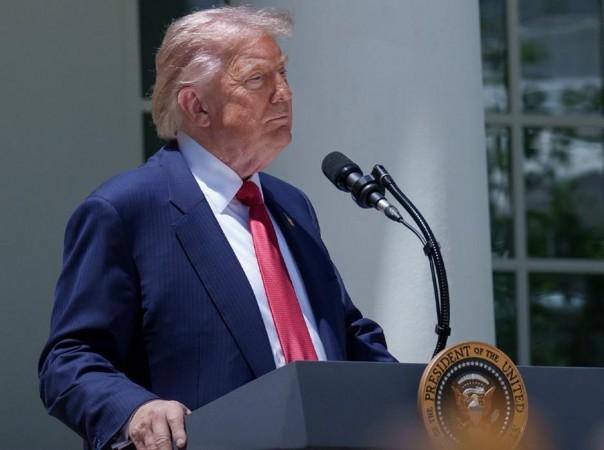
The United States appears to have made a similar miscalculation. President Donald Trump predicted that the Iran war could be concluded in as little as five weeks. Instead, months later, Washington finds itself facing an adversary that remains capable of imposing significant military and economic costs despite suffering enormous losses.
In both cases, military superiority has not translated into strategic success.
Russia has suffered tens of billions of dollars in military losses while failing to impose its political objectives on Ukraine.
Similarly, despite overwhelming military capabilities, the United States has struggled to achieve its principal goals of regime change and the dismantling of Iran's nuclear ambitions. Instead, Iran continues to exert leverage through its control of the Strait of Hormuz and its ability to threaten American interests and those of its regional partners.
The conflict reshaped the Middle East's strategic landscape
American military installations across the region have come under sustained attack, while Washington has struggled to shield its Gulf allies from Iranian retaliation. The Gulf monarchies, long dependent on American security guarantees, have begun reassessing their strategic options. Saudi Arabia's decision last week to deepen its security cooperation with Turkey and Pakistan illustrates how prolonged conflicts often produce geopolitical realignments that extend far beyond the battlefield.
The economic consequences for the region are equally profound.
For decades, cities such as Dubai marketed themselves as islands of stability in an otherwise turbulent Middle East. Investors, multinational corporations, and expatriates flocked there because regional conflicts rarely threatened everyday life.
That assumption no longer holds.
The destruction across Iran, Israel, and parts of the Gulf has already imposed enormous reconstruction costs that could exceed $400 billion. Tourism has weakened, investment has slowed, insurance costs have risen, and businesses are reassessing long-term commitments to the region.
The costs are not confined to the Middle East.
According to the Center for American Progress, the war has imposed significant financial burdens on American households through higher energy prices, increased federal spending, and broader economic disruptions. Like the Ukraine war, the conflict demonstrates how modern wars quickly become global economic events, affecting people thousands of miles from the battlefield.
History offers countless examples of such strategic overreach.
Powerful nations have repeatedly assumed that military superiority guarantees political success. Yet war has a way of escaping the plans of those who start it. Tactical victories do not necessarily produce strategic outcomes.
The United States experienced this reality in Vietnam, Iraq, and Afghanistan. The Soviet Union learned it in Afghanistan. Britain confronted it during the Suez Crisis. Russia is learning it today in Ukraine.
Now the U.S. risks learning a similar lesson in Iran
The central mistake is often the same: underestimating an opponent's willingness to endure hardship while overestimating one's own ability to shape political outcomes through military force alone.
Wars also develop their own momentum. Domestic politics, nationalism, international alliances, economic pressures, and public opinion combine to produce consequences that no military planner fully anticipates.
The Iran war illustrates that dynamic. What began as a campaign intended to achieve rapid strategic objectives has evolved into a prolonged regional conflict with mounting economic and geopolitical costs.
The broader lesson extends beyond either conflict.
George Santayana famously warned that those who cannot remember the past are condemned to repeat it. The Russia-Ukraine war and the U.S.-Iran war, though different in geography, history, and scale, underscore the same enduring truth: great powers often enter wars believing they can control them. More often than not, the wars end up controlling the great powers instead.
(Frank F Islam is an entrepreneur, civic leader and thought leader based in Washington, DC. The views expressed are personal.)