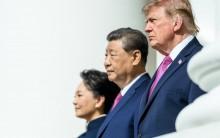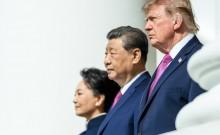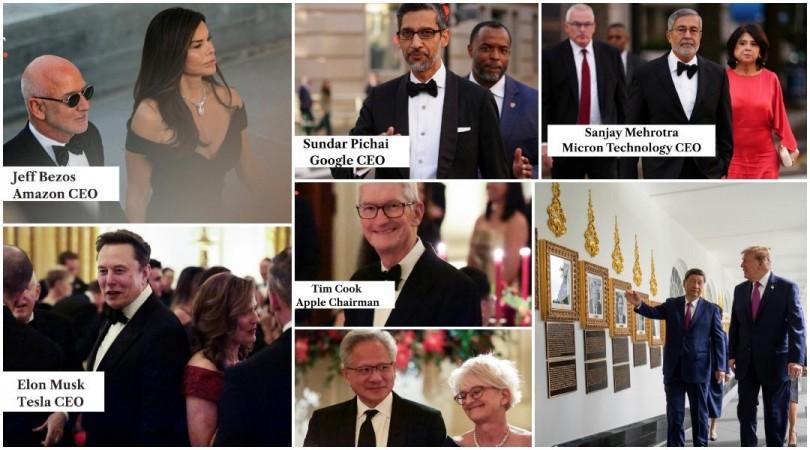
US President Donald Trump and Chinese President Xi Jinping's high-profile White House state dinner on September 24 brought together several of the biggest names in technology and artificial intelligence, while also putting the spotlight on one notable absence.
The guest list included OpenAI CEO Sam Altman, Nvidia CEO Jensen Huang, Apple executive chairman Tim Cook, Meta CEO Mark Zuckerberg, Tesla CEO Elon Musk, Amazon founder Jeff Bezos and Alphabet CEO Sundar Pichai. The gathering came as Washington and Beijing continue to navigate issues involving trade, technology, semiconductors and artificial intelligence.
Dario Amodei's absence stands out
One major name missing from the dinner was Dario Amodei, CEO of Anthropic, the company behind Claude AI.
While several leading technology and AI executives were present, Amodei was not among the guests listed for the White House dinner. The reason for his absence has not been publicly established.
His absence has drawn attention because Amodei has been among the technology executives calling for greater safeguards around increasingly powerful AI systems.
Earlier this month, he published an essay arguing that the development of frontier AI systems should be slowed enough to give governments, companies and independent evaluators more time to establish safety measures.
AI and US-China relations in focus
The dinner took place against the backdrop of growing US-China competition over artificial intelligence and advanced technology.
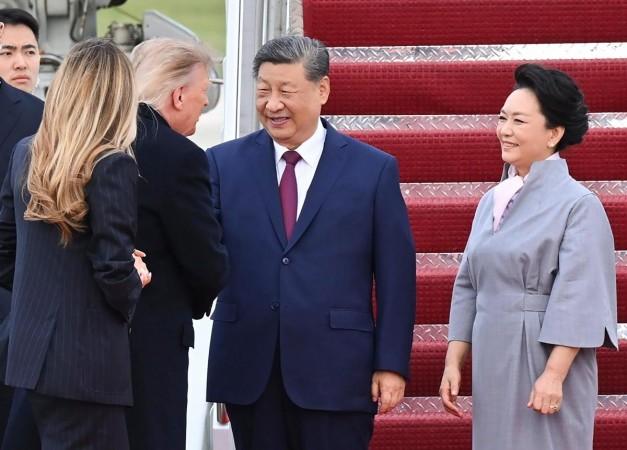
Trump and Xi have been discussing ways to manage relations between the two countries, even as disagreements remain over trade, critical minerals and advanced semiconductors. AI safety and the risks associated with increasingly powerful systems have also emerged as areas for international discussion.
OpenAI's Sam Altman and Amodei had recently appeared before the UN Security Council, where they discussed the potential benefits and risks of advanced AI and called for greater international cooperation on AI safety.
A table filled with tech heavyweights
The presence of some of the world's most influential technology executives made the dinner particularly notable.
Reports said Trump's table included Elon Musk, AMD CEO Lisa Su, Nvidia CEO Jensen Huang and Tim Cook, alongside Trump, First Lady Melania Trump and Xi Jinping.
Other business and technology leaders were also present, highlighting the importance of the tech industry to the broader US-China relationship.
From AI leaders to a lavish dinner menu
While the technology guest list attracted attention, the dinner itself also featured a carefully curated menu that combined American ingredients with subtle Chinese influences.
Trump and Melania hosted Xi and his wife, Peng Liyuan, in the White House's East Room for the formal state dinner. The evening began with a toast featuring Schramsberg Blanc de Noir, an American sparkling wine associated with the historic 1972 "Toast to Peace" between US President Richard Nixon and Chinese Premier Zhou Enlai.
The three-course menu brought together seasonal ingredients, Asian flavours and European culinary techniques.
First course: Yellow squash velouté
The meal began with yellow squash velouté, served with wild mushroom fricassée, crispy pancetta and scallion oil.
The creamy squash soup was paired with earthy mushrooms, while crispy pancetta added a savoury element. Scallion oil provided a fresh finish.
Main course: Sesame-crusted sea bass
The main course featured sesame-crusted sea bass, accompanied by braised baby bok choy, roasted garden eggplant and sauce verte.
The sesame crust added a nutty flavour to the fish, while bok choy and eggplant brought Asian-inspired elements to the plate. The dish was finished with a fresh herb-based sauce.
Dessert: Vanilla crémeux and White House honey ice cream
For dessert, guests were served vanilla crémeux with a sour cherry confit centre, placed over walnut frangipane.
The dessert was accompanied by ice cream made with honey harvested from beehives at the White House. Its fruit-like presentation added a decorative touch to the final course.
A menu blending different culinary traditions
The menu brought together American ingredients and subtle Chinese influences. Sesame, scallion oil and bok choy added Asian elements, while the velouté, fricassée and crémeux reflected European culinary techniques.
The East Room was also decorated with red linens, dahlias and ranunculus, adding Chinese-inspired touches to the setting.
The evening featured musical performances as well, including appearances by tenor Christopher Macchio and military musical groups.
Overall, the dinner brought together diplomacy, technology and fine dining, with the presence of major technology leaders reflecting the growing importance of AI and the tech industry in the US-China relationship.