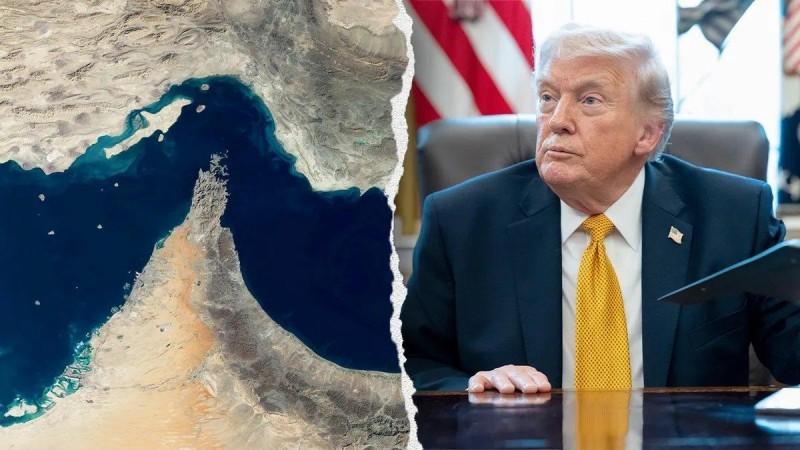
The Trump administration on Monday announced that the United States and Iran have signed a memorandum of understanding (MOU) establishing a framework for future negotiations, reopening the Strait of Hormuz and setting the stage for talks aimed at ensuring Tehran never acquires a nuclear weapon.
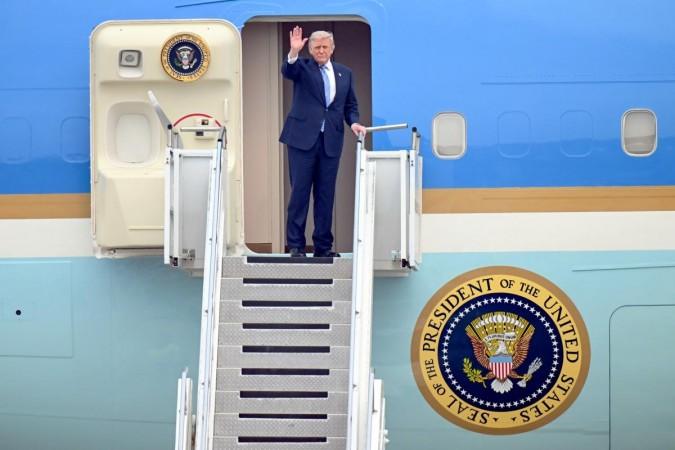
The breakthrough agreement was hailed by U.S. President Donald Trump and French President Emmanuel Macron during a bilateral meeting on the sidelines of the G7 Summit in Evian, France, with both leaders describing it as a major step toward easing tensions in the Middle East and stabilising global energy markets.
Senior U.S. administration officials said the agreement links sanctions relief and broader economic integration for Iran to verifiable steps on its nuclear programme, regional activities and support for militant groups. Officials described the understanding as the most significant opening in U.S.-Iran relations in decades, with a formal signing ceremony expected later this week.
???? Trump on Hormuz: toll-free, probably fine, maybe keep a ship or two around just in case.
— Mario Nawfal (@MarioNawfal) June 15, 2026
"We had a little argument about that"
"Free sailing" is the outcome Trump is selling. What Iran signed is a reopening under arrangements Iran determines.pic.twitter.com/jrUnRgSIqD https://t.co/Pt98Wvzfzw
"We have now signed a memorandum of understanding with Iran," a senior U.S. official said. "The more that the Iranians are willing to work with us on their nuclear program, on verifying that they're not building a nuclear weapon, on not funding radicalism and terrorism in the region, the more that they're going to be welcomed into the world economy."
Officials said the agreement provides for reopening the Strait of Hormuz and lifting the naval blockade that has disrupted maritime traffic and energy markets in recent weeks.
"You will see a significant increase in traffic in the Strait of Hormuz, actually starting already, and that will ramp up slowly over time," an official said.
Speaking at the G7 Summit, Macron described the deal as "a very important agreement" that would help resolve the nuclear issue and contribute to regional peace, including in Lebanon.
Trump said commercial shipping had already begun moving through the strategic waterway.
"The deal is all signed, and the Strait is already partially opened," Trump said. "Ships are starting to go out now. On Friday, it'll be completely opened."
He reiterated that the central objective of the agreement was to prevent Iran from obtaining a nuclear weapon.
"The main thing is that Iran will not have a nuclear weapon. They fully agreed to that with strong policing powers, and they won't have a nuclear weapon," Trump said.
U.S. officials said future negotiations would focus heavily on verification mechanisms and dismantling any remaining pathways to nuclear weapons development. They indicated that sanctions relief, access to frozen Iranian funds and international investment could eventually form part of a final agreement, but only if Tehran meets specific and verifiable benchmarks.
"We don't pay for play. We're prepared to give them a lot, but we expect performance," a senior official said.
The administration also stressed that the MOU would be released publicly and that there would be no undisclosed arrangements.
Despite the diplomatic breakthrough, officials said U.S. military forces would remain in place during the next phase of negotiations, with any reduction in deployments contingent on a final agreement being reached and implemented.
The administration argued that sustained military, diplomatic and economic pressure had weakened Iran's position and brought its leadership to the negotiating table. One senior official claimed Iran's nuclear programme had been "mostly destroyed" and said Tehran now understood Washington's willingness to act if it attempted to pursue a nuclear weapon.
Trump said the agreement would allow his administration to shift greater diplomatic attention to ending the Russia-Ukraine war.
"I had two very good conversations yesterday," Trump said, referring to discussions with Russian President Vladimir Putin and Ukrainian President Volodymyr Zelenskyy. "Now that this is finished, we're going to be focusing on that."
Macron said Ukraine, trade, critical minerals, artificial intelligence and broader strategic issues would also feature prominently during discussions among G7 leaders.