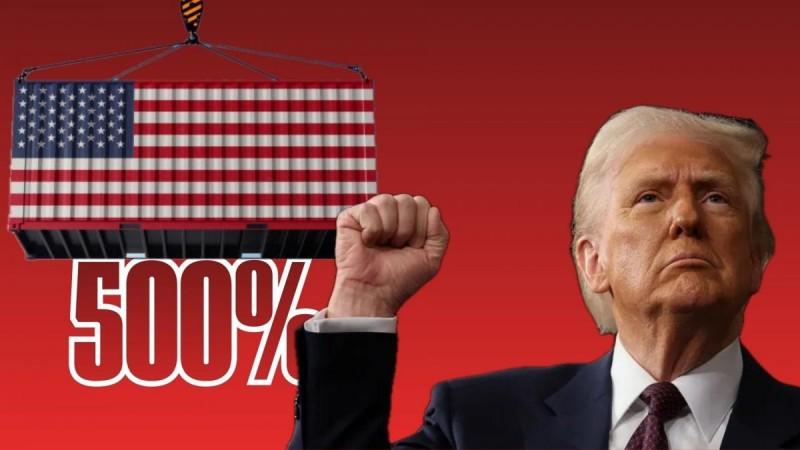
U.S. President Donald Trump has signalled his support for a bipartisan sanctions bill that would give the executive branch authority to impose punitive measures—including tariffs of up to 500 percent—on countries that continue to purchase Russian oil and other key exports, according to U.S. Senator Lindsey Graham and multiple reports.
The legislation, known as the Sanctioning Russia Act of 2025, is designed to escalate economic pressure on Moscow amid its nearly four-year war in Ukraine by targeting not only Russia itself but also nations whose energy purchases help sustain its economy. If enacted, the bill would allow tariffs and secondary sanctions on countries that "knowingly" buy Russian crude, petroleum products, gas or uranium.
Graham, a Republican from South Carolina who has championed the bill alongside Democratic Senator Richard Blumenthal, told reporters he met with Trump at the White House on Wednesday, during which the president "greenlit" the legislation after months of negotiations. A White House official confirmed Trump's support to the Associated Press, though details on any revisions or concessions requested by the administration have not been disclosed.
"This will be well-timed, as Ukraine is making concessions for peace and Putin is all talk, continuing to kill the innocent," Graham said in a statement. He added that the bill could come up for a Senate vote as early as next week, though Congressional scheduling remains uncertain amid other legislative priorities, including a government funding package and an upcoming recess.
Countries in focus: India, China and Brazil
While the bill must still pass both chambers of Congress and be signed into law before taking effect, its potential scope represents a significant shift in U.S. sanctions strategy. Graham has specifically identified India, China, and Brazil as possible targets for penalties under the bill, citing their continued purchases of discounted Russian crude, which the U.S. argues help finance Russia's military activities.
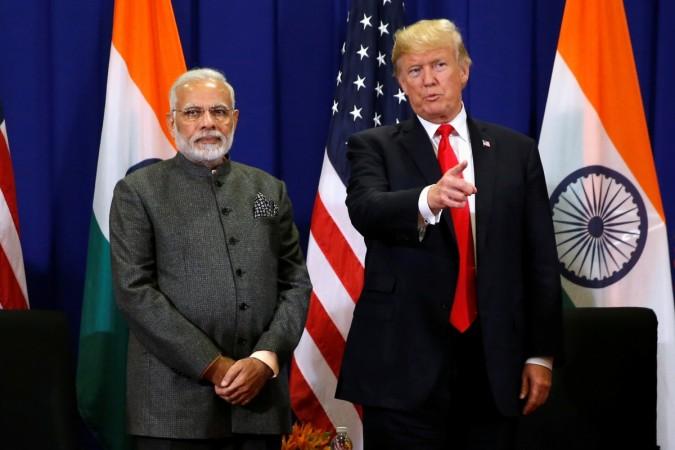
India and China are among the world's largest buyers of Russian oil, with discounted crude forming a substantial portion of their import baskets since the invasion of Ukraine. This trend has raised tensions with Washington. Analysts fear that punitive tariffs of up to 500 per cent on imports from those countries could sharply alter global trade dynamics, disrupt supply chains and strain diplomatic ties.
India, for example, has already faced elevated tariffs from the U.S. over its energy trade with Russia. Following earlier pressure from Washington, New Delhi's imports of discounted Russian crude fell significantly in late 2025, with some Indian refiners reportedly pausing deliveries altogether.
Trade experts say the sanctions bill — particularly the punitive tariff provisions — could have far-reaching consequences beyond its immediate geopolitical goals. Imposing such high duties on major trading partners risks inflating the cost of goods, altering export competitiveness, and prompting retaliatory measures.