The Joint Electricity Regulatory Commission (JERC) decision to increase electricity tariffs in Jammu and Kashmir and Ladakh has evoked strong political reactions, with opposition parties stepping up their attacks on the ruling National Conference over the hike.
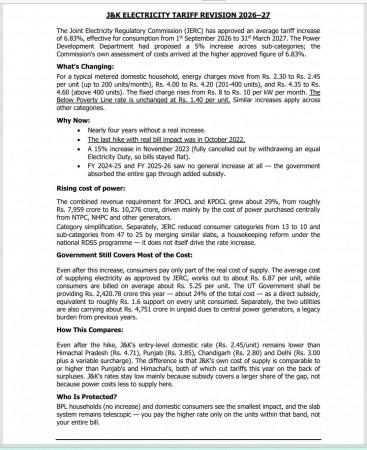
The JERC has approved an average 6.83 per cent increase in electricity tariffs for the Union Territory of Jammu and Kashmir for the financial year 2026–27. The revised tariff will come into force from September 1.
All electricity consumed from that date onwards will be billed according to the revised tariff structure.
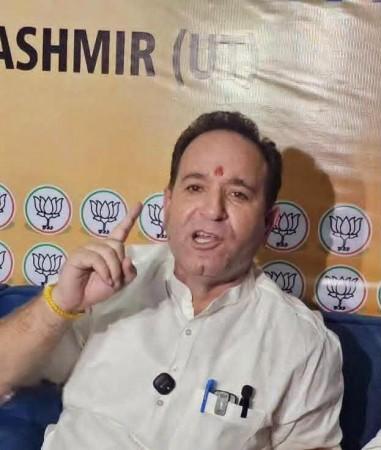
BJP MLA and Leader of Opposition in the J&K Legislative Assembly Sunil Sharma termed the tariff hike a "betrayal of the people", accusing the government of abandoning its electoral commitment.
"Before the elections, the promise was 200 units of free electricity; after the elections, the reality is higher electricity bills," Sharma said.
He warned that the BJP would continue to raise the issue and hold the government accountable for its unfulfilled promises.
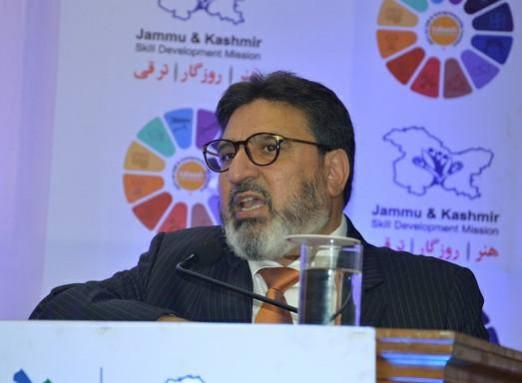
J&K Apni Party president Syed Altaf Bukhari said he was "not surprised" by the development, accusing the government of being "designed to trouble people".
He termed the decision to hike power tariffs "selfish" and "draconian", vowing that his party would actively oppose measures that increase the burden on ordinary citizens.
Trade bodies such as the Kashmir Trade Alliance (KTA) have also voiced concern, arguing that the hike will further strain the region's fragile economy. Ordinary consumers have echoed similar sentiments, with many saying that the increase contradicts the relief they were promised.
Chairman of the Peoples Conference and MLA Sajad Lone said that people in Jammu and Kashmir would now have to pay more out of their pockets for electricity.
"The regulator has approved a 6.83% hike in the power tariff and says it has avoided a tariff shock. It is definitely a shock for those who were promised 200 units free in 2024 by the ruling party," he said.
"Almost two years have passed and, to date, not a single rupee worth of benefit in terms of free power has been passed on to consumers. Not only that, the load has been increased in non-metered areas, which has increased the monthly bill," he added.
"A power tariff hike means an additional burden of more than Rs 500 crore on consumers, who have been helplessly waiting for 200 units of free electricity for the past two years," he said, adding that the Chief Minister himself had promised 200 units of free electricity to the people of J&K.
"At a time when unemployment is at a peak, inflation is biting hard and ordinary families are struggling to make ends meet, the government has imposed a 6.83% power tariff hike," Peoples Democratic Party leader Wahid-ur-Rehman Parra said.
Recalling the National Conference's electoral agenda, Parra said the party had come to power with promises of 200 units of free electricity, free gas and free rations.
"From free tariff promises of relief to higher bills, what happened to the promise?" he asked.
The tariff revision follows proposals submitted by the Jammu Power Distribution Corporation Limited (JPDCL) and Kashmir Power Distribution Corporation Limited (KPDCL), both of which had sought a 5 per cent across-the-board increase to meet their revenue requirements.
After a detailed prudence check, the Commission assessed the combined Annual Revenue Requirement (ARR) of the two corporations at Rs 10,275.72 crore. Under the existing tariff, projected revenue stood at Rs 7,352.87 crore, leaving a revenue gap of Rs 2,922.85 crore.
The JERC noted that bridging the entire gap through tariffs alone would have required a steep 40 per cent hike, an increase it deemed untenable for consumers.
The JERC has revised energy charges for metered domestic consumers to Rs 2.45 per unit for consumption of up to 200 units per month, Rs 4.20 per unit for 201–400 units, and Rs 4.60 per unit for consumption above 400 units. The previous tariffs were Rs 2.30, Rs 4.00 and Rs 4.35 per unit, respectively.