By Lakshmi Prabha
The World Meteorological Organization puts the odds of a strong-to "super" El Niño event at 80% to 90% through the rest of 2026, a forecast that has food security officials and commodity traders across South and Southeast Asia on alert.
Goldman Sachs has estimated the event could add more than 2 percentage points to regional food inflation over the next year, with rice, palm oil, sugar and coffee among the crops most exposed.
But on the ground, the picture is more mixed than the headline numbers suggest. According to Dr Naresh Kumar Soora, Head and Principal Scientist, Division of Environmental Sciences, ICAR-Indian Agricultural Research Institute, New Delhi, the real test for India's rice crop this year will come from what happens to rainfall in the coming weeks, not from the El Niño label itself.
"The rainfall in September is found to be crucial for rice performance in India," Dr Naresh Soora told IBTimes SG, adding that a delayed or weak monsoon has historically hit rainfed paddy hardest.
What a 'Super' El Nino Actually Means
El Niño is the warm phase of a natural Pacific Ocean cycle known as ENSO, or El Niño-Southern Oscillation. Roughly every two to seven years, trade winds weaken and warm water that typically piles up in the western Pacific shifts east, warming the central and eastern Pacific. The cycle usually develops between March and June, peaks between November and February, and lasts nine to 12 months.
Dr Naresh defines the "super" threshold precisely: "Super El Nino is the year when the central and eastern Pacific Ocean Sea Surface Temperature rises more than +2 degree over the long term mean." It is a specific, measurable departure from long-term ocean temperatures, one that has historically been associated with some of the most disruptive monsoon seasons on record, including 2015-16.
Even so, Soora cautioned against treating the El Niño label as a standalone predictor of India's monsoon. "Generally in India's monsoon is negatively affected in El Nino years," he said, "but other factors such as ENSO etc play important role in magnitude and extent of change in rainfall pattern."
Why Rice, and Why September
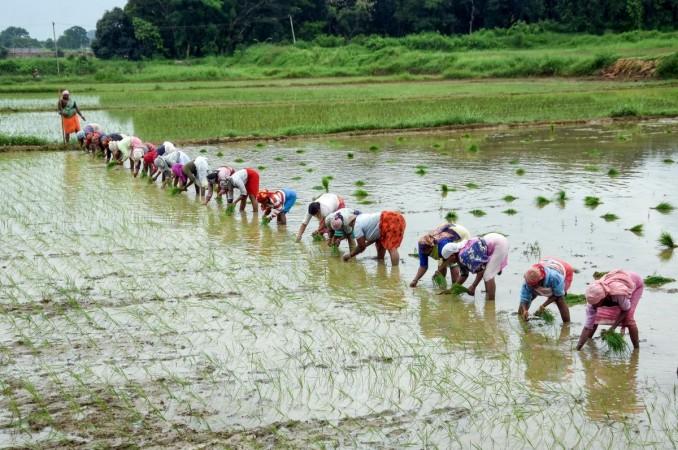
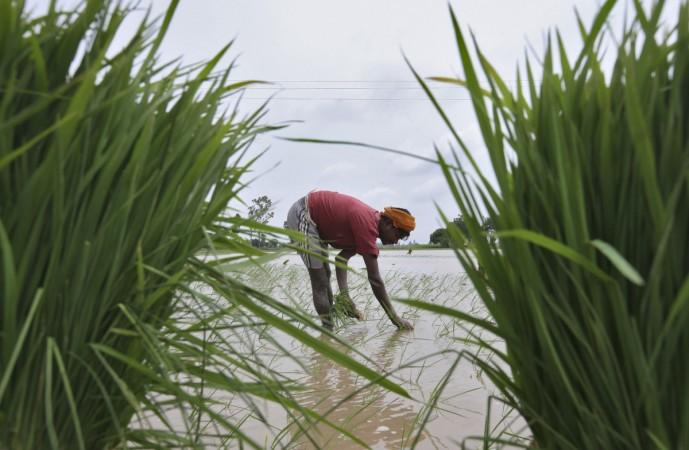
Of India's major crops, rainfed rice is the most exposed. "The El Nino years generally have low rainfall over India, affecting mainly rainfed crops such as rainfed rice," Soora said.
That vulnerability is tied to the crop's biology. Rice needs standing water through its vegetative and reproductive stages, and roughly half of India's farmland has no irrigation to fall back on if the rains falter.
A weak monsoon need not fail outright to cause damage; a poorly timed dry spell during flowering or grain filling can depress yields even in a season with adequate cumulative rainfall.
India recorded one of its driest Junes in more than a century before rains picked up in early July, narrowing the season's rainfall deficit. Kharif sowing, the summer planting season covering rice, cotton, soybeans and pulses, lagged well behind last year's pace, according to government crop data.
Dr Naresh Soora said the recovery has helped, but has not fully erased the early setback. "This year, the July rains have overcome the deficits of June," he said. "The sowing has been almost on time except in some regions."
What comes next, in his view, is still an open question. "In India, rainfed rice yield may be affected due to super El Niño, but it is too early to forecast loss, if any," Soora said. "Maybe by next month things will be more clear."
A New Normal of Dry Spells and Downpours
Beyond this season, Dr Naresh Soora pointed to a longer-term shift in India's rainfall patterns, one he said is becoming harder to separate from El Niño years alone. "Due to heating of atmosphere, long dry spells followed by heavy rainfall events become new normal," he said.
Dr Soora cited modeling work from ICAR's Environmental Modelling Lab, at the Division of Environmental Sciences of the Indian Agricultural Research Institute in New Delhi, which analyzed 21 global climate models under the CMIP6 framework.
"Analysis of CMIP6 21 Global climate models data at the Environmental Modelling lab of Division of Environmental Sciences, Indian Agricultural Research Institute New Delhi has indicated increase in climatic hazards heat waves, dry spells, cold waves, rainfall change any where between 5x to 17x in coming decades," he told IBTimes.
In other words, the volatility this year's monsoon has already shown - a historically dry June followed by a sharp wet correction in July - may increasingly be the pattern rather than the exception.

Also at risk, Soora noted, are farms that rely on canal or groundwater systems, though for a different reason than rainfed paddy. "Irrigated farms are likely to be affected too," he said.
"In irrigated farms, irrigation generally overcomes the dry spell effects, but extreme rainfall events can cause damage," a reference to the flooding and waterlogging risk that comes with heavy downpours now bookending longer dry stretches.
WMO puts the odds of a strong-to-"super" El Niño at 80-90% through 2026, a threshold Sharma defines as central-eastern Pacific sea surface temperatures rising more than 2 degrees above the long-term mean.Freepix
What Farmers are Being Told to Do
With the season's outcome still uncertain, ICAR's advisory to farmers has focused on reducing exposure rather than predicting losses.
Dr Soora laid out 10 interventions he described as urgent: harvesting rainwater in farm ponds for supplementary irrigation; shifting to shorter-duration varieties that mature before late-season dry spells set in; and choosing less water-intensive crops, such as millets, pulses and oilseeds, over paddy in the most exposed districts.
For fields that stay in rice, he recommended using the raised-bed method to stop water from stagnating around roots during heavy rain, applying crop residue as mulch to conserve soil moisture, and keeping fields weed-free so crops aren't competing for scarce water.
Proper drainage matters too, he said, so excess water can be channeled away from the crop and captured in a farm pond rather than left to pool. He also urged switching to sprinkler, drip or rain-gun irrigation where possible, adding organic matter to improve soil water retention, and cutting back on fertilizer, which can worsen crop stress during dry spells.
"Above are some of the major interventions that farmers are advised to undertake," Soora said. "There are many more, but these can be followed by farmers urgently."
Too Early to Call
For now, the story of this year's El Niño in India is less about confirmed losses than about a narrowing window of uncertainty. The June deficit has been partly repaired.
Sowing is close to normal in most regions. But the crucial month for rice, September, is still two months away, and the modeling, Dr Naresh Soora described, suggests that even a "normal" season may increasingly arrive punctuated by dry spells and sudden, damaging downpours.
Whether this cycle joins 2015-16 in the record books as a season of significant crop loss, or turns out to be a false alarm cushioned by a timely monsoon revival, is a question Dr. Soora was unwilling to answer prematurely, a caution that, in itself, reflects how this El Nino is being covered differently than past events with more data, more modeling, and less appetite for speculation.