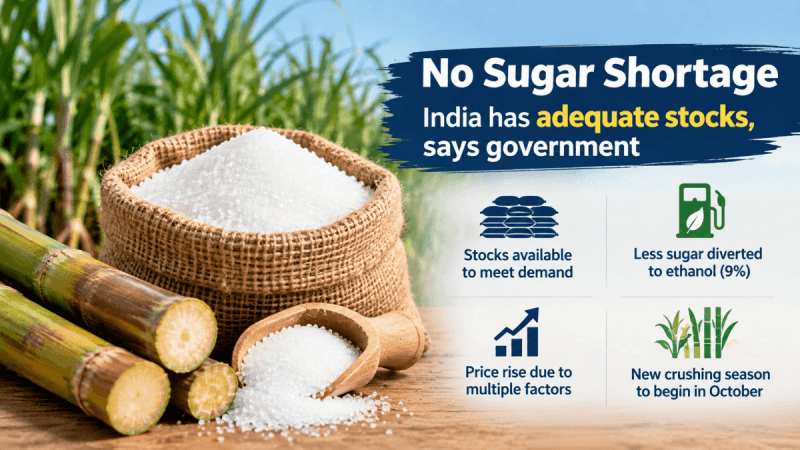
Sugar prices in India have begun easing after the central government approved the import of 1 million tonnes (mt) of raw sugar and imposed tighter stock-holding restrictions on bulk consumers.
According to a report by Business Standard citing data from the National Commodity & Derivatives Exchange, medium-grade sugar prices in Kolhapur, Maharashtra, declined from around ₹6,350 per quintal on August 21 to nearly ₹5,550 per quintal on August 25. This represents a fall of about 12.6% in four days.
Prices in Muzaffarnagar, however, remained largely unchanged at around ₹5,800 per quintal.
The government's measures appear to have provided some immediate relief to the domestic market. However, the sustainability of the decline remains uncertain, particularly with the next sugarcane crushing season expected to begin in late October.
Market participants said prices falling below ₹5,000 per quintal could put pressure on sugar mills if the weakness continues. Sugar production costs are estimated at approximately ₹4,200-4,300 per quintal.
In another move aimed at increasing local supplies, Indian refiners are reportedly preparing to divert around 350,000 tonnes of sugar originally meant for overseas markets to domestic buyers. The stocks could reach the local market within a week, according to people familiar with the matter cited by Bloomberg.
The additional supply could provide short-term relief as domestic sugar consumption typically rises during India's festival season, which begins in late August and continues through January.
The government's import decision had initially supported global sugar prices, although international prices have since moderated amid expectations that India may import less than the approved quota.
Five traders, analysts and millers surveyed by Bloomberg estimated that 300,000-600,000 tonnes could actually be imported by the end of October, below the government's 1-million-tonne allowance. Softer domestic prices could reduce the incentive for refiners and mills to bring in the full permitted quantity.