
When sleep troubles strike, most people blame stress, late-night screen time, or irregular routines. But the real culprit may be something far less obvious — the air inside the bedroom.
Indoor air quality is increasingly being linked to how well people sleep. Bedrooms, especially in urban homes, are often enclosed spaces where pollutants such as dust, allergens and gases can build up overnight. With doors and windows typically shut for long hours, the air inside can become stagnant, affecting breathing comfort and sleep quality.
Experts say that while people spend several hours sleeping in the same room each night, the role of indoor air quality is often overlooked in conversations around sleep health.

overlooked connection between air quality and sleep
Air pollution is widely associated with respiratory and cardiovascular diseases, but growing research suggests it can also interfere with sleep.
Higher levels of particulate matter in the air have been linked to poorer sleep quality, including more frequent awakenings during the night, reduced deep sleep and breathing discomfort. When air contains dust, allergens or chemical pollutants, it may irritate airways and disrupt the body's ability to enter deeper, restorative stages of sleep.
Unlike daytime hours, when air circulates more freely as people move around or open windows, bedroom environments often remain closed for long stretches at night. This allows pollutants to accumulate, particularly in homes with limited ventilation.
As a result, the air people breathe during sleep may play a bigger role in overnight recovery than many realise.
What sleep specialists are seeing
According to Dr Monika Sharma, a behavioural sleep medicine specialist, concerns about sleep disturbances often emerge alongside symptoms that may point to poor indoor air.
"In my practice, I often hear the same concerns — parents telling me their children wake up coughing at night, teenagers feeling unusually tired at school, and adults saying they wake up dull and unrefreshed," she said.
"Sometimes the issue isn't only sleeping habits or screen time, but the air we breathe indoors. When bedroom air becomes stale and CO₂ levels rise overnight, breathing can become less comfortable and sleep more fragmented."
Over time, she adds, poor sleep caused by environmental factors can lead to fatigue and reduced daytime performance.
"Clean air isn't just an environmental issue — it's a sleep health issue. The air we breathe through the night determines how well we recover and function the next day," Sharma said.
Why bedroom air gets worse overnight
Several factors contribute to declining air quality inside bedrooms. Dust and allergens from bedding and fabrics, outdoor pollutants entering through windows, and chemical compounds released by scented products or cleaning agents can all accumulate indoors.
Without adequate ventilation, these pollutants remain trapped inside the room.
During sleep, the body is continuously exposed to this environment for several hours. If the air contains irritants or high levels of carbon dioxide, it can interfere with breathing patterns and prevent the body from achieving deeper stages of sleep.
How to improve bedroom air quality
Natasha Taylor, an engineer at Dyson, says improving indoor air quality does not necessarily require major changes but does involve paying closer attention to the bedroom environment.
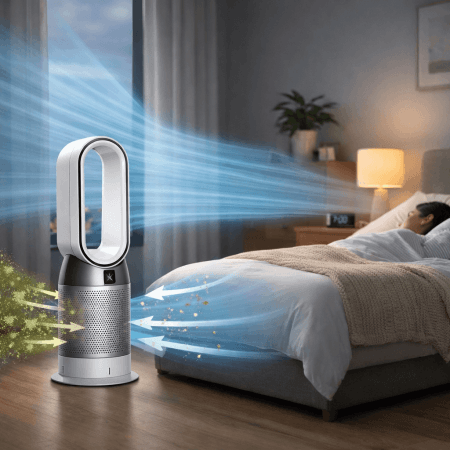
One approach is using an air purifier designed to capture airborne pollutants while circulating cleaner air across the room. Air purifiers equipped with advanced filtration systems can capture fine particles such as dust, pollen and pet dander while removing certain gases.
Taylor notes that effective purification depends not only on filtration but also on how well the purifier circulates air throughout the entire room.
Ventilation also plays an important role. During periods of high outdoor pollution, keeping windows closed at night can help limit the entry of dust, pollen and smog into indoor spaces.
Noise levels are another consideration. Devices designed for bedroom use typically operate in quieter modes to avoid disturbing sleep while maintaining air circulation.
Another simple step is reducing the use of scented candles, incense sticks and room fresheners before bedtime. While these products may create a calming atmosphere, they can release volatile organic compounds (VOCs) that affect indoor air quality.
A small change that can make a difference
Sleep remains one of the most critical pillars of overall health, influencing physical recovery, cognitive performance and emotional well-being.
While lifestyle habits such as reducing screen time or maintaining consistent sleep schedules remain important, experts say environmental factors inside the bedroom should not be ignored.
Cleaner indoor air, they say, could be a simple yet overlooked step toward achieving deeper, more restful sleep.