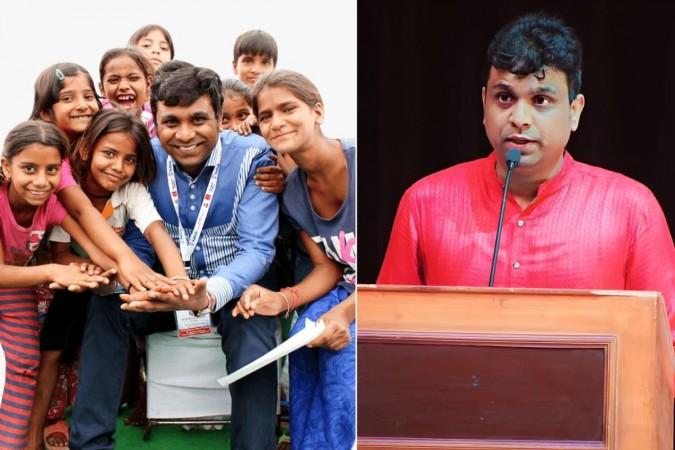
He once sold balloons on the streets of Delhi to survive. Gangs beat him and took his money. He had no home, no protection, and no school that felt like it was meant for him.
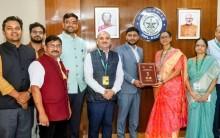
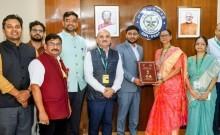
Today, Devendra Kumar — Founder of Ladli Foundation Trust — is the man standing at the inauguration of 100 state-of-the-art computer labs in Delhi government schools, flanked by cabinet ministers, with hundreds of thousands of children on the other side of a divide he is determined to close.
His words at that inauguration, delivered in February 2026, were not those of a distant policy voice. They were personal:
"With this initiative, we are working to bridge the biggest divide of this decade — which is the digital divide for marginalised students." — Devendra Kumar, CSR Mandate, February 2026
The Divide He Lived Before He Named It
Devendra was two years old when his parents abandoned him and his three-day-old infant sister in Dakshinpuri, one of South Delhi's most crime-prone slums. By age eight, he was a child labourer selling balloons — until Delhi's street gangs beat him and stole his earnings so repeatedly that his relatives stopped sending him out. He then cleaned pharmacies and helped chemists, navigating violence and poverty simultaneously.
The question that changed his life, as he has recalled it himself, was simple: "What if the police could protect me?" He began volunteering with the Delhi Police Community Policing Initiatives — not out of civic duty, but out of a child's desperate search for safety.
He never had access to a computer. He never had access to a teacher who expected anything from him. He was the student that India's education system was not built for.
He is now building it for every child like him.
The Numbers That Tell the Story
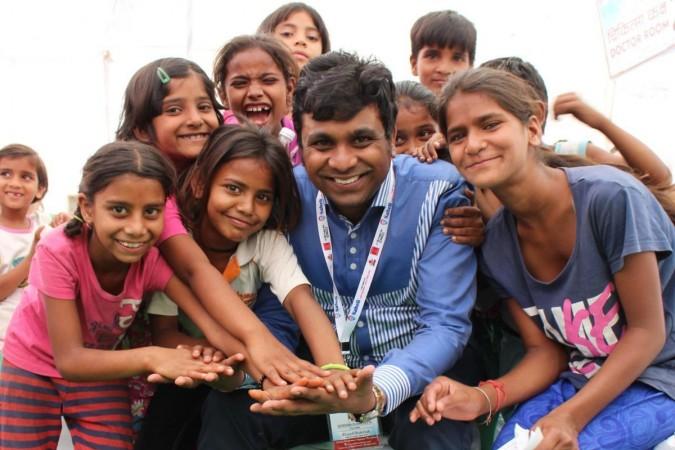
In 2021, Ladli Foundation partnered with BYJU'S Education for All initiative to launch Project E-Pathanshala — taking digital education directly into underserved communities across 26 states. The goal was not just to hand out devices. As Devendra wrote in American Bazaar Online (February 2026):
"The objective was not merely to distribute tablets. It was to create confidence with technology."
The results, by verified figures across Ladli Foundation's own records and confirmed by BYJU'S:
- 3.5 lakh (350,000+) marginalised students given free access to premium ed- tech platforms
- ₹600 crore (approximately USD 75 million) worth of in-kind digital educational resources delivered
- 35,000 refurbished digital devices — smartphones and tablets — distributed during the pandemic to enable uninterrupted home learning
- 100 computer labs equipped with 20 computers and Interactive Flat Panel Displays each, set up in Delhi government schools in partnership with the American India Foundation
- 200 smart classrooms established across government schools in partnership with the Delhi Government
- 60% of all digital beneficiaries are girls — the very students most likely, in low- income households, to be handed a broom instead of a keyboard
That last number is not incidental. It is the mission.
"When a family owns a single smartphone, it is frequently reserved for the son's education. Digital access within school infrastructure neutralises this inequality. When a computer lab exists inside a government school, the gatekeeping shifts. Girls gain equal time, equal exposure and equal confidence." — Devendra Kumar, American Bazaar Online, February 2026
From 7 Labs to a National Movement
Ladli Foundation did not begin with government backing or corporate partners. It began with seven computer labs in underserved communities — an act of stubborn faith at a time, as Devendra has noted, when digital literacy was still regarded as supplementary.
"Digital literacy was still seen as supplementary. It is no longer supplementary. It is foundational."
By 2026, the organisation had grown into one of India's most recognised social enterprises — a two-time National Award winner, acknowledged by the UN Secretary- General at the 65th Session of the Commission on the Status of Women, praised by successive Presidents of India, and, as Devendra has confirmed publicly, nominated for the Padma Shri.
His vision for what comes next is equally unambiguous. In his own words:
"Talent is evenly distributed. Infrastructure is not." — Devendra Kumar, India West, March 2026
The plan: to leverage AI, Web 3.0, cybersecurity, and digital marketing training through the new Institute of Future Skilling, designed specifically for underprivileged girls and transgender youth — the communities furthest from opportunity, and therefore the ones he pursues first.
What He Is Really Saying
When Devendra Kumar speaks about India's nearly 250 million students being locked out of a future "by a screen they were never taught to use," he is not speaking in abstractions.
He was one of those students.
The boy who sold balloons and dodged gangs in Dakshinpuri is now ensuring that the next child who grows up in a slum grows up with a keyboard, a tablet, and the one thing he never had: a fair start.
"Access reshapes imagination." — Devendra Kumar, American Bazaar Online, February 2026
Ladli Foundation Trust is a National Award-winning NGO with UN ECOSOC Special Consultative Status, headquartered in New Delhi. Learn more at ladlifoundation.org