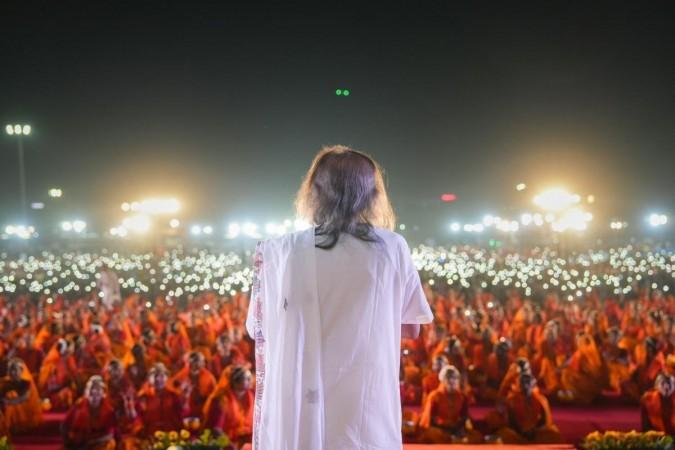
Are you amazed by the magnificence in this creation? Who is the seer, and what does it mean to rest in the seer? Samadhi is called Shiva Sayujya, Shiva's presence, a concept that's difficult to explain. Kabir Das refers to it as the koti kalpa vishram , rest of a billion years achieved in one moment. It is the deepest possible rest one can have, accompanied by alertness, which brings total freedom.
Shiva Tatva is omnipresent. All that one needs to do is become conscious of its depth and awaken to its glory, which is non-dual in the depth of Samadhi. It is as if a wave is being skillfully conscious of the vastness of the ocean. When we worship Lord Shiva throughout the month of Shravan, it is not just about forcing oneself to be awake or keep singing bhajans aloud all day. It is all about going inward and reaching the state of witness consciousness by being aware of this deep inner rest.
The rest is what you get from sleep every day, but without being aware of it. It is about turning your mind inwards and keeping it awake. Usually, the moment you turn the mind inwards, it is used to go into sleep, unconsciously. When you surpass a certain sleep-dream-wake state, the rest of samadhi or Shiva sayujya happens. Many a time, when people go into meditation, they do not know whether they slept or meditated. When they come out of it, they experience certain pleasantness and reduced entropy, which brings an unusual freshness to the mind and senses.
The union of Shiva and Shakti is also full of spiritual meaning. The primordial and dynamic energy is wedded to the transcendental one. What does it mean? Shiva is Chidakasha, the silent witness, and Shakti is chitti or chidvilasa, the eternal playful and dynamic energy in the infinite space. Recognising the dual aspect of matter and energy, we know, Shiva is the formless Being (Purusha) and Shakti is the manifestation in the field or Prakruti; Shiva is the substance dravya and Shakti encompasses the qualities of the substance as guna. Recognising the underlying non-dual nature of Brahman is the celebration of Shiva Tattva.
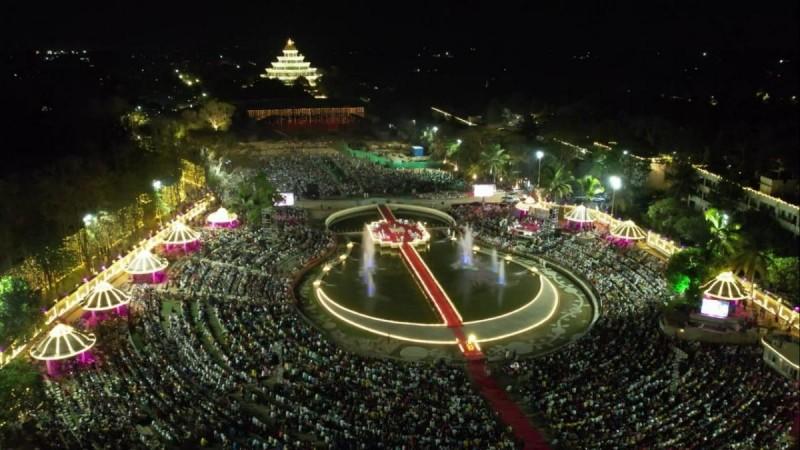
Shiva is beauty, yet he comes to marry Shakti with all his shivaganas, who include the odd-looking people. The story represents the cosmic dance of opposites that goes on in this creation, of beauty and oddness. They all rejoice and feel at home in the Shiva tattva, the one who unites and harmonizes. The Drishya (scenery) is Shakti, and the drishtaa (seer) is Shiva. The wakefulness, the darshana, brings about the unity. The process of wakeful seeing causes the unity. The seen can be many and include the opposites-good and bad, pretty and odd, but the seer is one. The beauty lies with the seer. Parva in Sanskrit translates to celebration, and it is the Shiva Tatva, which brings celebration in creation. The nirgun or formless Brahmn celebrates the sagun, the Brahmn with form.
Shiva embodies the entirety of existence, which is filled with opposites. He is simultaneously seen as the one clad in white (Shwetha Vastra dhaar) and as Krishna varna, embodying darkness. He reigns as the Universal Lord, yet does not own even a single piece of clothing or ornament. As Rudra, he radiates fierce power, yet as Bholenaath, he exudes pure innocence. He is Sundaresha, the lord of beauty, yet he also manifests as Aghora, intensely dreadful. The Shiva principle has woven within itself the dance of life and the tranquility of meditation, darkness and light, innocence and wisdom, fierceness and kindness.