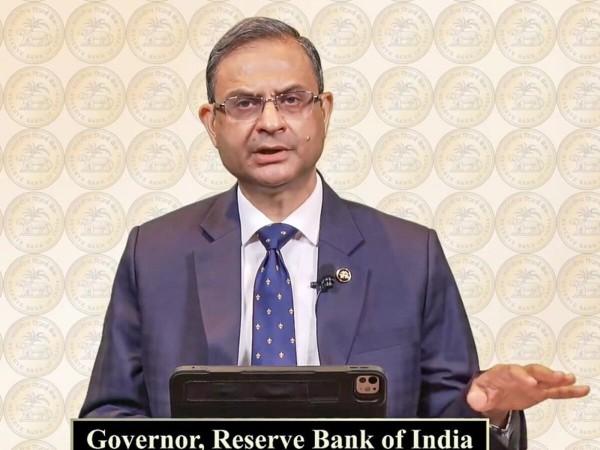
The Reserve Bank of India (RBI) commenced its three-day Monetary Policy Committee (MPC) meeting on Monday in New Delhi, with a policy decision expected on Wednesday amid surging inflation, crude oil prices above $100 per barrel, and a weakening rupee.
Markets are keenly observing whether the central bank will raise the repo rate for the first time since February 2023, after keeping it steady at 5.25 percent.
Economists have brought forward their expectations of a rate hike, now anticipating the RBI to start a rate-hiking cycle as early as October instead of December.
Bank of America (BofA) suggested a 25 basis points increase this month, citing higher energy prices, food inflation, and expanding price pressures as factors strengthening the case for tighter monetary policy.
"After almost two years of monetary accommodation, the RBI appears set to take early steps to start withdrawing the policy support in October MPC. As such, we now believe that the RBI will go ahead with a rate hike of 25 bp in October MPC," BofA stated.
Meanwhile, SBI Research highlighted that the balance of risks now leans decisively towards a 25-bps repo rate hike, driven by broadening inflationary pressures, deteriorating global macroeconomic conditions, evolving liquidity scenarios, and renewed global risk repricing.

RBI MPC meeting is scheduled from October 5 to 7 to deliberate on the benchmark repo rate.
SBI's report stressed that given the geopolitical tensions, crude oil price volatility, and global risk shifts, it would be prudent for the RBI to act pre-emptively rather than lag behind economic developments.
Inflation data reveals a broad-based uptick, with consumer price index (CPI) inflation rising to 4.82 percent in August from 4.45 percent in July. Additionally, strong El Nino conditions and below-normal rainfall in October may impact Rabi crop output.
The combination of rising crude oil prices, inflationary pressures, and higher global bond yields has significantly reduced the RBI's capacity to maintain current interest rates.