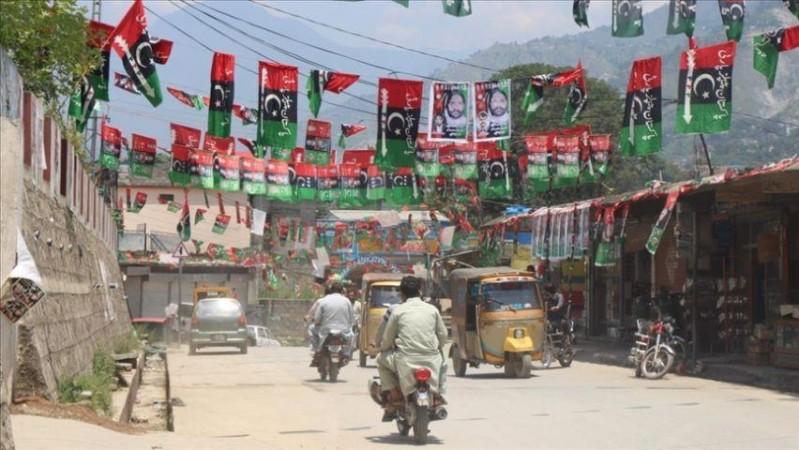
Responding to a call given by the Jammu Kashmir Joint Awami Action Committee (JAAC), a large number of residents of Pakistan-occupied Jammu and Kashmir (PoJK) on Monday reportedly boycotted the first phase of the three-phase Legislative Assembly elections in the region.
Videos shared by residents of PoJK showed deserted polling stations, with many people describing the ongoing elections as a "sham" and a "farce."
Polling for the first phase of the Legislative Assembly elections began across 13 constituencies in the Mirpur Division on Monday. Reports of empty polling booths also emerged following the boycott call issued by the JAAC and other opposition groups.
Urgent International Appeal to the United Nations, Human Rights Organizations, and Global Media
— Fearless (@UnitedByIK) July 27, 2026
We respectfully appeal to the United Nations, Office of the High Commissioner for Human Rights (OHCHR), UN Human Rights Council (UNHRC), Amnesty International, Human Rights Watch,… pic.twitter.com/LAaXOKkbSu
According to reports, thousands of people gathered in the Dera Ismail Khan area of Rawalakot in Pakistan-occupied Jammu and Kashmir to protest against the elections being held in the region.
Responding to the JAAC's "Long March" call, protesters from different parts of PoJK converged in Rawalakot to oppose what they described as "fictitious elections".
کشمیر کے حالات شدید خراب ہیں اس وقت۔۔
— Awami Action Committe (@JAAC__Official) July 27, 2026
سٹریٹ فائرنگ کی جا رہی ہے لگاتار pic.twitter.com/SgUpOfleky
Addressing the gathering, the head of the Joint Awami Action Committee strongly rejected what he termed the "so-called elections" in Pakistan-occupied Jammu and Kashmir. Challenging the Pakistani authorities, he alleged that they were attempting to hold elections after "massacring innocent and unarmed residents, usurping their rights, and riddling their bodies with bullets."
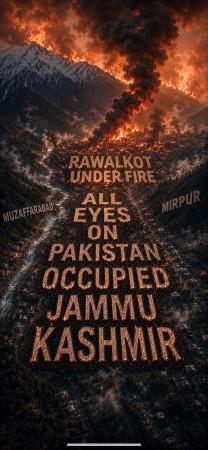
"We reject your sham elections. We will not tolerate military interference, and we will not accept fake elections," he declared, adding that the sit-in (dharna) at Rawalakot would continue "at any cost."
The JAAC alleged that the elections had been announced against the wishes and aspirations of the people of Pakistan-occupied Jammu and Kashmir.
شہر الفت راولاکوٹ وادی پرل دریک کہ مناظر۔
— Awami Action Committe (@JAAC__Official) July 26, 2026
اب راج کرے گئ خلق خدا جو تم بھی ہو اور میں بھی ہوں۔? pic.twitter.com/63WxLMsIDt
Since early June, PoJK has witnessed weeks of protests and sit-ins that have reportedly claimed several lives. Protesters have opposed the elections for the region's Legislative Assembly, which were scheduled to begin on July 27 in the Mirpur Division. Polling in the Poonch Division, which has emerged as the epicentre of the protests, has been scheduled for August 10.
In an open field on the outskirts of Rawalakot, thousands of protesters have been camping under the open sky for more than a month, protesting alleged state repression and demanding greater political representation.
One of the principal issues driving the protests is the reservation of 12 seats in the Legislative Assembly for refugees. Residents of PoJK argue that only local residents should have the right to decide how the territory is governed.
The issue first gained prominence in 2023 when traders and local activists came together under the banner of the Jammu Kashmir Joint Awami Action Committee (JAAC) to press Islamabad for greater political rights and equitable treatment.
Rawalakot is under fire. Reports say Pakistani forces have opened live fire on civilians. Where are the international media and human rights organizations? For God's sake, hear our voices and help bring global attention to what is happening.????? pic.twitter.com/wg0mdTJ73m
— kashmir speaks (@KashmirspeaksO) July 27, 2026
The JAAC initially demanded subsidised wheat, cheaper electricity and increased investment in infrastructure. While negotiations with the Pakistani authorities reportedly resulted in agreement on several of these demands, both sides remained divided over the issue of the reserved refugee seats, leading to escalating tensions.
On June 5, ahead of a planned demonstration by the JAAC, the Pakistani government reportedly banned the civil society group, designated it a terrorist organisation and arrested hundreds of its activists. On the same day, a convoy led by one of its leaders, Umar Nazir, was allegedly attacked by law enforcement personnel. Although Nazir escaped unharmed, one of his associates was killed, triggering widespread protests across the region.
Voting on Monday was conducted across 13 Assembly constituencies in the districts of Mirpur, Bhimber and Kotli. Election authorities had established more than 2,500 polling stations and dispatched polling material to all districts ahead of the commencement of voting.