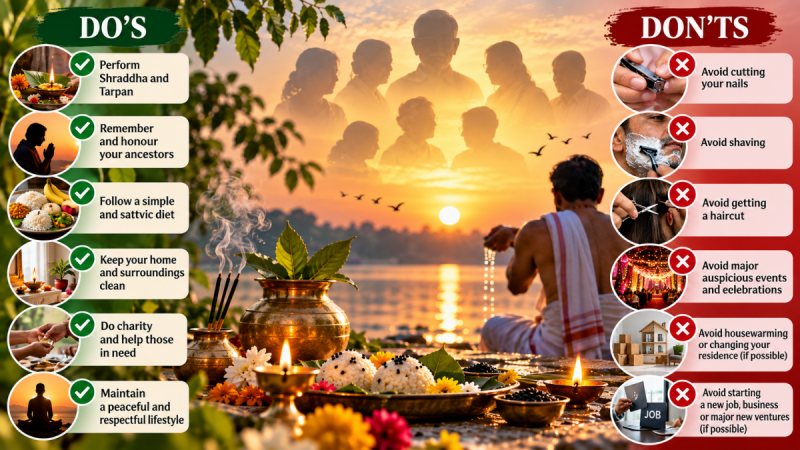
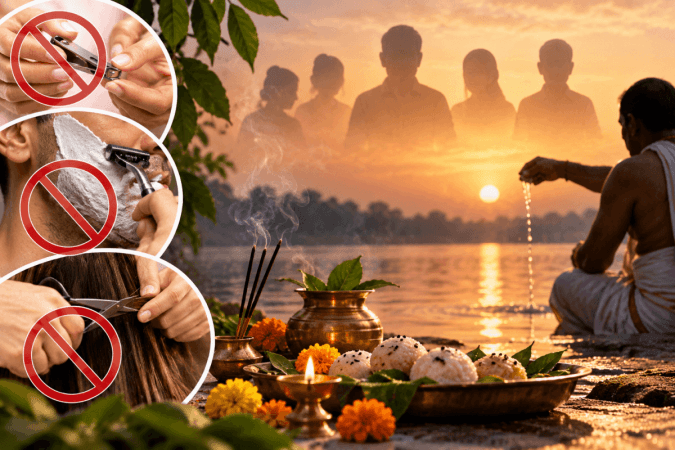
Pitru Paksha is considered a solemn period dedicated to remembering and honouring ancestors. During these 16 days, many Hindu families follow traditional rules and adopt a simple lifestyle while performing Shraddha and Tarpan rituals. One such tradition is avoiding haircuts, shaving and cutting nails during this period.
Why are nails and hair traditionally not cut during Pitru Paksha?
The practice is primarily associated with respect, simplicity and remembrance of ancestors. Since Pitru Paksha is considered a period of mourning and paying homage to departed family members, personal grooming and beautification are traditionally kept to a minimum.
Avoiding activities such as haircuts, shaving and nail trimming is therefore seen as a way of maintaining a restrained and respectful lifestyle during the period.
Is the rule the same for men and women?
Traditional practices can vary depending on family customs, region and the rituals being performed.
For men, particularly the person performing Shraddha or Tarpan, avoiding haircuts, shaving and nail trimming during Pitru Paksha is commonly observed.
For women, there is no single rule followed by every Hindu family. In households that observe the traditional restrictions, women may also avoid haircuts, nail trimming and other forms of grooming during the period.
What about married women?
Married women who follow Pitru Paksha traditions may choose to observe the same restrictions on haircuts, shaving and nail trimming. However, these practices are generally determined by family and community customs rather than a universal rule applicable to every married woman.
What about unmarried women?
Unmarried women may also follow these restrictions if their family tradition requires it. However, there is no universally applicable rule that says unmarried women must avoid cutting their hair or nails throughout Pitru Paksha.
Who should follow the rules strictly?
The restrictions are traditionally considered more significant for the Karta, the family member performing the Shraddha and Tarpan rituals. In many households, the Karta avoids cutting hair and nails throughout the Pitru Paksha period.
Other family members may follow the restrictions as a mark of respect, but the practice varies from one family to another.
Can you start a new job during Pitru Paksha?
Some traditional beliefs advise people to avoid starting auspicious new beginnings, including launching a new business or beginning certain major ventures, during Pitru Paksha. However, this is a matter of religious custom and not a universal prohibition.
If a new job offer has already been received and joining is required on a particular date, families may follow their own traditions or consult their religious guide rather than treating the date as automatically prohibited.
Should you change your house or move to a new place?
Similarly, some families prefer to avoid housewarming ceremonies, moving into a new home or other major auspicious activities during Pitru Paksha. The concern is traditionally about performing celebrations or auspicious ceremonies during a period meant for ancestor remembrance.
However, if moving is necessary because of work, rent, family circumstances or other practical reasons, the decision can depend on individual and family customs.
Pitru Paksha do's and don'ts
Do:
- Perform Shraddha and Tarpan according to family tradition.
- Remember and honour ancestors.
- Maintain a simple lifestyle.
- Keep the home and surroundings clean.
- Follow the food and ritual practices prescribed by your family tradition.
- Complete important practical responsibilities when necessary.
Don't:
- Cut hair or nails if your family tradition prohibits it.
- Shave if you are observing the traditional grooming restrictions.
- Organise major celebratory or auspicious ceremonies if your family avoids them during Pitru Paksha.
- Treat customs followed by one family or region as mandatory for everyone.
Ultimately, Pitru Paksha practices differ across communities and families. There is no single set of rules that applies identically to all men, women, married people or unmarried people. The Karta performing the rituals may follow stricter observances, while other family members may follow their own established customs.