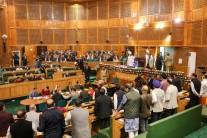
The Monsoon Session of Parliament witnessed a heated debate on Thursday as the Rajya Sabha took up the Public Examinations (Prevention of Unfair Means) Amendment Bill, 2026, a day after it was passed in the Lok Sabha. The proposed legislation seeks to strengthen India's anti-paper leak framework by introducing stricter penalties and tougher measures to curb organised examination fraud.
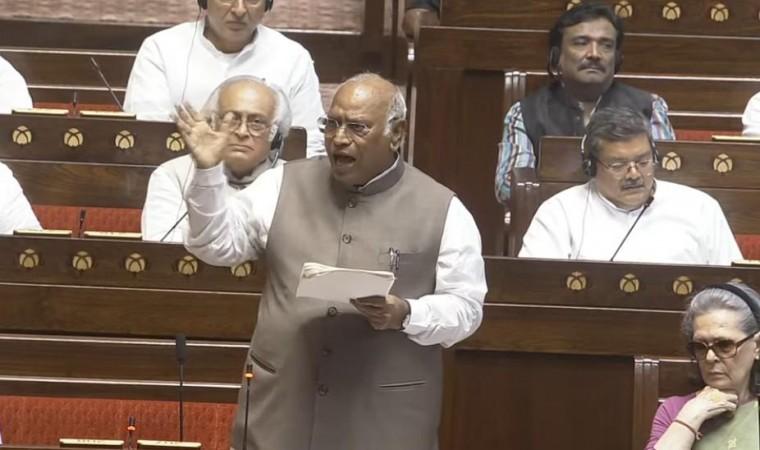
Participating in the debate, Leader of Opposition in the Rajya Sabha Mallikarjun Kharge launched a sharp attack on the Centre, accusing it of prioritising politics over meaningful reforms for students. He questioned why the government had delayed bringing legislation to tackle paper leaks despite repeated controversies surrounding competitive examinations.
Kharge alleged that the government introduced the Bill only after widespread protests by students across the country and claimed it was intended to defuse public anger rather than reform the examination system.
"You brought the Bill to stop the protests in Delhi. You did not bring in the Bill for reforms," Kharge said, alleging that the BJP's politics had led to paper leaks, student protests and police action.
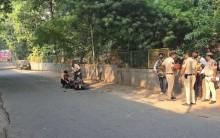
The Congress leader also demanded accountability from Union Home Minister Amit Shah over the alleged lathi charge on protesting students in Delhi. He argued that since the Delhi Police and the CRPF function under the Home Ministry, such action could not have taken place without its approval. Kharge called on Shah to make a statement in Parliament on the alleged police excesses.
He further alleged that the government had focused only on damage control instead of strengthening enforcement mechanisms to prevent paper leaks in the first place. According to Kharge, the Bill failed to clearly explain how such examination fraud would be prevented in the future.
The Leader of Opposition congratulated students and youth who had protested against examination irregularities, claiming their sustained agitation had forced the government to act. He asserted that mounting public pressure compelled the Centre to introduce the legislation and take corrective decisions, including the removal of Dharmendra Pradhan.
Kharge also accused the government of initially dismissing concerns over examination failures as politically motivated instead of engaging with protesting students and addressing their grievances.
The amendment Bill comes amid renewed scrutiny of India's examination system following the NEET controversy and other alleged paper leak incidents. The government has maintained that the legislation is aimed at protecting the integrity of public examinations and restoring confidence among students by introducing stricter anti-cheating provisions and stronger legal safeguards.
The debate in the Rajya Sabha followed the Bill's passage in the Lok Sabha on Wednesday, with the proposed law expected to further strengthen the country's framework against organised examination fraud. Major uproar erupted in the Rajya Sabha after Kharge alleged that Manusmiriti promotes casteism in the field of education.
Kharge questioned Dharmendra Pradhan's warm welcome like a "war hero" on Parliament premises after his resignation.
Rahul-Rijiju face-off
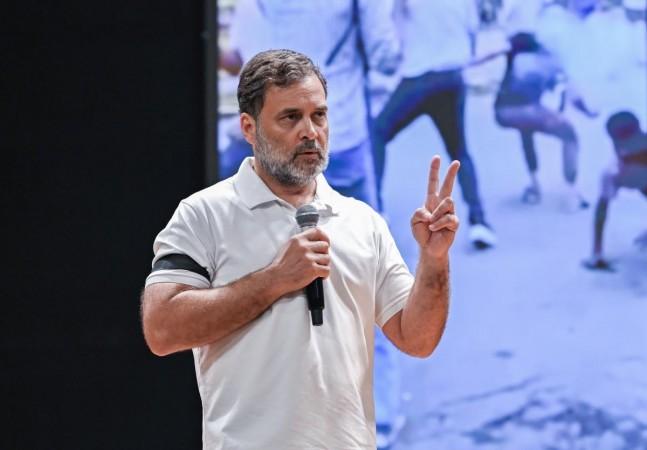
On Wednesday, a massive face-off unfolded between Leader of Opposition in the Lok Sabha Rahul Gandhi and Parliamentary Affairs Minister Kiren Rijiju after the LoP alleged that Home Minister Amit Shah authorised police firing against student protesters, triggering a massive uproar inside and outside Parliament.
"He put pellets into the blood of our students. He ordered the students of India to be shot," Gandhi said amid chaos in the House.
Responding to Gandhi's remark, a visibly aggressive Parliamentary Affairs Minister Kiren Rijiju termed the allegation "baseless" and demanded that Gandhi either substantiate the charge or apologise to the House.
The Lok Sabha is scheduled to take up the Supreme Court (Number of Judges) Amendment Bill, 2026 on Thursday.