
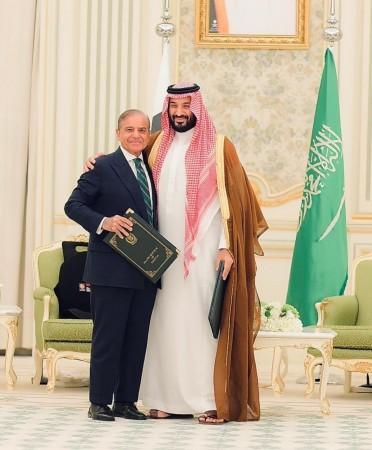
The World Bank's decision to shift Pakistan from South Asia into the Middle East and North Africa region from July 2025 is being treated in Islamabad like a diplomatic coronation. The Pakistani commentariat is already selling it as proof of Pakistan's 'natural belonging' with the Gulf, as if geography itself has finally surrendered to sentiment, and the Indus has at last been granted permission to flow into Arabia.
But this is bureaucracy with geopolitical consequences.
For years, Pakistan carried the 'AfPak' label like a scar stitched by Washington's so-called war on terror. It was never a compliment, only a classification born out of utility. Pakistan was grouped with Afghanistan not because of culture or geography, but because it served as the indispensable corridor for an American project, the paid gatekeeper of a conflict that destabilised the region while leaving Pakistan's own economic indicators battered and its internal cohesion permanently strained. The AfPak framework was also not a regional identity; it was a strategic job description.
Now the file has been moved. And Pakistan is cheering, as if the world has finally recognised it as a Gulf-adjacent power rather than a South Asian state with a South Asian economy and South Asian problems.
The irony is almost Shakespearean. Pakistan has been trying for decades to escape the shadow of India by insisting it is not quite South Asia, not quite the subcontinent, not quite the same civilisation that it shares language, history, trade routes, and bloodlines with. It has sought to reinvent itself as an outpost of the Middle East, a soldier of Islam stationed on the frontier of the Indian world. It has wanted to be seen less as a country and more as a cause.
So, when an international institution shifts Pakistan into the MENA bracket, the Pakistani elite reads it not as an administrative rearrangement but as a validation of a long-running identity fantasy. In their minds, it is not merely reclassification, it is re-birth.
But this is where the celebration becomes premature, even childish.
South Asia, for all its political quarrels, is an economic engine. India, Bangladesh, and Sri Lanka are not without problems, but the region's overall growth story remains one of expansion, consumption, and demographic momentum. South Asia's growth rates of roughly 5 to 7 per cent represent a trajectory. It is the kind of region investors tolerate noise for, because the underlying story is upward.
MENA is different. It is a region where wealth exists, but stability is conditional. Where prosperity is often concentrated, and growth is tied to oil cycles, conflict shocks, and diplomatic weather. A region where political risk is not an occasional disturbance but a structural feature. The growth numbers are lower, more volatile, and more vulnerable to shocks. It is a region that can go from normalcy to crisis with a single missile launch or one assassination.
The recent Iran-US flare-up has underlined a truth that many were reluctant to admit during the years of Gulf glamour. Even the richest capitals, including those of the UAE and Saudi Arabia, are not immune. They have built fortresses of modernity, but they live in a neighbourhood where history does not sleep, where geography is not a blessing but a trap, and where security is never fully owned, only rented through alliances.
Pakistan is not stepping into a safer club. It is stepping into a more combustible theatre.
And this is precisely why the reclassification is not just symbolic. It mirrors the strategic direction Pakistan has already chosen, consciously and aggressively, under the military-dominated state structure that General Asim Munir now represents. Pakistan has been digging itself deeper into Middle Eastern power politics, offering itself as a service state, a strategic subcontractor, a provider of manpower, security arrangements, religious influence, and sometimes discreet coercive capabilities. It has sought loans not as temporary relief but as a permanent economic model. It has treated foreign dependency as a substitute for domestic reform.
In exchange, it has gained short-term relevance, the intoxicating kind. Invitations, handshakes, occasional headlines, and the illusion that it is a player rather than a petitioner.
But long-term stability does not come from relevance. It comes from institutions, industry, trade, and predictable governance. It comes from growth that is earned, not borrowed.
Pakistan's tragedy is that it has repeatedly chosen the seduction of geopolitical importance over the dull, grinding discipline of economic self-repair. It would rather be discussed in security conferences than in investment summits. It would rather be useful to great powers than productive for its own people.
The World Bank's reclassification is therefore not the cause of Pakistan's shift. It is simply the stamp on an envelope that Pakistan has already posted.
There is another, deeper reason for the Pakistani excitement. The move is being interpreted domestically as an escape from India's economic shadow. Being categorised with South Asia means being compared, relentlessly, with India. It means every statistic becomes humiliating. Every growth chart becomes an indictment. Every regional report becomes a reminder that the state which was carved out as a rival has become an economic giant, while Pakistan has remained stuck in cycles of IMF bailouts, political instability, and military-managed governance.
MENA, in Pakistani imagination, offers a different comparison set. It offers the psychological comfort of being judged alongside oil-rich monarchies rather than a booming Hindu rival next door. It allows Pakistan to pretend it belongs to a more 'Islamic' neighbourhood, where identity feels like an asset rather than an excuse.
It is not economics. It is ego management.
And now comes the Trump angle, the cherry on the delusion cake.
There is a growing expectation in Pakistan that this reclassification, combined with Middle Eastern turbulence and Pakistan's eagerness to present itself as a mediator, will bring Donald Trump to Islamabad. That Pakistan will become a stage again, the way it briefly became after 9/11, when its generals were treated like indispensable allies and its leaders were given importance far beyond the country's economic weight.
This expectation is not entirely irrational, because Pakistan's foreign policy has long functioned on a simple principle: create or exploit a crisis, then sell yourself as the solution. The Pakistani military establishment has historically thrived when the region is on fire. Peace reduces Pakistan's leverage. Stability exposes Pakistan's internal dysfunction. Conflict, however, makes Pakistan appear relevant.
So, in the Pakistani mind, a reliable ceasefire between Iran and the US is not merely a security relief. It is a diplomatic opportunity. A moment where Pakistan hopes to insert itself as a broker, an intermediary, a messenger boy with a uniform, carrying notes between angry empires. And if Trump is the kind of man who loves spectacle and strongman theatre, then Pakistan hopes it can provide the setting.
But this is where the strategic reality bites.
Trump does not reward loyalty, he rewards usefulness. And usefulness in Washington is temporary, transactional, and often humiliating. If Pakistan is expecting a grand diplomatic embrace, it is forgetting the harsh logic of American foreign policy. Pakistan was used heavily in Afghanistan, and then discarded with remarkable coldness. The damage was Pakistan's, the withdrawal was America's, and the bill was left unpaid.
To believe the next cycle will be different is to confuse memory with wishful thinking.
More importantly, Pakistan's shift towards the Middle East does not guarantee influence. It guarantees exposure. The more Pakistan anchors itself in MENA's geopolitical storms, the more it inherits their volatility. The more it becomes entangled in Iran-Saudi tensions, Gulf security calculations, and the shadow war between regional blocs, the more it risks importing instability into an already fragile domestic environment.
Pakistan is not a wealthy Gulf monarchy with financial buffers. It is a debt-stressed state with a struggling currency, internal sectarian fault lines, and a political system repeatedly destabilised by its own military's appetite for control. A country like that does not 'benefit' from Middle Eastern turbulence. It bleeds from it.
In the end, the reclassification is not a promotion. It is a mirror. It reflects what Pakistan has chosen to become: a state that trades sovereignty for cash, policy independence for external patronage, and long-term development for short-term diplomatic theatrics. The tragedy is not that Pakistan has been moved out of South Asia on a World Bank chart. The tragedy is that Pakistan has been trying to move out of South Asia in its own mind for decades, and, in doing so, has refused to accept the one reality that could have saved it: that nations rise not by changing their labels, but by changing their foundations.
Pakistan can celebrate all it wants. But the map does not change the ground beneath its feet.
A country does not become Middle Eastern by being filed under MENA. It becomes Middle Eastern when its future is chained to the region's wars, its economy dependent on the region's cheques, and its rulers obsessed with the region's power games.
And if Pakistan is indeed celebrating this shift as a moment of destiny, it should remember that the Middle East is not a club you join. It is a theatre you get dragged into. The applause is temporary, the spotlight is harsh, and the exits are usually blocked.
[Disclaimer: This is an authored article by Sonam Mahajan, a columnist and strategic affairs commentator, focusing on South Asian geopolitics, national security, and India's foreign policy. Views expressed are author's own.]