The Centre has tightened resignation and voluntary retirement rules for scientists working on key Indian Space Research Organisation (ISRO) projects following a rise in exits from the country's premier space agency. The move is aimed at protecting strategic missions such as Gaganyaan, Chandrayaan-4 and the proposed Bharatiya Antariksh Station, even as India's private space sector continues to expand rapidly.
Under a Department of Space (DoS) memorandum issued on July 14, resignation and voluntary retirement requests from Group 'A' scientists associated with critical missions will no longer be routinely approved at the ISRO centre level. Instead, all such cases will require clearance from the Department of Space, reversing a 2020 policy that had delegated approval powers to centre directors.
The directive has been issued to several major ISRO centres, including the Vikram Sarabhai Space Centre (VSSC), U R Rao Satellite Centre (URSC), Satish Dhawan Space Centre (SDSC), Liquid Propulsion Systems Centre (LPSC), Space Applications Centre (SAC), National Remote Sensing Centre (NRSC), ISRO Telemetry, Tracking and Command Network (ISTRAC) and the Master Control Facility (MCF).
Why were the rules tightened?
The decision comes amid reports that more than 100 scientists have resigned or sought voluntary retirement in recent months. Although the departures account for only a small fraction of ISRO's workforce, officials are concerned that many of those leaving are experienced scientists working on flagship programmes where specialised expertise is difficult to replace.
The URSC in Bengaluru and VSSC in Thiruvananthapuram have reportedly witnessed the highest number of resignations.
Loss for ISRO, gain for startups?
The growth of India's private space sector is widely seen as a major reason behind the exodus.
Since the Centre opened the space sector to private players in 2020 and introduced the Indian Space Policy in 2023, space startups have been offering significantly higher salaries, stock options, faster career growth and greater flexibility than government service.
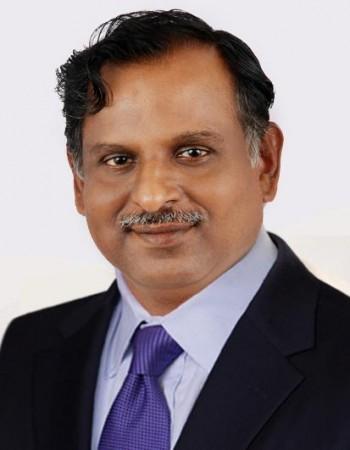
Among those who left ISRO is Victor Joseph T, former Project Director of the Launch Vehicle Mark-3 (LVM3) programme at VSSC. Joseph reportedly resigned in February after serving around 13 months as head of the LVM3 project, the launch vehicle that will power India's first human spaceflight mission, Gaganyaan.
Several former ISRO scientists have since joined private space companies, reflecting the sector's rapid growth. India now has more than 400 registered space startups, which have attracted nearly $500 million in investments, including around $150 million in 2025 alone.
Companies such as Pixxel, Dhruva Space, Skyroot Aerospace, Agnikul Cosmos and Bellatrix Aerospace are among the leading players driving the country's private space ecosystem.
Manpower challenge
The resignations come at a time when ISRO is already grappling with its biggest manpower shortage in nearly 25 years. Reports suggest that around 30 per cent of sanctioned posts remain vacant as the organisation prepares for ambitious programmes, including Gaganyaan, Chandrayaan-4, future Mars missions and the Bharatiya Antariksh Station.
The Department of Space has attributed the shortage to a combination of COVID-19-related recruitment disruptions, changes in hiring processes and rising attrition.
Recent setbacks add to concerns
The staffing challenge comes alongside a series of recent setbacks for the space agency.
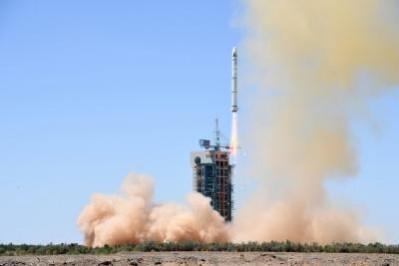
ISRO's Polar Satellite Launch Vehicle (PSLV), long regarded as the organisation's "workhorse", has suffered two consecutive mission failures within a year.
In January, PSLV-C62, carrying the EOS-N1 Earth observation satellite and multiple commercial payloads, deviated from its planned trajectory after experiencing disturbances at the end of its third stage, resulting in mission failure.
Will flagship missions be affected?
Despite the resignations and recent mission setbacks, the government has maintained that ISRO's flagship programmes remain on schedule.
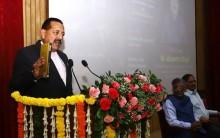
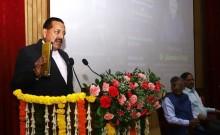
Science and Technology Minister Jitendra Singh has downplayed concerns over the departures, saying personnel changes are not unusual in large scientific organisations. ISRO has also reiterated that work on Gaganyaan and other upcoming missions continues as planned.
The tightening of resignation rules reflects the government's effort to retain highly skilled scientists as India enters an ambitious phase of space exploration. With human spaceflight, lunar exploration and long-term space station plans underway, preserving institutional expertise has become a strategic priority for the country's expanding space programme.