
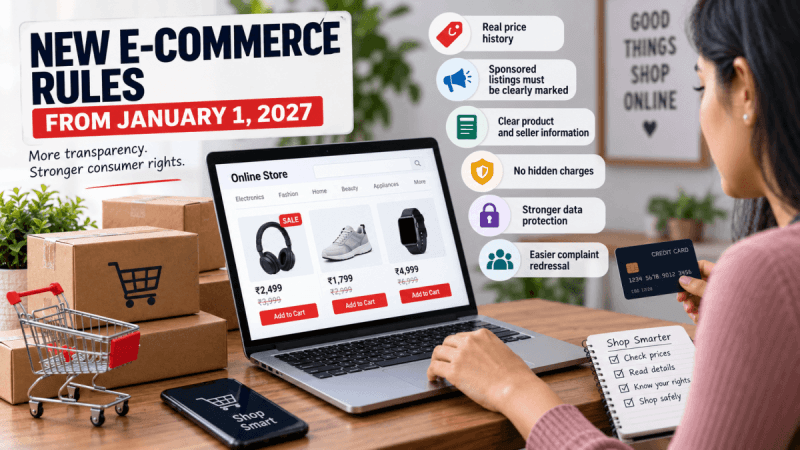
Online shopping in India is set to become more transparent as the government has amended the Consumer Protection (E-Commerce) Rules, 2020. The new rules will come into effect from January 1, 2027, bringing stricter requirements for e-commerce platforms and sellers.
The Department of Consumer Affairs said the changes are aimed at protecting consumers from misleading practices while making online marketplaces more accountable.
Sellers must show previous prices
Under the new rules, platforms announcing a price reduction will have to show both the reduced price and the prior price. The prior price will mean the lowest price at which the product or service was offered during the previous 30 days.
This is intended to make it easier for shoppers to understand whether a discount is genuine.
Sponsored listings must be clearly marked
E-commerce platforms will also have to clearly identify sponsored listings. Search results cannot be manipulated in a way that misleads consumers or affects the relevance of results to their searches.
Dark patterns face stricter checks
The amended rules also target dark patterns, which are online design practices that can influence or manipulate consumers into making decisions they may not otherwise make.
E-commerce companies will have to follow the 2023 dark-pattern guidelines, conduct a yearly self-audit and prominently display a certificate confirming compliance.
More information about products and sellers
Marketplaces will have to provide important information such as best-before or use-before dates, return and refund policies, warranty details, delivery information and payment details.
For imported products, platforms will also have to disclose the importer's details and country of origin.
Consumer data and additional charges
The new rules also provide greater protection for consumer information. Platforms cannot use consumer data for specified purposes without obtaining express and affirmative consent.
E-commerce marketplaces will also be restricted from collecting bundled fees for services unrelated to their platform, except in specified cases involving loyalty or membership programmes.

Complaints to get stronger protection
Every e-commerce entity will have to participate in the National Consumer Helpline convergence process. When a consumer files a complaint, the platform's grievance officer will also have to provide the complainant with a copy of the complaint as recorded.
The government said the National Consumer Helpline received 17,71,622 complaints in 2025, with around 29 per cent, or 5,11,196 complaints, related to e-commerce.
The new rules are aimed at making online shopping more transparent and ensuring that consumers have clearer information before making a purchase.