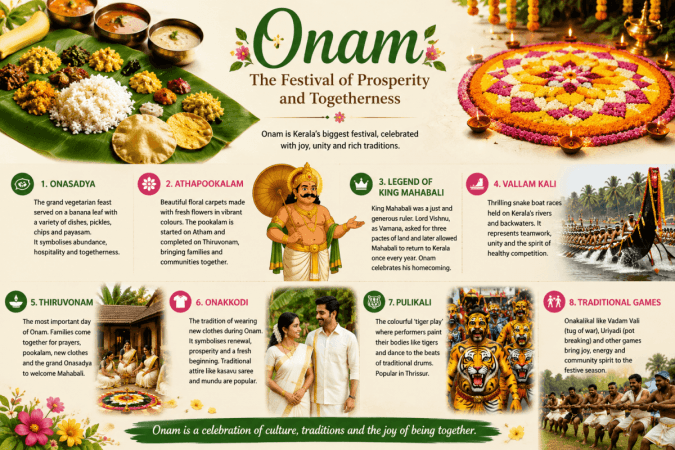
Onam is one of Kerala's biggest and most vibrant festivals, celebrated with colour, flavour, traditions and a strong sense of community. The festival brings families and communities together through elaborate feasts, floral decorations, cultural performances, traditional games and festive rituals.
At the heart of Onam is the legend of King Mahabali, whose annual return to Kerala is celebrated with great joy. From the traditional Onasadya served on banana leaves to the colourful Athapookalam and exciting Vallam Kali boat races, each tradition adds to the spirit of the festival.
Onam 2026: Traditions and rituals
1. Onasadya
No Onam celebration is complete without Onasadya, the elaborate vegetarian feast traditionally served on a banana leaf. The meal features a variety of traditional dishes, including avial, sambar, thoran, olan, erissery, kaalan, pachadi, kichadi and parippu.
The feast is served with rice, pappadam, pickles and banana chips, while payasam is a much-loved dessert. Popular varieties include ada pradhaman, parippu payasam and palada payasam.
More than just a festive meal, Onasadya represents abundance, hospitality, togetherness and the joy of sharing with family and loved ones.
2. Athapookalam
One of the most recognisable Onam traditions is Athapookalam, an intricate floral carpet created at the entrance of homes, temples, schools and public spaces.
Made using fresh flowers in different colours, these designs often feature geometric patterns, traditional motifs and creative shapes. Families traditionally begin making the pookalam on Atham, the first day of the Onam celebrations, and gradually add more flowers and expand the design as Thiruvonam approaches.
The tradition is not just about decoration but also brings families and communities together during the festive season.
3. The legend of King Mahabali
The story of King Mahabali is at the heart of Onam celebrations. Mahabali is remembered as a generous and beloved ruler whose kingdom was associated with peace and equality.
According to the legend, Lord Vishnu appeared before Mahabali in the form of Vamana, a dwarf Brahmin, and asked for three paces of land. As Vamana grew to a cosmic size, he covered the earth and heavens in two steps. Mahabali offered his own head for the third step.
Moved by his humility and devotion, Lord Vishnu allowed Mahabali to return to Kerala once every year. Onam is celebrated to mark this annual return.
4. Vallam Kali
Vallam Kali, Kerala's traditional snake-boat race, is one of the most exciting spectacles associated with Onam.
Long, narrow boats known as chundan vallams carry teams of rowers who paddle in perfect rhythm to the beats of traditional songs and drums. The races take place on Kerala's rivers and backwaters and attract large crowds.
Beyond the competition, Vallam Kali represents teamwork, community spirit, tradition and Kerala's deep connection with its waterways.
5. Thiruvonam
Thiruvonam is considered the most important day of the Onam celebrations and is traditionally associated with King Mahabali's annual return to Kerala.
On this day, families come together to prepare their homes, create elaborate pookalams, wear new clothes and enjoy the grand Onasadya feast. The day is marked by family gatherings, festive meals and cultural celebrations.
Thiruvonam brings together many of the traditions associated with Onam and celebrates prosperity, togetherness and the joy of welcoming loved ones.
6. Onakkodi
Onakkodi refers to the tradition of wearing new clothes during Onam. Families often buy new outfits for themselves and their loved ones, with traditional Kerala attire such as the kasavu saree, settu mundu and mundu being especially popular.
The custom symbolises renewal, prosperity and a fresh beginning. Giving new clothes to family members and children also reflects the spirit of generosity associated with the festival.
7. Pulikali
Pulikali, meaning "tiger play", is one of the most colourful and entertaining traditions associated with Onam.
Performers paint their bodies with striking tiger-like patterns, often in shades of yellow, black and orange, and take to the streets accompanied by energetic traditional drumbeats. They dance and perform for crowds, creating a lively festive atmosphere.
The tradition is particularly popular in Thrissur, where large Pulikali processions are held during the Onam season.
8. Traditional games
Traditional games are another important part of Onam celebrations, bringing families, friends and communities together in a spirit of fun and friendly competition.
Popular activities include Vadam Vali, the traditional tug-of-war, Uriyadi, a pot-breaking game, and other Onakalikal played during the festive season.
Together, these games add energy to the celebrations while keeping Kerala's traditional culture and community spirit alive.
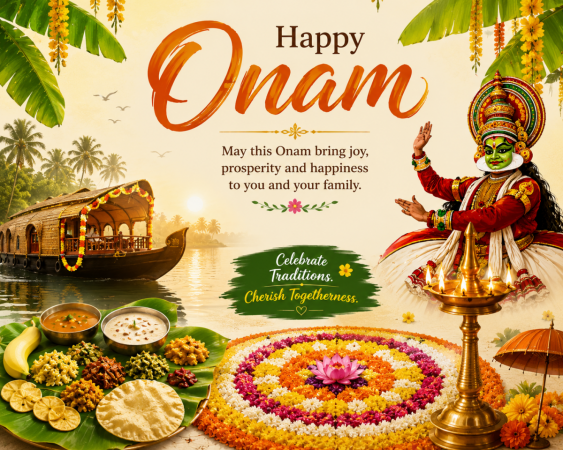
Onam: A celebration of culture and togetherness
From the elaborate Onasadya and colourful pookalams to the excitement of Vallam Kali and Pulikali, Onam brings together Kerala's food, folklore, art and traditions. The festival continues to be a celebration of community, prosperity, generosity and togetherness, with the story of King Mahabali remaining at its heart.