The first day of Navratri is dedicated to Maa Shailaputri, the first form of Goddess Durga. She is worshipped as a symbol of strength, purity, patience and devotion. Devotees seek her blessings for peace, prosperity, courage and new beginnings during the nine-day festival.
The word Shailaputri means 'Daughter of the Mountain', with 'Shaila' referring to a mountain and 'Putri' meaning daughter. According to Hindu mythology, she was born to Himavan, the King of the Himalayas. She is also believed to be the reincarnation of Goddess Sati, the first wife of Lord Shiva.
Navratri day 1: Significance of Maa Shailaputri
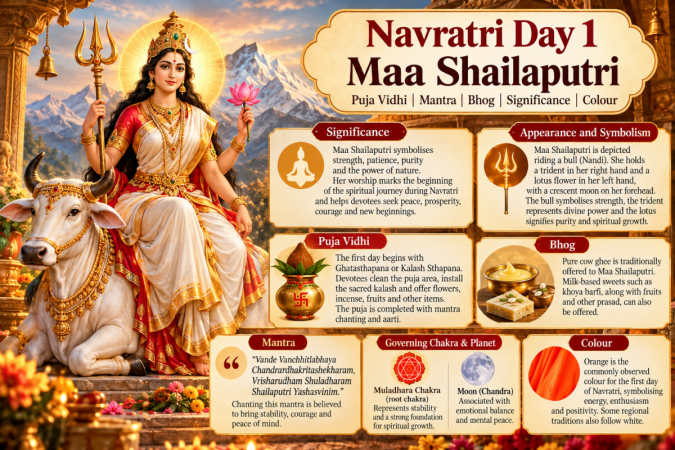
Maa Shailaputri represents determination, inner strength and a deep connection with nature. Her worship marks the beginning of the spiritual journey during Navratri, reminding devotees of the importance of remaining grounded and maintaining balance in life.
She is associated with the Muladhara chakra, also known as the root chakra, which represents stability, security and the foundation of spiritual growth. According to traditional beliefs, worshipping Maa Shailaputri helps devotees seek mental peace, emotional stability and confidence.
In Hindu astrology, Maa Shailaputri is associated with the Moon. Devotees believe that worshipping her can bring calmness and balance to the mind.
Maa Shailaputri's appearance and symbolism
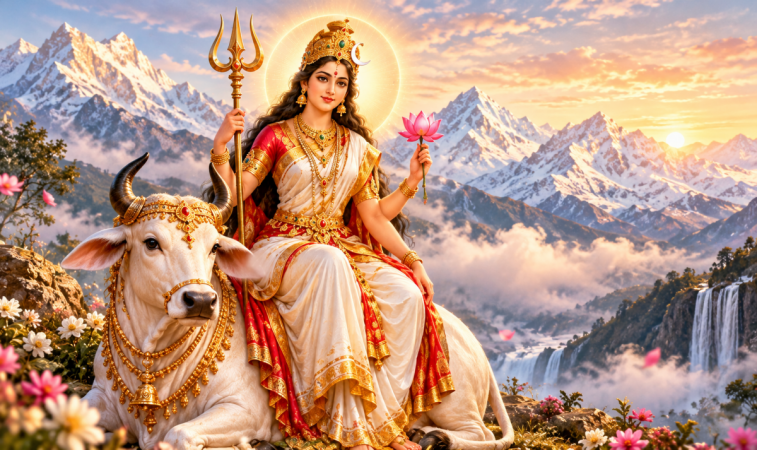
Maa Shailaputri is depicted riding a bull named Nandi. She holds a trident in her right hand and a lotus flower in her left hand, while a crescent moon adorns her forehead.
The bull symbolises strength and determination, while the trident represents divine power. The lotus signifies purity and spiritual growth, and the crescent moon is associated with the mind and emotions.
Navratri day 1 puja vidhi
The first day of Navratri begins with Ghatasthapana, also known as Kalash Sthapana. The ritual marks the beginning of the festival and involves establishing a sacred kalash to invoke divine blessings.
Devotees clean the puja area, prepare the altar and place the kalash according to their family traditions and the prescribed auspicious muhurat. They then worship Maa Shailaputri by offering flowers, incense, fruits and other traditional items.
The puja is completed with mantra chanting and aarti. Devotees pray for good health, happiness, prosperity and strength to overcome challenges. Rituals and timings may vary depending on regional customs and the Hindu calendar.
Navratri day 1 bhog: What to offer Maa Shailaputri?
Pure cow ghee is traditionally offered to Maa Shailaputri on the first day of Navratri. According to religious beliefs, offering ghee is associated with good health and well-being.
Devotees may also offer milk-based sweets such as khoya barfi, along with fruits and other traditional prasad. After the puja, the offerings are distributed among family members and devotees.
Navratri day 1 colour
Orange is associated with the first day of Navratri in several popular colour traditions. The colour represents energy, enthusiasm, warmth and positivity.
However, Navratri colour traditions can vary across regions and calendars, with some traditions associating white with the first day. Devotees can follow the colour specified by their regional tradition or family customs.
Maa Shailaputri mantra
Devotees chant the following mantra while worshipping Maa Shailaputri to seek her blessings for strength, peace and spiritual growth.
Vande Vanchhitlabhaya Chandrardhakritashekharam, Vrisharudham Shuladharam Shailaputri Yashasvinim.
Chanting the mantra with devotion is believed to help devotees cultivate inner strength, stability and peace of mind.