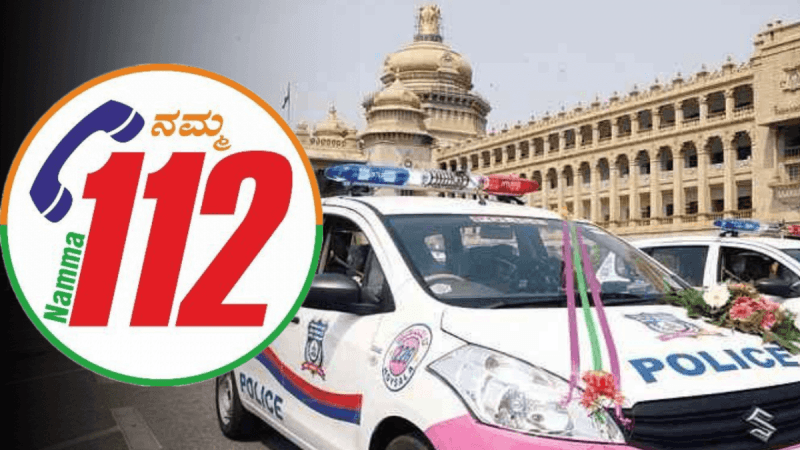
Bengaluru's emergency response framework under Namma 112 has undergone a phased transformation over the last four years, marked by technological upgrades, expanded access mechanisms, and changes in how emergency calls are handled, monitored, and reviewed.
The evolution began in 2022 with the rollout of the Safe City Project, under the Government of India's Nirbhaya Fund, and has since progressed through multiple infrastructure, software, and operational changes aimed at improving response capacity, accountability, and accessibility.
2022: Initial rollout and operational scale-up
In 2022, Bengaluru's emergency response system operated with limited technological capabilities but handled 2,49,945 calls, including 91,250 calls from women. Hoysala patrol units formed the primary field response mechanism, supported by a fleet of approximately 320 vehicles.
During this period, focus remained on stabilising response operations and strengthening coordination between the control room and field units. The control room infrastructure was gradually aligned with response-time benchmarks set for later years.
2023: Introduction of body-worn and vehicle cameras
A significant operational change occurred in 2023 with the deployment of body-worn cameras for field officers. Bengaluru became the first city to integrate body-camera feeds directly into the Command and Field Services workflow.
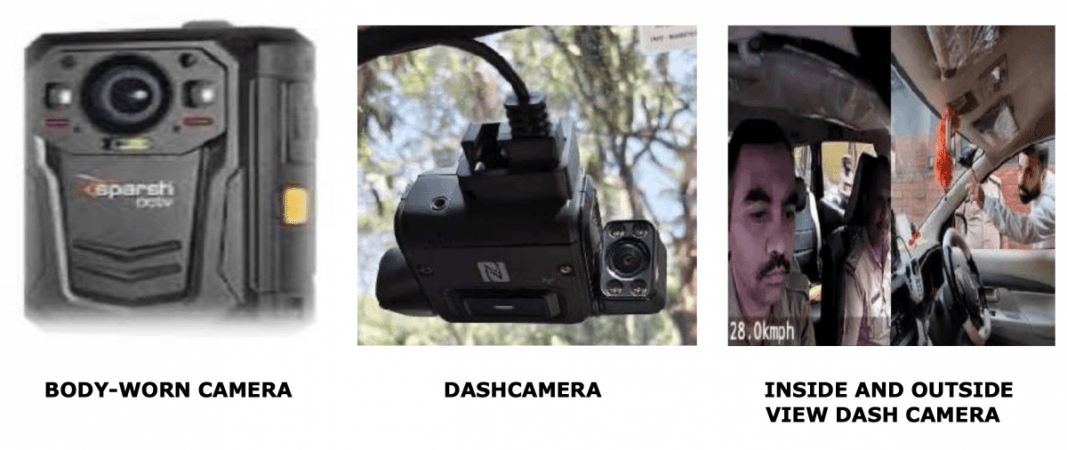
In parallel, dash cameras were installed inside and outside Hoysala patrol vehicles. The combined use of body-worn and in-vehicle cameras enabled visual documentation of incidents, improved situational awareness for the control room, and provided recorded material that could be used for review and legal proceedings.
Despite continuing to rely on Primary Rate Interface (PRI) telecom infrastructure, the system handled 2,51,779 calls, including 98,550 calls from women. This year served as a transition phase between legacy infrastructure and upgraded systems.
2024: Caller tracking, feedback, and expanded access
By 2024, several citizen-facing features were introduced. Distressed callers began receiving SMS-based tracking links, allowing them to view the real-time location of the responding Hoysala vehicle. After incident resolution, callers received feedback messages and follow-up calls to rate the response.
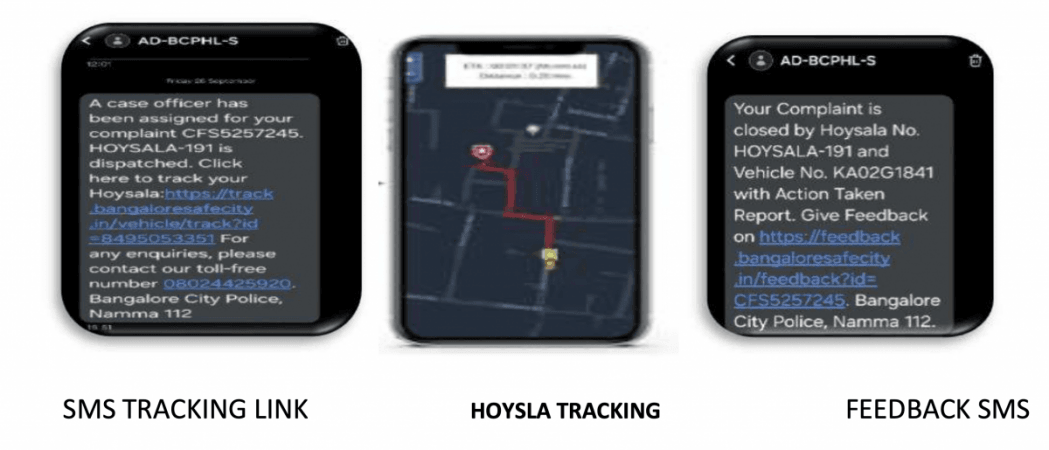
During the year, Bengaluru recorded 4,43,918 emergency calls, including 1,02,480 calls from women. According to system data, feedback ratings showed:
- 68% five-star ratings
- 16% four-star ratings
- 12% three-star ratings
- 4% combined one- and two-star ratings
In the same year, Emergency Call Boxes installed at designated Safety Islands were integrated with Namma 112. These call boxes allow individuals to connect directly to emergency services without using a mobile phone. To date, 230 verified emergency calls have been received through these installations.
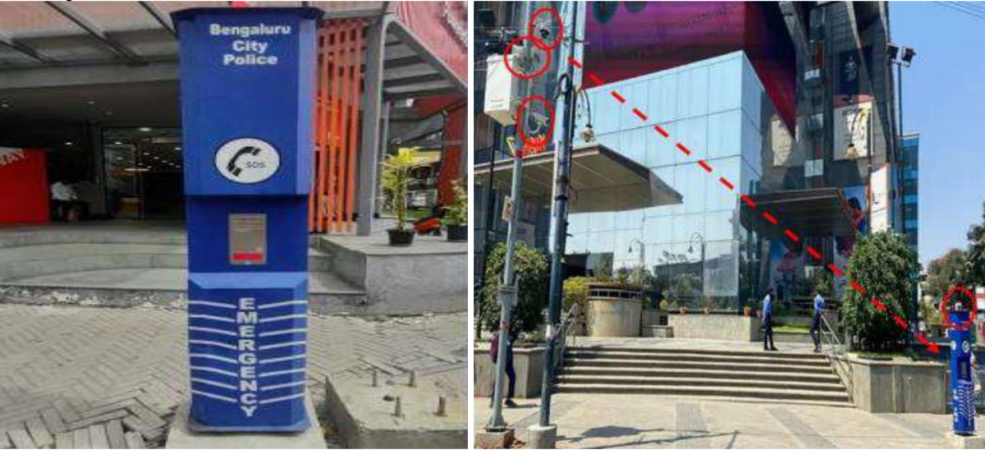
Integration with the Integrated Command and Control Centre (ICCC) enabled the control room to monitor incidents across the city on a unified real-time platform.
Safe Connect: Audio-video emergency reporting
Another addition in 2024 was Safe Connect, a feature introduced within the Karnataka State Police mobile application. It allows two-way audio and video communication between callers and the control room, enabling responders to view incidents as they unfold.
As of now, 36 verified emergency calls have been recorded through Safe Connect. Bengaluru was the first city in India to deploy such a feature within its emergency response framework.
2025: Infrastructure upgrade, privacy measures, and mobility integration
In mid-2025, the emergency response system migrated from PRI to Session Initiation Protocol (SIP) infrastructure. This upgrade addressed issues such as call congestion, dropped connections, and limited scalability during peak hours, allowing more calls to be handled simultaneously with improved audio quality.
Following the infrastructure upgrade, number masking was introduced. This feature conceals a caller's phone number from responding officers while retaining traceability within the system, addressing privacy concerns without affecting operational oversight.
Later in the year, ride-hailing platforms Ola and Uber were integrated with Namma 112, enabling passengers to contact emergency services directly from within their rides.
Planned additions
According to Bengaluru Police, upcoming developments include:
- Multilingual support for emergency calls
- Integration with additional government and private agencies for specialised responses
- Further system integrations aimed at reducing response time and improving coordination