

The Ministry of Electronics and Information Technology (MeitY) is examining a Chinese battery management application BAT-BMS after viral videos showed people allegedly using it to remotely switch off e-rickshaws, triggering concerns over cybersecurity and public safety.
The videos, widely shared across social media platforms, appear to show pranksters connecting to nearby Bluetooth-enabled e-rickshaw batteries through a smartphone app and remotely disabling the vehicles, in some cases while they are moving. The incidents have sparked fears that such misuse could lead to accidents, injuries and serious safety risks for both drivers and passengers.
According to reports, the app is designed to manage compatible lithium battery systems, allowing users to monitor battery health and control certain functions remotely. However, security experts believe that some low-cost battery management systems installed in e-rickshaws may lack adequate authentication safeguards, making them vulnerable to unauthorised Bluetooth access.
Chinese app BAT-BMS sparks panic by remotely shutting off e-rickshaws & scooters via Bluetooth on their batteries.? pic.twitter.com/oeyG2haBqN
— Ghar Ke Kalesh (@gharkekalesh) July 1, 2026
The ministry is assessing whether the app or the connected battery management systems pose broader cybersecurity risks. Officials are also examining whether additional safeguards or regulatory intervention may be required to prevent misuse of connected electric vehicles.
This is sad. ?
— PunsterX (@PunsterX) July 2, 2026
BAT-BMS is a Chinese battery management app.
It connects via Bluetooth to compatible lithium batteries within 10-15 meters.
The app lets users monitor battery health and remotely control compatible batteries.
The remote-control feature is reportedly being… pic.twitter.com/ikSo3WKfsV
The viral clips have drawn widespread criticism online, with many users warning that remotely disabling moving vehicles is a dangerous act that could endanger lives. Several creators have also urged people not to participate in the trend, calling it irresponsible and harmful to e-rickshaw drivers who depend on their vehicles for their livelihood.
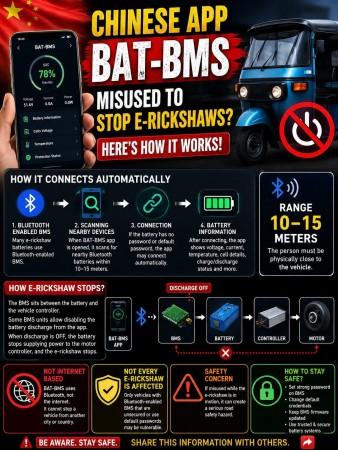
The incident has reignited concerns over the security of connected mobility devices in India, highlighting the need for stronger authentication measures and better protection against unauthorised access as electric vehicles become increasingly software-enabled.