Kuwait on Monday said its armed forces were confronting hostile aerial targets within Kuwaiti airspace, while neighbouring Bahrain sounded emergency sirens and urged residents to move to the nearest safe place as tensions in the Gulf escalated following fresh US strikes on Iran.
The developments came after Iran's Islamic Revolutionary Guard Corps (IRGC) claimed it had launched retaliatory missile and drone attacks on US military bases in Jordan, Bahrain and Kuwait in response to the latest American airstrikes on southern Iran.
In a statement shared on X, the Kuwait Army urged citizens and residents to follow security instructions issued by the authorities.
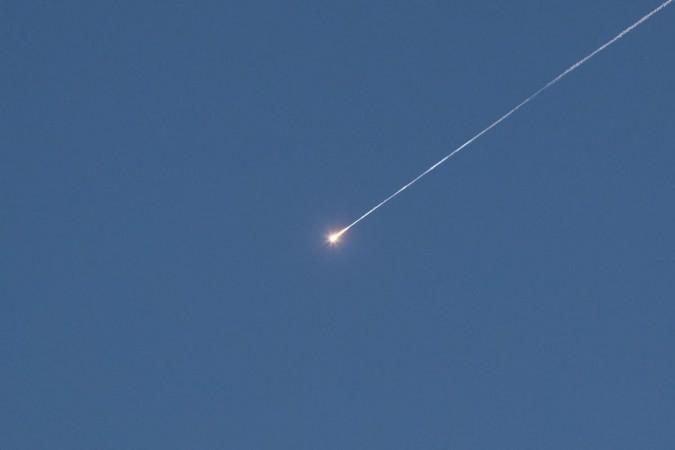
"The Armed Forces are currently confronting hostile aerial targets within Kuwaiti airspace. The General Staff of the Army notes that any explosion sounds, if heard, are the result of air defence systems intercepting hostile attacks. Everyone is requested to adhere to the security and safety instructions issued by the competent authorities," the Kuwait Army posted.
Bahrain's Ministry of Interior also issued an alert after emergency sirens were activated across the country.
"The siren has been sounded. Citizens and residents are urged to remain calm and head to the nearest safe place," the ministry said in a post on X.
According to Iran's official news agency IRNA, the IRGC launched the retaliatory operation after the US military struck several locations in southern Iran, saying the attacks were carried out following alleged threats to commercial shipping in the Strait of Hormuz.
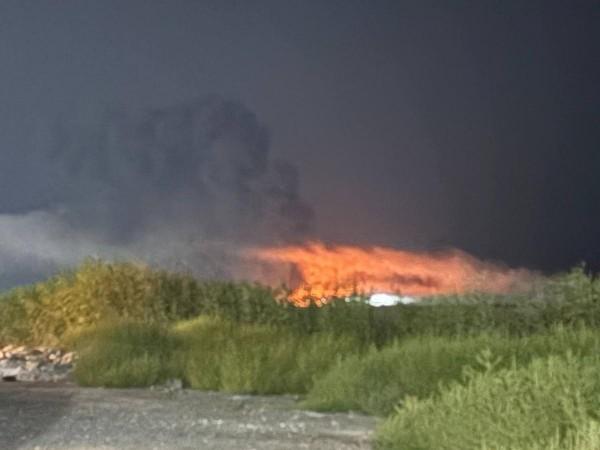
The IRGC claimed it had intercepted two vessels that had switched off their tracking systems and taken an unauthorised route through the Strait of Hormuz. It subsequently launched missiles and drones targeting Prince Hassan Air Base in Jordan, saying the attack was a direct response to the US military operation.
The second phase of the operation targeted the US military's Sheikh Isa Air Base in Bahrain.
"In the second phase of their retaliatory operation, the IRGC Aerospace Force struck key helicopter maintenance and repair facilities, a hangar housing a P-8 electronic warfare aircraft, and the command-and-control centre for the US military's drone operations at the US base in Sheikh Isa, Bahrain," the IRGC claimed.
According to the IRGC, the third and fourth phases of the operation targeted US military installations in Kuwait.
It claimed that its Aerospace Force destroyed fuel storage tanks, a Patriot air defence system at Ali Al Salem Air Base and an FPS strategic radar system at Ahmad Al Jaber Air Base. The group further alleged that its ground forces attacked a US surface-to-surface missile base, destroying two HIMARS launchers and missile depots.
The claims have not been independently verified, and there has been no official confirmation from the United States regarding the reported damage.
The retaliation followed a fresh wave of US strikes targeting Ahvaz Airport in Iran's southwestern Khuzestan province, marking another escalation in the rapidly intensifying conflict between Washington and Tehran.
According to reports, the strikes hit areas around Ahvaz Airport, a strategically important facility, prompting Iranian authorities to extend airspace restrictions while airlines continued reviewing flight routes across the region.
The latest operation formed part of a broader US campaign targeting Iranian military infrastructure, including missile sites, air defence systems, radar installations, drones and naval assets. Washington has said the strikes are intended to reduce Iran's ability to threaten international shipping in the Strait of Hormuz following recent attacks on commercial vessels.
The IRGC, meanwhile, described the Strait of Hormuz as Iranian territory and vowed not to allow what it called a "rogue, child-killing army from the other side of the world" to continue interfering in the strategic waterway.
The Strait of Hormuz remains one of the world's most critical energy corridors, carrying nearly one-fifth of global oil shipments. Any disruption to traffic through the route has immediate implications for international trade and global energy markets.
The escalating conflict has already rattled global markets, with oil prices surging on fears of supply disruptions. Airlines have also begun reassessing flight operations across the Middle East as security concerns intensify.
While there were no immediate reports of casualties or the extent of damage at Ahvaz Airport, officials continue to assess the impact of the strikes as fears grow that continued military exchanges could trigger a wider regional conflict.